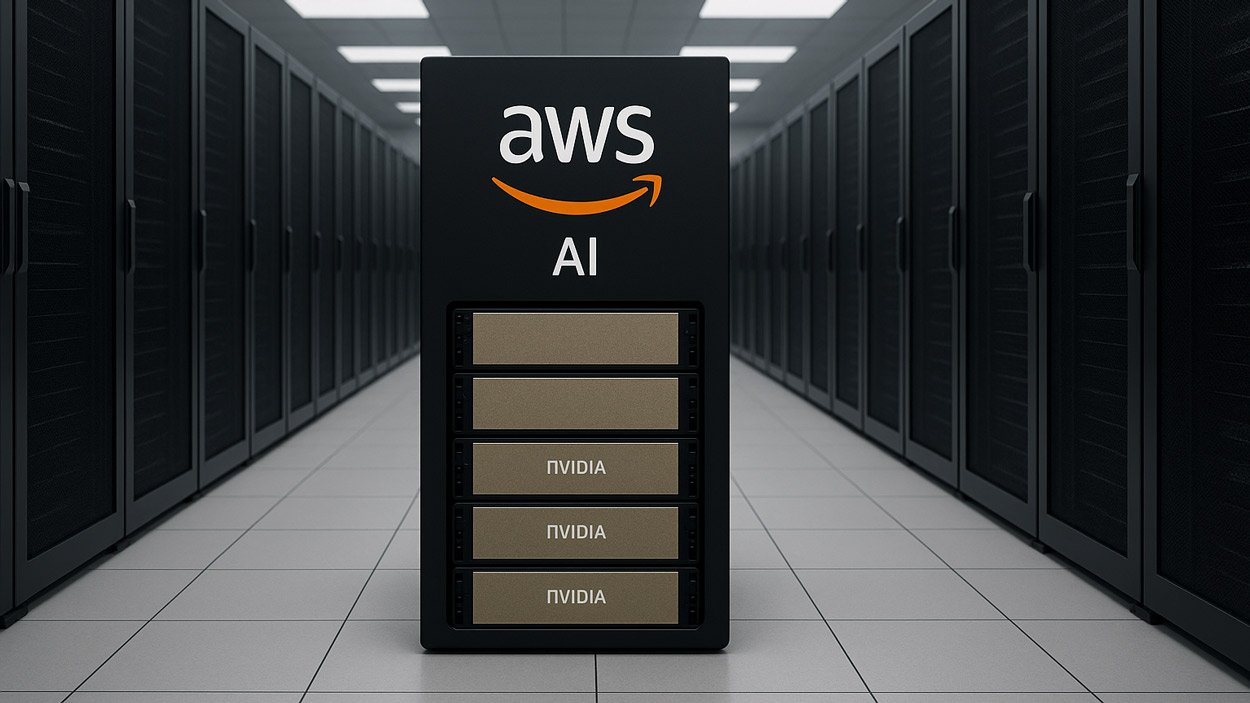


Amazon is making a bold move in enterprise AI with its new ‘AI Factories’, allowing organisations to run powerful AI systems in their own data centres without sending data to the cloud.
TLDR:
- Amazon has launched on-premises ‘AI Factories’ in partnership with Nvidia, letting enterprises run AI infrastructure in their own data centres.
- This move aims to address data sovereignty concerns among companies and governments.
- Customers get full control over AI workloads while still tapping into AWS’s broader cloud services.
- The launch directly challenges Microsoft, which has been developing its own hybrid AI infrastructure.
What Happened?
Amazon Web Services (AWS) has introduced a new product called AI Factories, developed in collaboration with Nvidia. These on-premises systems are designed to give enterprises and governments full control over their AI workloads, addressing the growing demand for data privacy and regulatory compliance. The service enables clients to supply their own power and data centres, while AWS installs and remotely manages the AI systems, fully integrated with its cloud services.
🚀 Exciting times in the tech world! Amazon is taking the lead by introducing on-premises Nvidia ‘AI Factories’ to revolutionize AI processing. 🖥️💡 This move is set to challenge competitors and reshape the landscape of innovation! 🌟 #AmazonAI #Nvidia #… https://t.co/AgwehClvwg
— Daily Dose Media & Finance (@_DailyDoseMedia) December 3, 2025
A Strategic Shift Back to Hybrid Cloud
Amazon’s AI Factories are more than just a new offering; they signal a fundamental shift in cloud strategy. For years, major cloud providers pushed everything into the public cloud. Now, amid rising concerns over data security, regulatory requirements, and competitive risk, the industry is swinging back toward hybrid and private cloud deployments.
With this new offering, Amazon delivers a complete AI stack directly to customer premises, including:
- Nvidia’s latest Blackwell GPUs
- Amazon’s Trainium3 chips
- AWS’s own networking, storage, databases, and security
- Integration with Amazon Bedrock for managing AI models
- Access to AWS SageMaker AI for model building and training
This setup allows companies to maintain strict control over sensitive data while enjoying the scalability and tools of the AWS ecosystem.
Nvidia and AWS Join Forces
The term “AI Factory” isn’t just a catchy name; it’s Nvidia’s branding for its powerful AI hardware platforms, which are loaded with GPUs and tools tailored for AI workloads. The AWS version is a true collaboration with Nvidia, blending Amazon’s software and cloud management strengths with Nvidia’s leading-edge chips and architecture.
The systems are aimed at enterprises and governments that require maximum data control and performance. This configuration ensures no data leaves the building, minimising the risk of exposure to competitors or foreign entities.

Going Head-to-Head with Microsoft
While Amazon is making waves with its customer-facing on-prem AI systems, Microsoft has been working in parallel. The company showcased its own AI Factories earlier this year to power OpenAI workloads, mostly intended for its internal infrastructure and public cloud.
Microsoft’s version, dubbed AI Superfactories, includes massive data centres in Wisconsin and Georgia. Although not initially marketed for private use, Microsoft later announced ‘Azure Local’, a version of its AI infrastructure that can also be deployed at customer sites to address data sovereignty.
This sets the stage for a competitive face-off between the two cloud giants, as both scramble to provide secure, flexible AI infrastructure for enterprise clients.
Daily Research News Takeaway
I see this as a major inflexion point in how AI infrastructure will evolve. After years of pushing everything into the public cloud, Amazon is acknowledging that data security and sovereignty are non-negotiables for many large organisations. And they’re not just talking, they’re delivering a complete, powerful AI solution that fits those needs. Microsoft may have had a head start, but Amazon’s move feels more direct, more practical, and much more appealing for businesses that need cloud-grade AI without the cloud exposure. It’s exciting to see this hybrid cloud model make a strong comeback, and this time, AI is the reason.