

Apple remains one of the most loyalty-driven brands in technology, with millions of users worldwide choosing its products year after year. Apple’s success isn’t just about hardware sales; loyalty influences spending on services, ecosystem engagement, and repeat purchases across devices. In the automotive industry, strong brand loyalty boosts aftermarket sales and subscription engagement. In mobile gaming, iPhone users remain key drivers of in‑app spending thanks to their ecosystem preferences. Let’s explore the latest data behind Apple customer loyalty and what it means for users and marketers alike.
Editor’s Choice
- Apple’s iPhone customer retention rate is around 92%, outpacing most competitors in 2025.
- Apple’s Net Promoter Score (NPS) is estimated at 61 in 2025, above the tech industry average.
- Approximately 89% of iPhone users intend to stay with Apple for their next device.
- Over 1.56 billion active iPhone users are projected worldwide in 2025.
- iOS holds roughly 27–28% of the global smartphone OS market.
- Apple’s U.S. App Store consumer spending is forecast to hit $43 billion in 2025.
- Bloomberg‑reported data suggests 93% of Apple users express intent to remain loyal.
Recent Developments
- Apple’s loyalty rate dipped to ~89% in 2025, but it remains the highest in the industry.
- The EU’s Digital Markets Act has prompted changes in App Store policies, potentially affecting ecosystem stickiness.
- Apple’s services revenue hit record highs, with $85.8 billion in Q3 2024, reflecting deeper engagement.
- The App Store had over 813 million weekly visitors worldwide in 2024, showing ongoing activity.
- Apple has expanded third‑party integrations while maintaining strong ecosystem coherence.
- Market dynamics show iPhone 16 emerging as the top‑selling model in India in 2025, signaling loyalty beyond primary markets.
- Reports indicate customers are holding devices longer, impacting device upgrade cycles.
- Apple’s ecosystem enhancements, such as cross‑device continuity features, continue to strengthen engagement.
Key Apple Customer Loyalty Statistics Overview
- Apple retains customers at ~92% for iPhone users in 2025.
- Bloomberg Intelligence suggests 93% loyalty intent among users.
- Overall loyalty is still higher than rivals like Samsung, despite a slight drop.
- Apple’s iOS global share sits around 27–28% of smartphones in 2025.
- There are ~1.56 billion active iPhone users worldwide projected in 2025.
- In the U.S., iPhone users number ~155 million and are growing.
- iPhone accounts for a majority share in U.S. smartphone sales (58%).
- Apple ecosystem loyalty measures indicate that about 79% of iOS users stay within the ecosystem.
Apple Net Promoter Score (NPS) Statistics
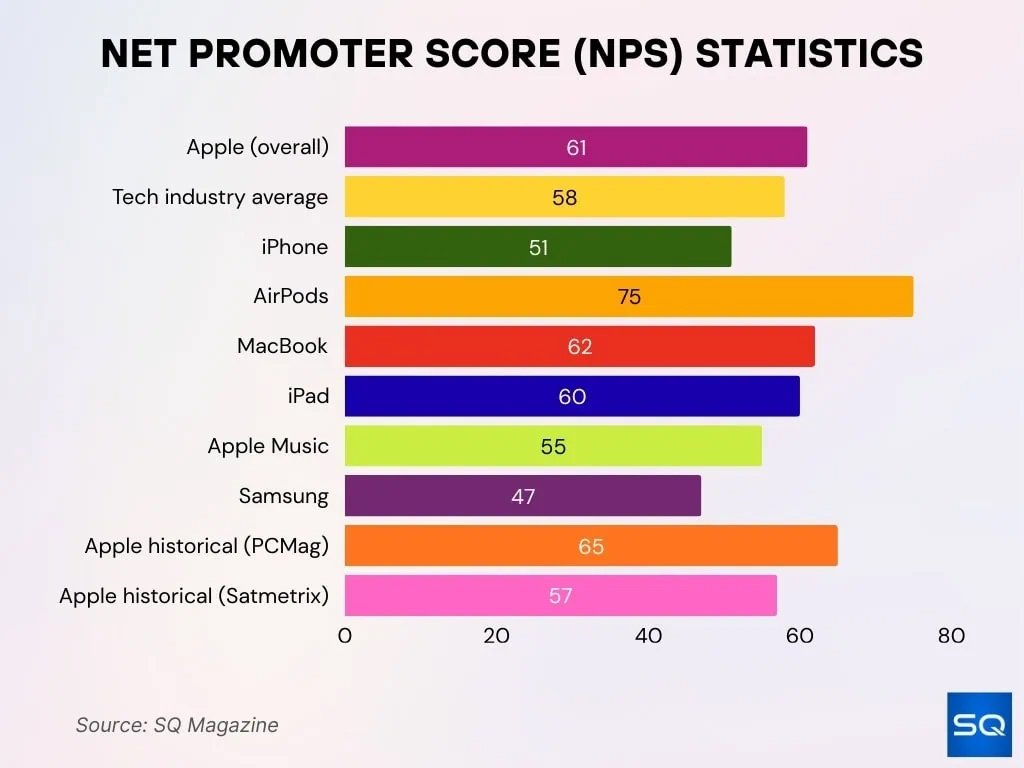
- Apple’s Net Promoter Score (NPS) is widely reported at 61 in 2025, reflecting strong customer advocacy and brand loyalty.
- This NPS score places Apple ahead of the technology industry average of approximately 58, highlighting superior customer satisfaction.
- According to CustomerGauge, Apple’s average NPS across key product categories such as earphones and laptops stands at 61.
- Across individual Apple products, NPS scores differ notably, with iPhone ~51, AirPods ~75, MacBook ~62, iPad ~60, and Apple Music ~55.
- Historical sources show variation, as PCMag reported Apple’s NPS = 65, while Satmetrix measured it at approximately 57.
- In NPS benchmarking, any score above 50 is considered excellent, and Apple’s score of 61 clearly meets this high-performance threshold.
- Within the broader tech brand ecosystem, Apple’s NPS significantly outperforms major competitors such as Samsung (~47).

Apple Customer Retention Rate Statistics
- iPhone customer retention stands at around 92% in 2025.
- Apple has maintained >90% retention over multiple years.
- In 2024 and 2025, Oceania saw some of the highest Apple market share figures (55.55%).
- North America’s Apple market share reached ~54.76%.
- Europe follows with ~35.84% Apple share among markets.
- Around 92% of previous iPhone owners are likely to buy another Apple device.
- Trade‑in loyalty sits at roughly 74.6% brand loyalty among users.
- Compared to Samsung (~77% retention), Apple’s rates are significantly higher.
iPhone Brand Loyalty and Retention Statistics
- iPhone users show around 89–93% loyalty intent in 2025.
- 84% of iPhone owners plan to replace it with another Apple device.
- 48% of users say they’re unlikely to switch brands.
- Apple holds 58% smartphone market share in the U.S.
- iPhone’s global market share reached ~27.7% in 2025.
- Annual global active iPhone users exceed 1.46 billion.
- iPhone users contribute ~68.6% of mobile app spending globally.
- iPhone dominance is particularly strong in North America and parts of Europe.
Apple Services (iCloud, Music, TV+, Arcade) Loyalty Statistics
- Apple’s services revenue hit record highs, reaching $85.8 billion in Q3 2024, reflecting increased engagement.
- There are 95 million Apple Music subscribers worldwide as of 2025, up from previous years.
- Apple TV boasts ~42 million subscribers in early 2025.
- Services like Apple One bundle multiple platforms, driving longer retention.
- iCloud syncing across devices contributes to stickier user behavior.
- Apple Arcade adds gaming to the ecosystem, increasing services engagement.
- Subscription services are cited by many users as a key reason they resist switching platforms.
- Digital services contributed a growing share of Apple’s overall revenue mix in 2025.
Mac and MacBook Customer Loyalty Statistics
- Mac users report satisfaction levels above 90% in independent surveys, far exceeding industry averages.
- 85% of MacBook users would recommend their device to friends, showing strong endorsement.
- Apple’s Mac market share reached 8.69% globally for desktops in August 2025.
- Mac shipments surged 28.7% YoY in Q1 2025, capturing 16% U.S. PC market share.
- 75% of MacBook users plan to purchase another MacBook as their next laptop.
- 90%+ customer retention rate stems from Apple’s seamless ecosystem loyalty.
- 87% of professional engineers rely on macOS for their daily work needs.
- 44% of software developers use macOS for coding and app development tasks.
- 96.4% of millennial Mac owners intend to repurchase within the Apple ecosystem.
- Over 100 million active MacBook users worldwide reinforce cross-sell opportunities.
Apple Ecosystem Adoption Among iPhone vs Non-iPhone Users
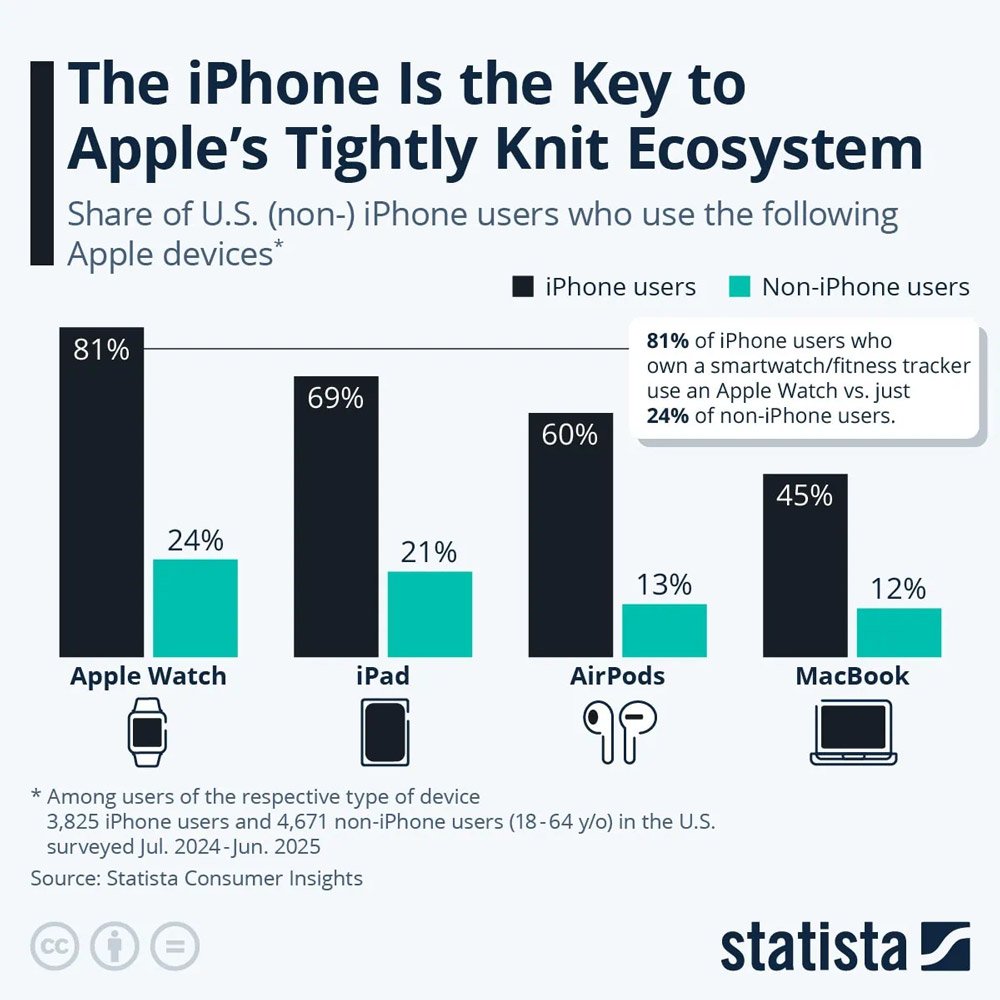
- 81% of iPhone users who own a smartwatch or fitness tracker have an Apple Watch, compared to just 24% of non-iPhone users.
- 69% of iPhone users own an iPad, while only 21% of non-iPhone users report owning one.
- 60% of iPhone users use AirPods, versus 13% of non-iPhone users.
- 45% of iPhone users have a MacBook, compared to 12% of non-iPhone users.
iPad and Tablet Loyalty Statistics
- iPad captured 33% global tablet market share with 12.7 million shipments in Q2 2025.
- 78% of Apple customers own an iPad alongside their iPhone.
- 94% of dedicated Apple users own an iPhone, driving iPad ecosystem stickiness.
- Apple’s tablet satisfaction scores 85/100, exceeding the industry average of 81.
- 40% of iPad owners wait 3+ years before upgrading, showing strong retention.
- Apple holds 42.3% tablet market share in education-heavy Q4 2024.
- Over 90% of iPad users plan to stay in the Apple ecosystem for upgrades.
- iPad integration with Apple Pencil boosts premium user loyalty and accessory demand.
- Apple services generated $27.4B in Q2 2025, with iPad owners heavily subscribing.
Apple Watch and Wearable Loyalty Statistics
- Apple Watch holds a 23% share of the global smartwatch market in 2025.
- 73% of Apple Watch owners report high loyalty to the Apple ecosystem.
- 95% of Apple Watch users plan to repurchase from Apple for their next smartwatch.
- 84% of Apple Watch owners intend to buy another Apple device next.
- 82% of Apple Watch users wear their device daily, boosting reliance.
- 70% of consumers are very satisfied with their Apple Watch features.
- Apple Watch shipments are projected to grow 12% annually in 2025.
- 77% of smartwatch buyers planning upgrades choose the Apple Watch.
Number of Purchases Required to Build Brand Loyalty
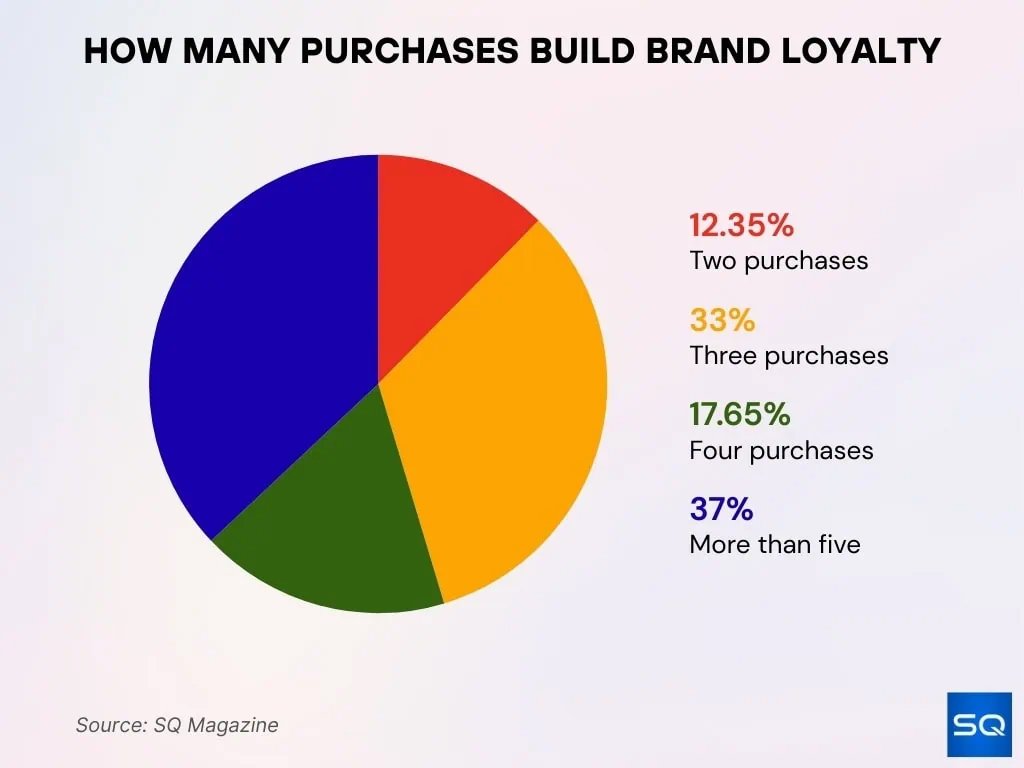
- 37% of consumers require more than five purchases before they fully commit to brand loyalty.
- 33% of shoppers develop brand loyalty after completing just three purchases.
- 17.65% of buyers become loyal customers only after making four purchases.
- Only 12.35% of customers build brand loyalty after completing just two purchases.
Apple vs Android Loyalty Comparison Statistics
- Apple’s retention rate among iPhone users (~92%) outpaces Samsung’s (~77%).
- iPhone users are about 18% more loyal than Android users in some studies.
- Android holds ~72.47% global smartphone OS share, while iOS holds ~27.11%.
- In the U.S., iOS leads with about 57.97% smartphone market share.
- Apple users spend more on apps and services per capita than Android users.
- Android’s broader device base doesn’t always translate to higher loyalty metrics.
- Apple’s ecosystem overlaps more across product categories than Android’s.
- Apple’s NPS typically remains higher than that of many Android manufacturers.
Apple Customer Satisfaction and CX Statistics
- Apple’s NPS in 2025 stands at 61, surpassing the tech industry average of 58–59.
- Overall, customer loyalty intentions reach as high as 93% among iPhone users.
- iPhone customer retention rate hovers near 92%, far exceeding competitors.
- 81% of surveyed consumers rate Apple highest in smartphone satisfaction.
- AirPods NPS score excels at 75, leading Apple’s product lines.
- 73% of iPhone users report being highly or somewhat loyal to Apple.
- MacBook NPS achieves 62, with user satisfaction often exceeding 90%.
- Among Millennials, 96.4% of iPhone owners plan to repurchase Apple products.
- 89% iPhone loyalty in the U.S. for the year ending June 2025.
- Apple Music subscriber retention stands at approximately 62%.
Geographic Breakdown of Apple Loyalty (US vs Global) Statistics
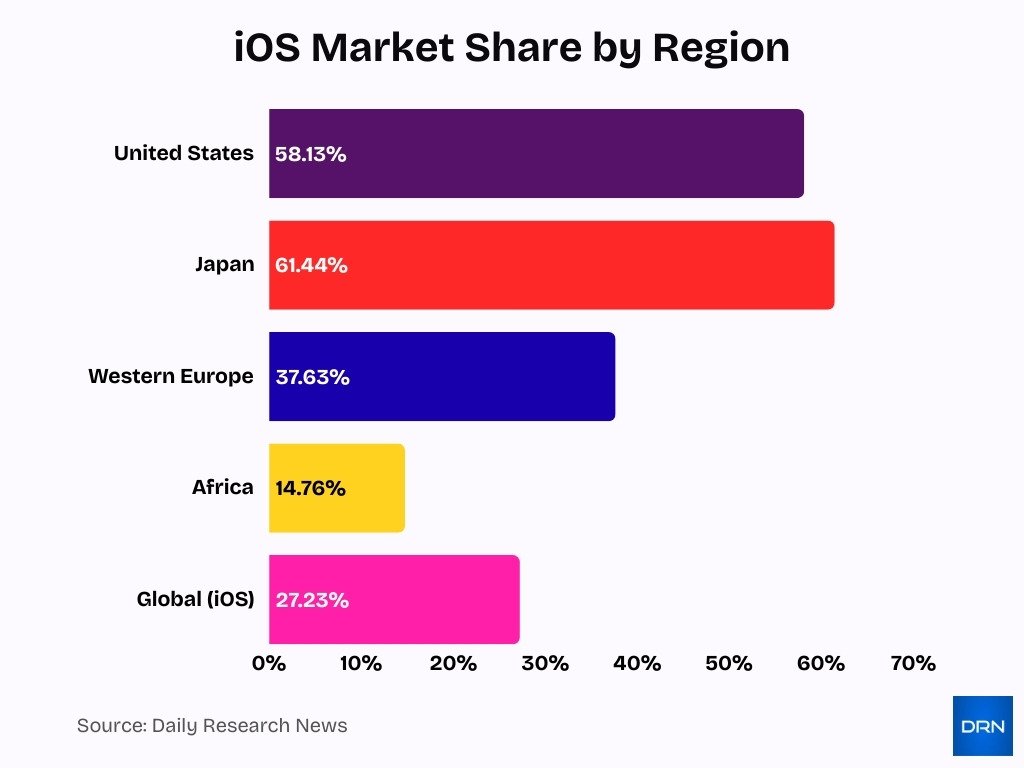
- The US iPhone market share reaches 58.13% in 2025, far exceeding global averages.
- Globally, 1.561 billion active iPhone users demonstrate robust loyalty as of 2025.
- In China, iPhone captures 25% market share in October 2025, up significantly YoY.
- Android holds 72.77% worldwide smartphone share vs iOS’s 27.23% in 2025.
- Japan sees iOS at 61.44% market share in November 2025, a loyalty stronghold.
- Western Europe records an iOS 37.63% share from Nov 2024–Nov 2025.
- Africa shows iOS at 14.76% market share, with Android dominating at 84.04%.
- US iPhone users total 150.7 million in 2025, growing 5.16% YoY.
- India hits record 10.4% iPhone share in Q3 2025 with 5 million shipments.
Switching Intent and Churn Rate Statistics
- iPhone users show low switching intent, with surveys indicating ~48% say they’re unlikely to switch brands.
- Apple’s retention rates (~89–92%) imply low churn relative to competitors.
- Some data indicate a modest drop in loyalty (down from peaks near 94%), but churn remains low compared to industry norms.
- Trade‑in loyalty (~74.6%) keeps many customers within the ecosystem at upgrade time.
- Loyalty declines tend to be minor and concentrated in markets facing strong Android competition.
- High satisfaction and ecosystem lock‑in reduce churn risk.
- Loyalty remains above industry averages despite economic headwinds affecting upgrade cycles.
- Customers often delay switching due to integration costs across devices and services.
Emotional Connection and Brand Advocacy Statistics
- Reports show ~73% of iPhone users describe themselves as loyal, often citing an emotional connection.
- Among Millennials, up to ~96.4% plan to repurchase Apple products, illustrating strong advocacy.
- Repeat buyers often act as brand advocates in their social circles.
- Pride in owning Apple devices is a frequently cited loyalty driver.
- High loyalty translates into word‑of‑mouth referrals, a key advocacy measure.
- Emotional attachment reduces the likelihood of switching, even when alternatives are cheaper.
- Apple users may forgive service glitches more readily because of the strong brand identity.
- Advocacy extends to services like Apple Music and iCloud, not just devices.
Demographic Breakdown of Apple Loyalty (Age, Gender, Income) Statistics
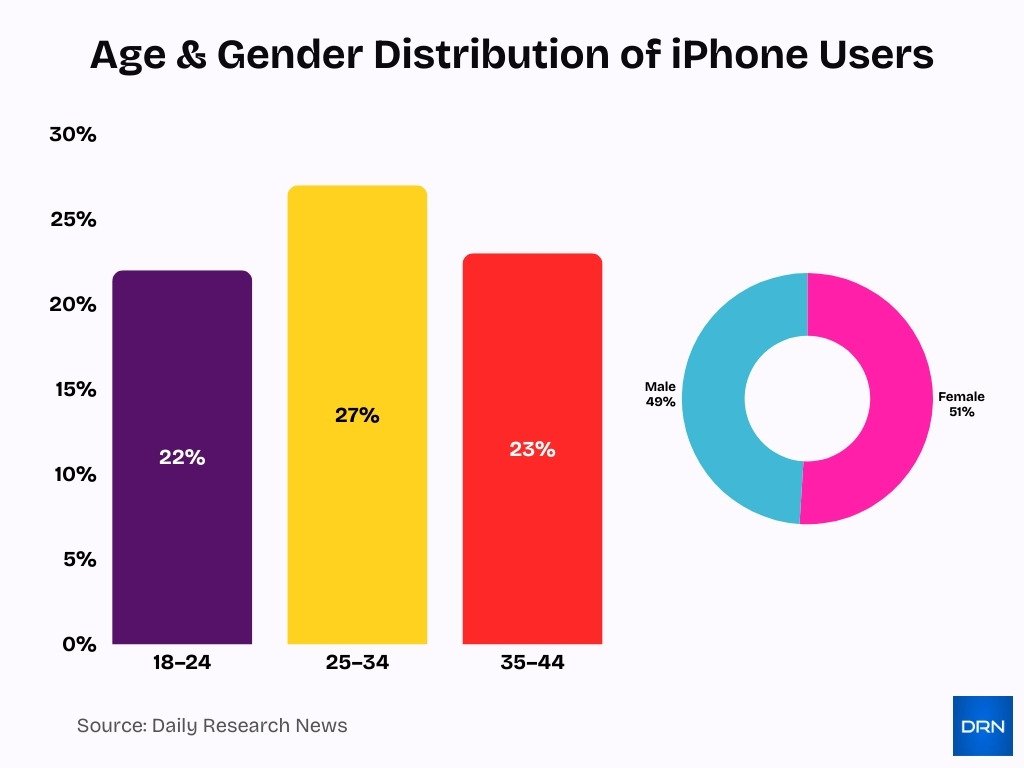
- Adults aged 18–34 represent the largest iPhone user group, comprising 72% of users, with 27% in 25–34 and 23% in 35–44.
- 88% of U.S. teens own an iPhone, up from 85% earlier in 2025, per Piper Sandler survey.
- 51% of global iPhone users are female and 49% male, showing balanced gender appeal.
- iPhone users have a median income of $85,000 annually, 40% higher than that of Android users, $61,000.
- 43% higher average income for iPhone owners at $53,251 vs. Android’s $37,040.
- 58% of U.S. adults aged 18–29 use iOS, far exceeding Android’s 42% share.
- ~40% of iPhone owners report incomes above $100,000, outpacing average smartphone users.
- 87% of U.S. teenagers prefer iPhones, signaling strong Gen Z loyalty.
- 31% of Gen Z and 35% of Millennials favor Apple products globally.
Impact of Privacy and Security on Apple Loyalty Statistics
- Apple boasts a 92% iPhone user retention rate, far exceeding Samsung’s 77%.
- App Tracking Transparency boosts user trust, with only 4-15% global opt-in for tracking post-launch.
- 81% of consumers say brand data trust directly sways their buying decisions, favoring Apple.
- Apple scores 81% customer satisfaction in surveys, topping smartphone brands due to security.
- iPhone loyalty holds at 89% in the US for 2025, driven by privacy ecosystem lock-in.
- 72% of Apple users cite privacy reputation as key over Android rivals.
- Deloitte finds 81% link between privacy practices and loyalty, amplified by Apple’s stance.
- 90%+ iPhone retention persists, tied to security updates and data protection trust.
Loyalty Statistics Across Upgrade Cycles and Trade‑In Programs
- Trade‑in loyalty is about 74.6%, meaning nearly 3 in 4 Apple users trading in devices stay within the brand.
- Among existing iPhone owners, the repeat purchase rate is roughly 70%, indicating strong repurchase intent across upgrade cycles.
- Surveys show that around 84% of iPhone owners plan their next device to be another Apple product, reinforcing in‑ecosystem upgrades.
- iPhone retention is estimated near 92% in 2025, highlighting that most users do not switch ecosystems when upgrading.
- Cross‑device ownership is high, with about 80% of iPhone users owning at least one other Apple product that keeps services and accounts unified.
- Around 48% of iPhone users say they are unlikely to switch brands, showing loyalty even as upgrade cycles gradually lengthen.
- Apple’s installed base exceeds 2 billion active devices, creating a large pool of users feeding trade‑in and repeat‑upgrade programs.
- Roughly 18% higher loyalty is seen among iPhone users compared with Android users, emphasizing Apple’s stronger brand stickiness at upgrade time.
Frequently Asked Questions (FAQs)
Apple’s iPhone user retention rate is approximately 92% in 2025.
Apple’s overall Net Promoter Score (NPS) in 2025 is 61.
About 48% of iPhone users report they are unlikely to switch brands.
Apple’s trade‑in brand loyalty rate is around 74.6%.
Conclusion
Apple’s customer loyalty metrics continue to reflect a powerful and multidimensional bond between the brand and its users. From strong demographic appeal among younger, affluent audiences to high satisfaction, low churn, and emotional advocacy, Apple’s ecosystem fosters repeat purchases and deep brand allegiance across the globe. Even as competition increases and market shares shift regionally, Apple maintains a loyalty ecosystem that outstrips most peers.
Future loyalty trends will be shaped by privacy practices, service integration, and how Apple adapts to evolving customer expectations. Overall, Apple’s loyalty remains a core asset that drives sustained engagement and market strength.