

ChatGPT is facing user backlash after it began inserting app suggestions into chats that many mistook for advertisements.
TLDR:
- OpenAI quietly added app suggestions in ChatGPT, which many users believed were paid ads.
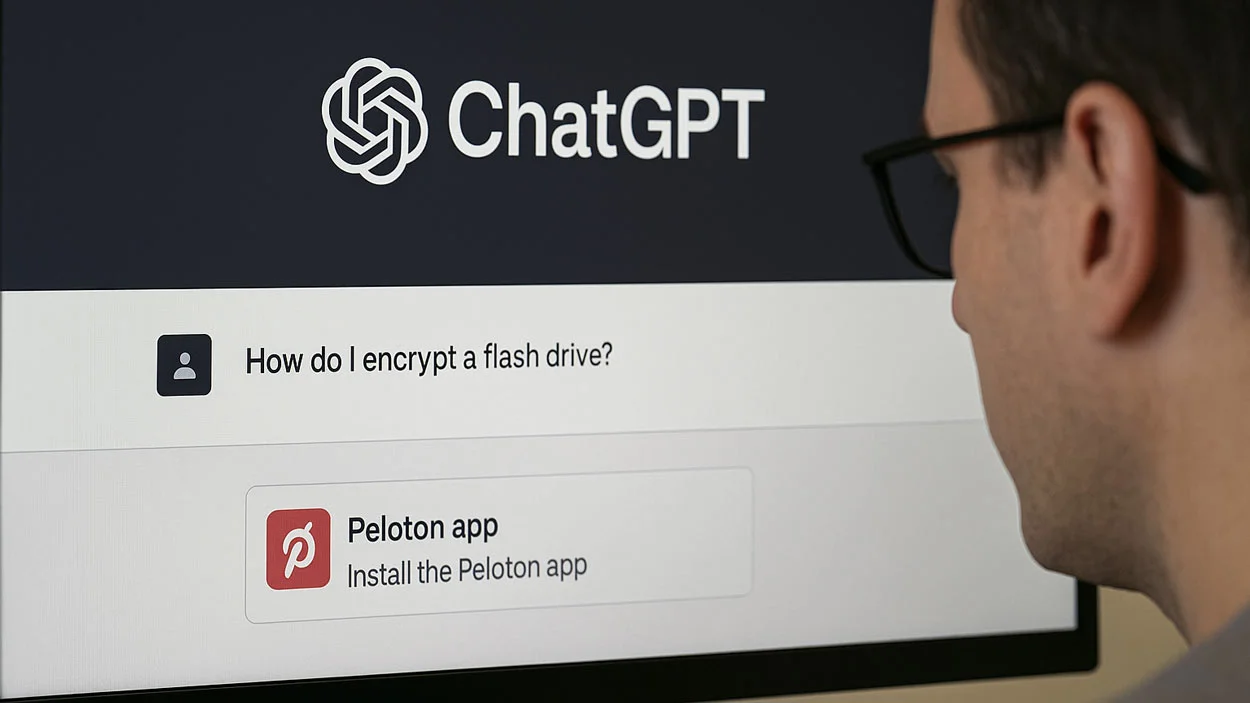
- Users saw links for brands like Target and Peloton in unrelated queries.
- OpenAI says these are not ads and has since turned off the feature.
- The backlash comes at a time when OpenAI is under internal pressure to improve ChatGPT.
What Happened?
Over the past week, many ChatGPT users, including paying subscribers, noticed something unusual. While chatting with the AI, they were served clickable suggestions pointing to apps or products from well-known brands. These looked and felt like ads, despite OpenAI insisting they were not. The situation caused a stir on social media and Reddit, prompting the company to turn off the feature amid growing criticism.
OpenAI’s Controversial Suggestion Feature
It all started when users began spotting what seemed like product placements in their ChatGPT sessions. A viral tweet by user Benjamin De Kraker showed the chatbot suggesting links to shop at Target while he asked about Windows BitLocker. Others reported seeing similar links for brands like Peloton.
I’m in ChatGPT (paid Plus subscription), asking about Windows BitLocker
— Benjamin De Kraker (@BenjaminDEKR) December 3, 2025
and it’s F-ing showing me ADS TO SHOP AT TARGET.
Yeah, screw this. Lose all your users. pic.twitter.com/2Z5AG8pnlJ
These suggestions confused and irritated users, especially those on paid plans like ChatGPT Plus and Pro, with some questioning why a subscription-based service would introduce what felt like commercial prompts.
- One Reddit post called it “the death of ChatGPT.”
- Others called the feature “misleading” and “intrusive.”
OpenAI initially defended the suggestions. Daniel McAuley, a data team member at OpenAI, responded to concerns by saying, “This is not an ad (there’s no financial component).” He clarified that the links were meant to highlight apps built on the ChatGPT platform, launched in October.
Hey, Kol. Thanks for flagging 🙏 This is not an ad (there’s no financial component). It’s only a suggestion to install Peloton’s app. But the lack of relevancy makes it a bad/confusing experience. We’re iterating on the suggestions and UX, trying to make sure they’re awesome.
— Daniel McAuley (@_dmca) December 1, 2025
Apologies and Rollbacks
The backlash didn’t go unnoticed internally. Mark Chen, OpenAI’s chief research officer, admitted in a reply to De Kraker, “I agree that anything that feels like an ad needs to be handled with care, and we fell short.” He confirmed the company had turned off the suggestions and was exploring new ways to implement such features more appropriately.
I agree that anything that feels like an ad needs to be handled with care, and we fell short.
— Mark Chen (@markchen90) December 5, 2025
We’ve turned off this kind of suggestion while we improve the model’s precision. We’re also looking at better controls so you can dial this down or off if you don’t find it helpful.
ChatGPT head Nick Turley also weighed in but took a firmer stance. He stated, “There are no live tests for ads. Any screenshots you’ve seen are either not real or not ads. If we do pursue ads, we’ll take a thoughtful approach.”
While Turley’s comment aimed to clarify the situation, some users felt it contradicted other responses, further adding to the confusion.

What’s Really Going On Behind the Scenes
This incident comes during a sensitive time for OpenAI. The company is reportedly under a “code red,” an internal effort to boost ChatGPT’s quality following growing competition, especially from Google. CEO Sam Altman’s memo reportedly instructed teams to focus on performance and user satisfaction, pushing potential ad plans to the back burner.
OpenAI recently hired Fidji Simo, formerly of Instacart and Facebook, to head its applications division. Many see this as a move toward a longer-term ad strategy. But for now, the company insists it is focused on creating a cleaner, more relevant user experience.
Daily Research News Takeaway
Let me be blunt. If you’re paying for ChatGPT and suddenly see what looks like a sales pitch mid-conversation, it’s jarring. Sure, OpenAI says these weren’t technically ads, but they walked and quacked like one. Users are right to feel misled. The trust that people place in AI tools depends on transparency. OpenAI may have turned off the feature for now, but this episode shows how badly things can go if a rollout lacks clear communication. I’m watching closely to see how OpenAI learns from this one.