


Cross-platform gaming has shifted from a niche convenience to a mainstream expectation for players and developers alike. As players demand seamless experiences across mobile, PC, and consoles, this format now influences engagement, retention, and monetization across the global gaming ecosystem. The rise of cloud gaming and unified progression systems illustrates how cross-platform features impact how games are designed and enjoyed, whether in casual mobile play or competitive esports arenas. Read on to explore key trends and statistics shaping cross-platform gaming today.
Editor’s Choice
- 3.32 billion people worldwide were active video game players in 2025.
- Global gaming market revenue is projected to exceed $320–$340 billion in 2026.
- 61% of gamers globally report adopting cross-platform play.
- An estimated 87% of multiplayer gamers have played cross-platform games.
- 72% of gamers use two or more platforms regularly.
- Cross-platform titles can improve player retention by 25%–45% compared with single-platform games.
- Cloud gaming platforms lead cross-platform support at 92% compatibility.
Recent Developments
- Developers are increasingly prioritizing cross-platform features in game design due to player demand.
- Partnerships between major engines and platforms show rising industry commitment to shared ecosystems.
- Cross-save and cross-play implementations, such as expanded support for titles across major consoles and PC, are becoming more common.
- Cloud gaming growth supports broader cross-platform connectivity.
- Gaming systems like Xbox Play Anywhere continue to extend cross-platform ownership and playability.
- Expanded cross-platform commerce and creator ecosystems aim to unify digital economies across games.
- Consumer expectations for seamless cross-device progress are shaping release roadmaps.
- Industry focus includes leveling, matchmaking, and balancing play fairness across devices.
What Is Cross-Platform Gaming?
- Cross-platform gaming enables players on different hardware to play together in the same online environment. This includes console, PC, and mobile devices.
- The concept spans cross-play, playing together, and cross-save shared progress across systems.
- Unified experiences reduce silos between ecosystems and increase multiplayer collaboration and competition.
- This approach supports social play, letting friends connect regardless of platform choice, which drives longer play sessions and more frequent engagement.
- Developers benefit from a wider potential audience, reducing fragmentation and increasing long-term player investment.
- Cross platforms can also mean cross-progression, where players continue progress from one device to another.
- Integration of cloud save technology further enhances continuity across games and devices.
- While historically limited by technical and business barriers, widespread support is now common among modern titles.
Global Cross-Platform Gaming Market Size
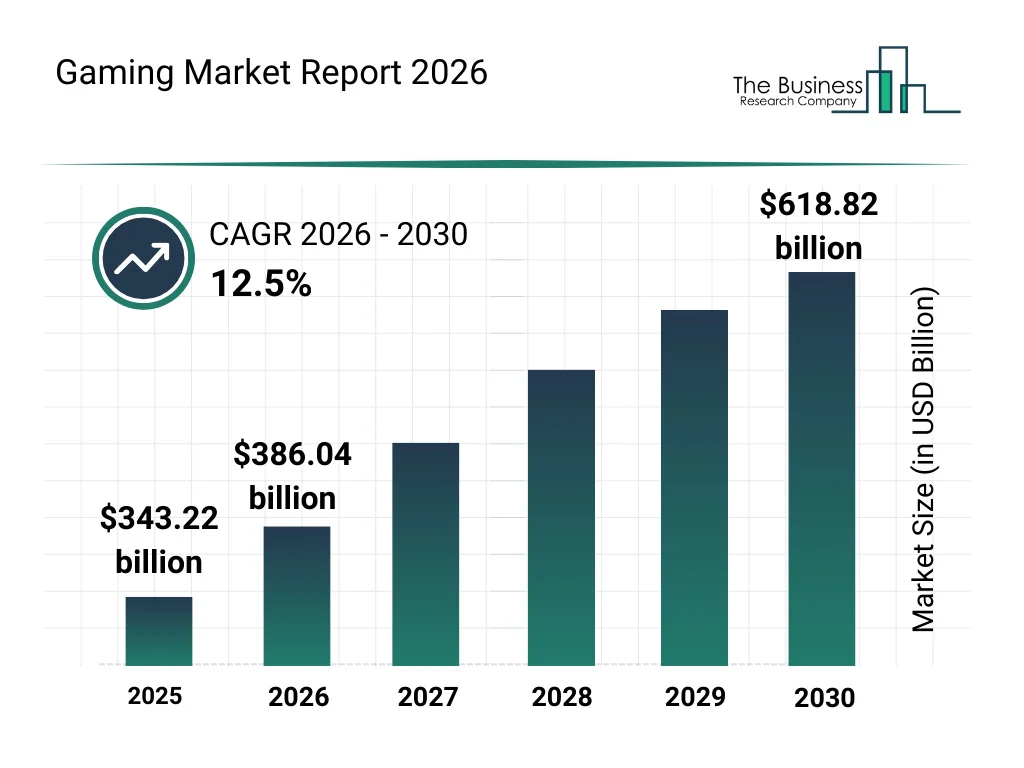
- The global gaming market was valued at $343.22 billion in 2025, reflecting strong baseline demand across mobile, PC, and console platforms.
- In 2026, the market expanded to $386.04 billion, indicating continued momentum in digital entertainment and esports adoption.
- From 2026 to 2030, the industry is projected to grow at a CAGR of 12.5%, highlighting sustained long-term expansion.
- By 2030, the global gaming market is expected to reach $618.82 billion, demonstrating significant revenue growth over five years.
- The market is forecast to add more than $275 billion in value between 2025 and 2030, underlining rising consumer spending and technological innovation.
- Rapid growth is being driven by cloud gaming, mobile gaming, immersive technologies, and subscription-based platforms, strengthening overall market scalability.
- Increasing adoption of 5G networks, AI-driven gaming, and cross-platform play is expected to further accelerate industry revenues through 2030.

Cross-Platform Gaming Adoption Rates Worldwide
- As of 2025, the global gaming audience reached 3.32 billion players, up from 3.22 billion in 2024, reflecting steady cross-platform demand.
- 61% of gamers worldwide report using cross-platform play features at least occasionally.
- In the U.S., 65% of multiplayer gamers say cross-play influences their decision to purchase a title.
- Over 70% of Gen Z gamers expect cross-progression across devices as a standard feature.
- Europe accounts for nearly 18% of the global gaming population, with high cross-platform engagement in Western markets.
- Asia-Pacific represents over 1.7 billion gamers, driving the largest cross-device gaming base globally.
- In 2025, 48% of console players reported playing with users on other platforms.
- Cross-platform multiplayer adoption in Latin America grew by 12% year over year between 2024 and 2025.
- Approximately 43% of global gamers say they want more titles to support full cross-play.
Multi-Platform Gamer Behavior (Single vs Multi-Device)
- 72% of gamers play on more than one device, highlighting the normalization of multi-platform behavior.
- Around 25% of players regularly use three platforms, typically mobile, PC, and console.
- U.S. gamers spend an average of 7.6 hours per week gaming across devices.
- 40% of console gamers also play on mobile weekly, indicating blended usage patterns.
- PC gamers are the most platform-flexible, with 58% also gaming on console or mobile.
- Players who engage across multiple platforms spend 30% more annually on games than single-platform users.
- Cross-progression users show 31% higher login frequency compared to players limited to one device.
- In 2025, 54% of U.S. households reported owning both a console and at least one gaming-capable PC or tablet.
- Gamers who switch between devices during the same week report 20% longer average session time overall.
All-Time Esports Earnings Distribution by Game Genre
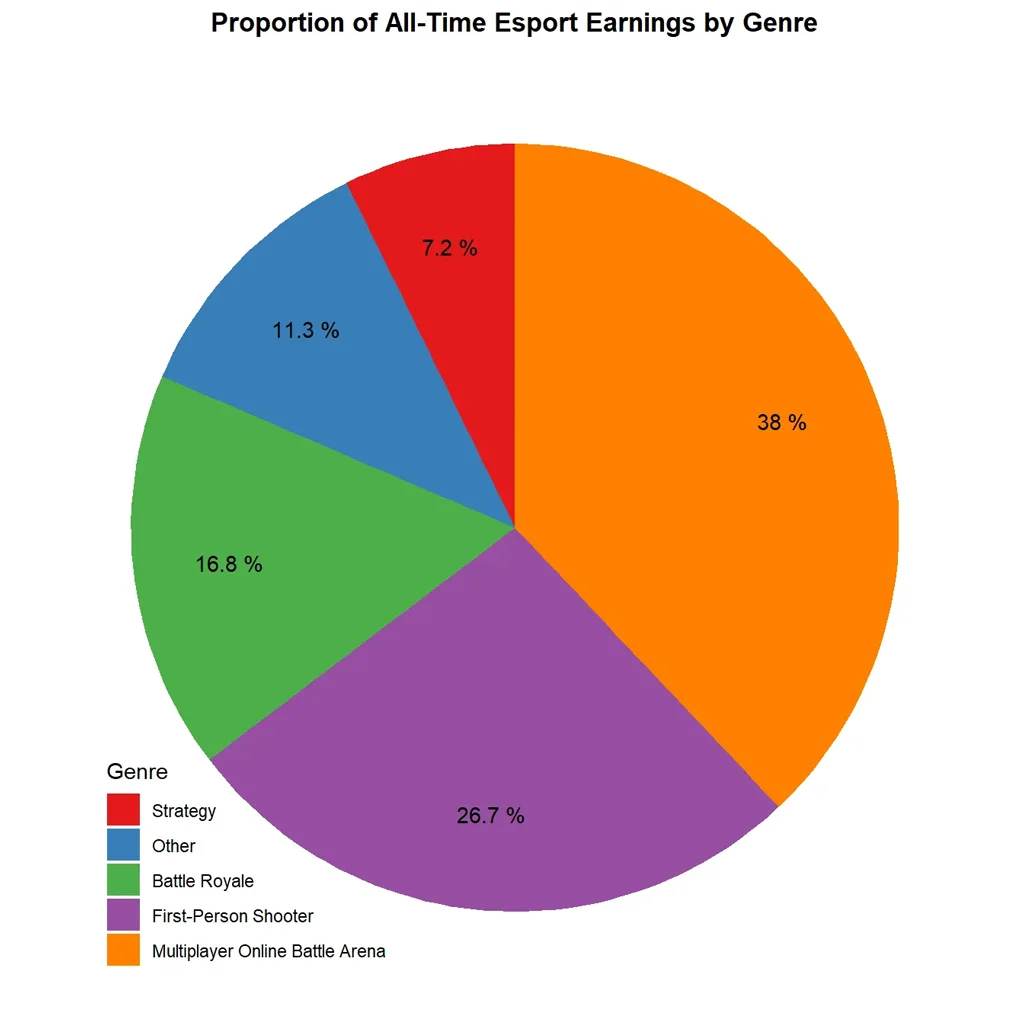
- Multiplayer Online Battle Arena (MOBA) leads the esports industry by dominating with 38% of all-time esports earnings, highlighting its strong competitive ecosystem and massive audience engagement.
- First-person shooter (FPS) titles account for 26.7% of total esports earnings, reflecting their global popularity, intense gameplay, and consistent tournament presence.
- Battle Royale games contribute 16.8% to cumulative esports prize pools, demonstrating their rapid growth, high player participation, and streaming appeal.
- Other competitive game genres collectively represent 11.3% of overall esports earnings, showing their diverse contributions across multiple niche communities.
- Strategy-based esports games make up the remaining 7.2% of total earnings, emphasizing their specialized player base and long-term competitive stability.
Regional Cross-Platform Gaming Trends
- The U.S. gaming market generated over $46 billion in 2025, with high cross-platform penetration among multiplayer titles.
- Asia-Pacific remains the largest region, contributing nearly 50% of global gaming revenue.
- China alone accounts for more than 700 million gamers, many engaged in mobile-to-PC cross-play ecosystems.
- Western Europe saw a 9% increase in multiplayer cross-play participation between 2024 and 2025.
- In Japan, over 60% of console titles launched in 2025 supported cross-platform features.
- Latin America’s gaming market grew at double-digit rates 10%+ in 2025, fueled by mobile-console integration.
- The Middle East and Africa gaming audience surpassed 300 million players, with rising cloud-based cross-platform engagement.
- South Korea’s esports ecosystem integrates cross-platform competitive titles with over 30 million active esports viewers.
- In Canada, 67% of gamers report using more than one gaming device weekly.
Cross-Platform Player Demographics
- In the U.S., the average gamer age is 36 years old, indicating a mature cross-platform audience.
- 52% of U.S. gamers are female, fueling demand for multi-device gaming ecosystems.
- Gen Z comprises 40% of global gamers, leading in cross-platform engagement.
- 82% of U.S. parents who game play with their children, frequently across platforms.
- 72% of global gamers use two or more platforms, enabling seamless cross-play experiences.
- Over half of U.S. gamers aged 65+ (22% of total) participate, broadening cross-platform appeal.
- 70% of U.S. parents play video games compared to 60% of all adults, often multi-device.
- Millennials represent 50% of esports fans, favoring cross-platform competitive titles.
- 55% of mobile gamers also play on consoles, showing strong cross-platform overlap.
- Gen Z gamers average 10.3 hours weekly on cross-platform multiplayer titles.
Cross-Platform Gaming: Player Spending and Engagement Trends
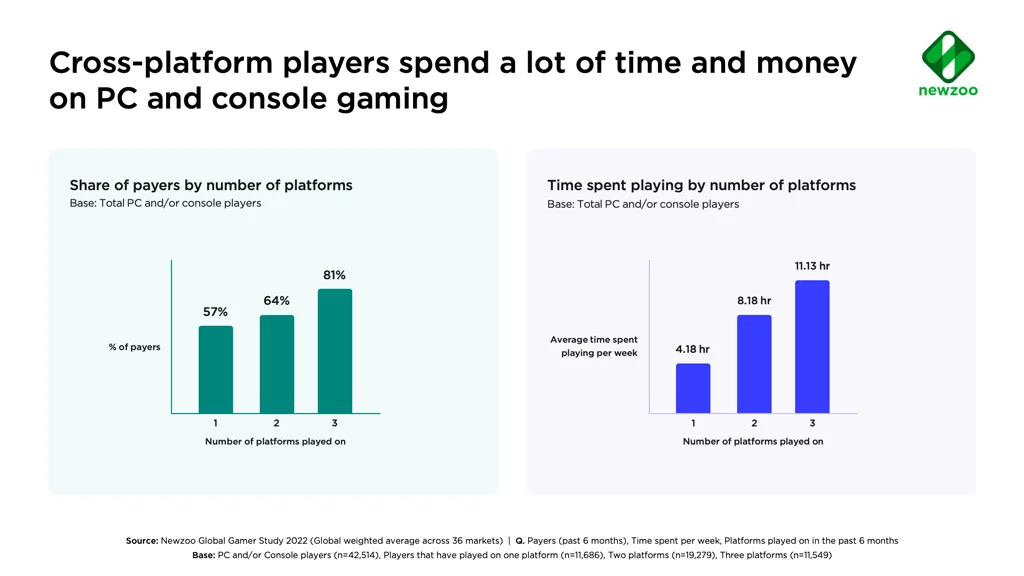
- 57% of single-platform players make in-game purchases, showing that even gamers using just 1 platform actively contribute to gaming revenue.
- 64% of two-platform players are payers, indicating that multi-device users are more willing to spend on games and digital content.
- 81% of three-platform players spend money, highlighting that gamers active on 3 platforms are the most valuable customer segment.
- Players using 1 platform spend an average of 4.18 hours per week, reflecting relatively lower engagement levels.
- Gamers active on 2 platforms dedicate around 8.18 hours per week, nearly double the time of single-platform users.
- Three-platform players are the most engaged, averaging 11.13 hours per week, making them the heaviest users in the ecosystem.
- Overall, the data shows that cross-platform gamers not only spend more but also play longer, strengthening their importance for publishers and developers.
Cross-Platform Monetization and Revenue Uplift
- Cross-platform functionality increases lifetime value LTV by up to 30%, as players spend across multiple devices.
- Gamers who play on more than one device spend 1.4x more annually than single-platform players.
- Free-to-play cross-platform titles generate the majority of in-game revenue, with microtransactions accounting for over 70% of digital game revenue globally in 2025.
- Live-service games with cross-play features report 25%–45% higher retention rates compared to single-platform titles.
- Cross-progression increases in-game purchase frequency by approximately 18%, as players remain engaged across sessions.
- In 2025, downloadable content, DLC, and add-ons contributed over $17 billion globally, driven by cross-device ecosystems.
- U.S. digital game sales accounted for nearly 95% of total game revenue, enabling seamless cross-platform monetization.
- Battle pass models, common in cross-platform games, deliver recurring revenue with conversion rates between 40% and 60% among active player bases.
- Cross-platform ecosystems reduce churn by up to 20%, directly improving revenue stability for publishers.
Device Usage: Mobile vs PC vs Console
- Worldwide, around 79% of gamers prefer mobile devices, while 42% use PCs and 55% rely on consoles, with multi-device usage being highly common across platforms.
- In the United States, nearly 72% of players use mobile, about 54% play on PCs, around 42% choose consoles, and roughly 12% engage with VR devices.
- Among U.S. gamers aged 8+, approximately 82% access games on mobile, nearly 47% use consoles, about 45% prefer PCs, and close to 10% utilize VR technology.
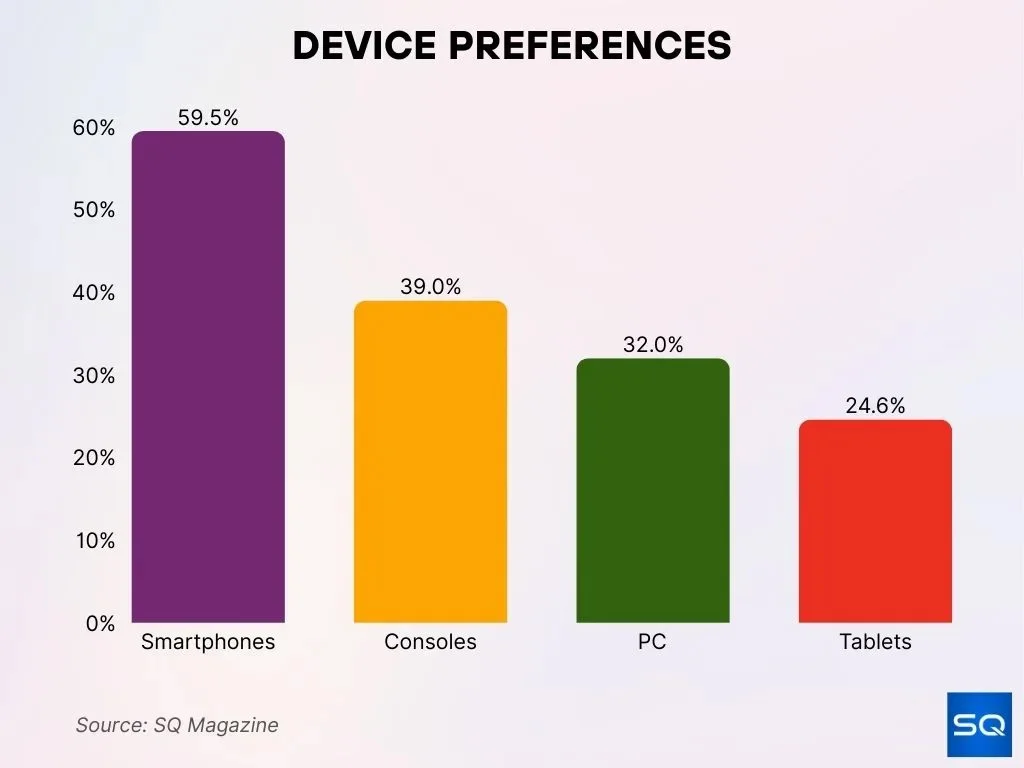
- Smartphones dominate global gaming with a 59.5% usage rate, followed by consoles at 39%, laptops/desktops at 32%, and tablets at 24.6%, highlighting strong device diversity.
Subscription Services and Cross-Platform Ecosystems
- Global gaming subscription revenue exceeded $11 billion in 2025, fueled by cross-platform access models.
- Xbox Game Pass surpassed 34 million subscribers in 2025, offering cross-play and cross-save features across console and PC.
- PlayStation Plus reached more than 47 million subscribers, with growing integration across console and cloud.
- Cloud-enabled subscriptions grew at over 40% CAGR from 2024 to 2025.
- Approximately 36 million gamers worldwide use cloud gaming services, many tied to subscription bundles.
- In the U.S., 52% of gamers subscribe to at least one gaming service.
- Subscription users spend 20% more on in-game purchases compared to non-subscribers.
- Cross-platform subscription libraries increase average monthly playtime by 15%, strengthening engagement.
- Multi-device access remains a top purchase driver, with 45% of gamers citing flexibility as a key reason for subscribing.
Esports and Streaming Statistics for Cross-Platform Titles
- Global esports revenue reached approximately $1.8 billion in 2025, with cross-platform titles leading competitive scenes.
- There are over 540 million esports viewers worldwide, many engaging with cross-play-enabled games.
- Twitch reported over 21 billion hours watched in 2024, dominated by cross-platform multiplayer games.
- Fortnite esports tournaments attracted peak concurrent viewership exceeding 2 million viewers.
- Call of Duty League events averaged 250,000+ live viewers per major event in 2025.
- Cross-platform competitive balance initiatives reduced matchmaking complaints by 18% year over year.
- YouTube Gaming surpassed 800 million monthly logged-in users engaging with gaming content.
- Mobile esports titles now represent over 30% of global esports revenue, driven by cross-device play.
- Sponsorship accounts for nearly 60% of total esports revenue, supported by cross-platform global audiences.
Leading Cross-Platform Titles and Player Base Statistics
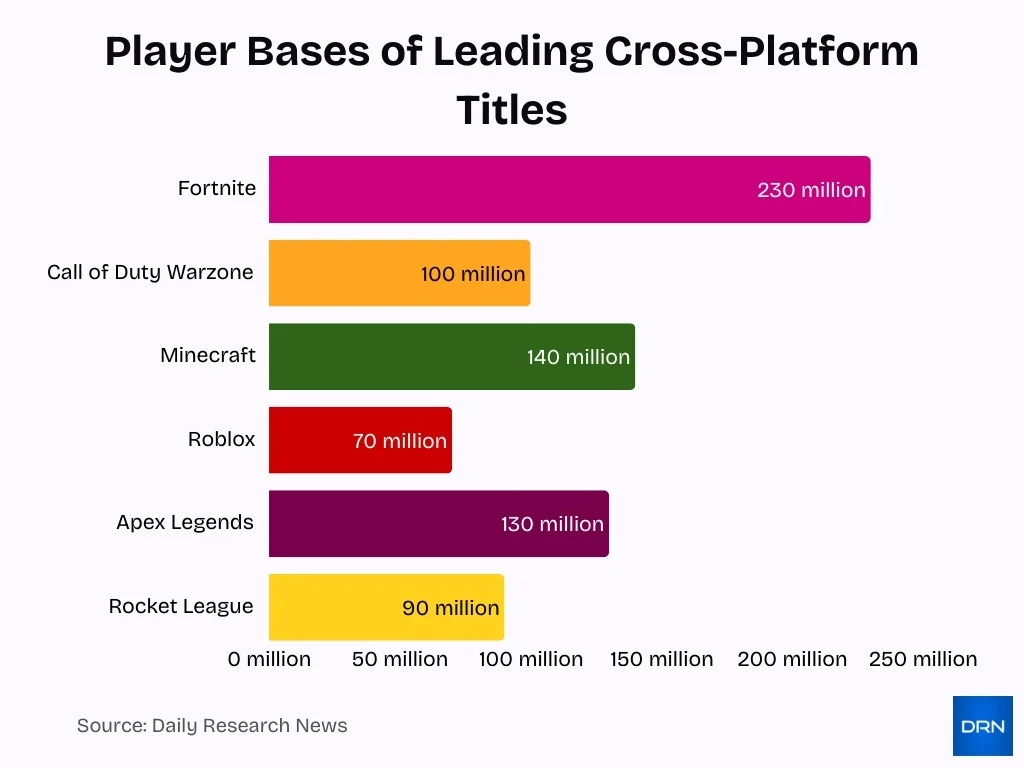
- Fortnite maintains over 230 million monthly active players, supporting full cross-play across mobile, PC, and consoles.
- Call of Duty Warzone surpassed 100 million players globally, with cross-platform matchmaking.
- Minecraft reports over 140 million monthly active users, offering cross-play across nearly all platforms.
- Roblox reached 70+ million daily active users in 2025, spanning mobile, console, and PC.
- Apex Legends crossed 130 million total players, with integrated cross-play since 2022.
- Rocket League has over 90 million registered players, with cross-platform support since 2019.
- Genshin Impact generated over $4 billion in lifetime revenue, leveraging mobile-console-PC cross-play.
- Cross-platform multiplayer titles account for 8 of the top 10 highest-grossing games globally in 2025.
- Games with cross-platform capabilities show 15% higher average concurrency rates during peak events.
Developer Adoption of Cross-Platform Development
- Over 85% of major game releases in 2025 included cross-platform functionality.
- Unity and Unreal Engine support cross-platform deployment to 20+ platforms, lowering technical barriers.
- Developers report 25% faster ROI when launching on multiple platforms simultaneously.
- Approximately 78% of studios consider cross-play important or very important to their roadmap.
- Indie developers adopting cross-platform tools increased by 15% between 2024 and 2025.
- Cross-platform backend service adoption grew 22% year over year, enabling synchronized matchmaking.
- Studios implementing cross-progression report 30% higher player retention.
- Cloud-native game development investments rose by 35% in 2025, tied to cross-platform ambitions.
- Cross-platform QA costs remain 10–15% higher, reflecting additional testing complexity.
Technical and Security Challenges in Cross-Platform Implementation
- 45% of developers cite matchmaking fairness as the top cross-platform technical challenge.
- Anti-cheat systems account for up to 20% of multiplayer development budgets.
- Cross-platform titles experience 30% more complex QA cycles due to device fragmentation.
- Security breaches in online games increased by 18% year over year in 2025.
- Latency disparities between mobile and console environments create up to 50 ms average performance differences, impacting competitive balance.
- Data synchronization errors affect approximately 12% of early cross-save implementations, requiring backend optimization.
- Compliance with regional data laws such as GDPR increases cross-platform operational costs by 10–20%.
- Server infrastructure spending for multiplayer games rose 28% in 2025, supporting cross-device ecosystems.
- Cross-platform moderation demands grew 15% year over year, reflecting expanded player pools.
Major Video Game Releases by Platform: Key Market Breakdown
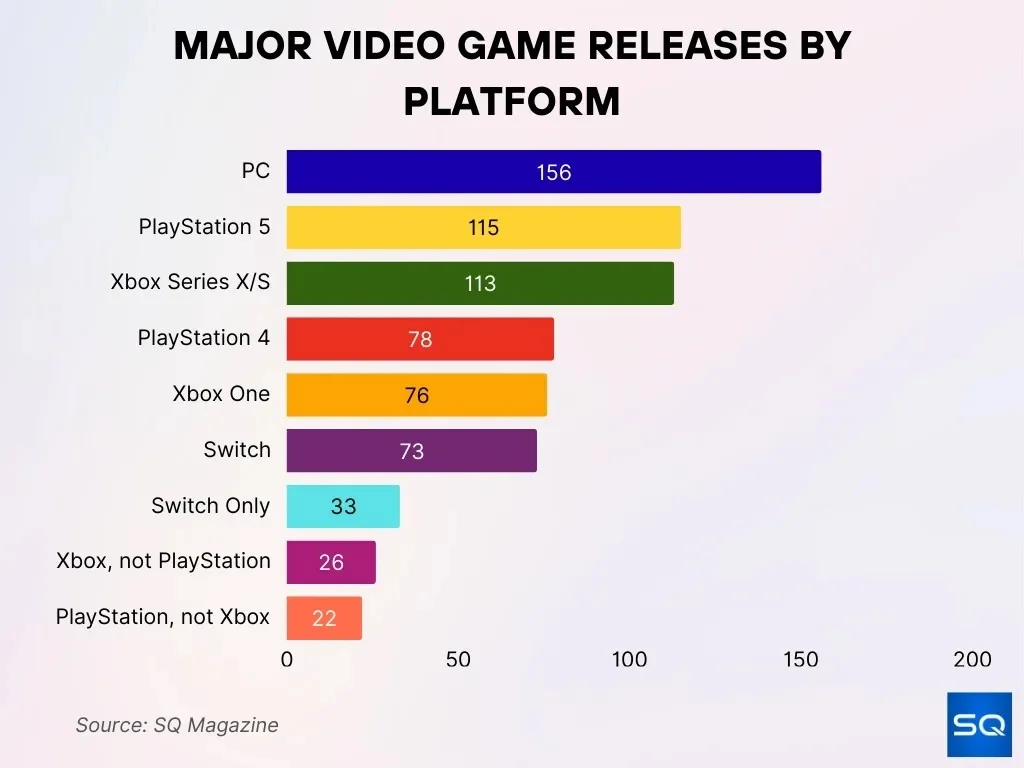
- PC leads all platforms with 156 major video game releases, showcasing its dominance in cross-platform and indie game development.
- PlayStation 5 follows with 115 titles, reflecting strong support from both AAA and exclusive developers.
- Xbox Series X/S has seen 113 major releases, nearly matching PS5 in next-gen game availability.
- PlayStation 4 continues to receive attention with 78 releases, highlighting ongoing support for previous-gen hardware.
- Xbox One holds steady with 76 releases, just slightly behind its PlayStation 4 counterpart.
- Nintendo Switch accounts for 73 major releases, balancing portability with mainstream appeal.
- Switch-only titles total 33, underscoring the platform’s unique library of exclusives.
- Xbox-exclusive (not PlayStation) games number 26, showing a smaller but focused set of titles.
- PlayStation-exclusive (not Xbox) games reach 22, emphasizing Sony’s continued strategy around platform-specific content.
Cloud Gaming and Emerging Technologies in Cross-Platform Play
- The global cloud gaming market surpassed $2.4 billion in 2024 and is projected to exceed $20 billion by 2030.
- Cloud gaming user penetration is expected to reach 5% of total gamers by 2026, up from under 3% in 2024.
- 5G adoption improved cloud gaming latency by up to 30%, enabling smoother cross-device play.
- Edge computing deployments increased by 25% in 2025, reducing server lag in multiplayer titles.
- AI-driven matchmaking tools improved engagement rates by 12% year over year.
- Cross-platform AR and VR experiments grew 18% in 2025, integrating immersive features.
- NVIDIA GeForce NOW surpassed 25 million registered users, supporting cross-platform cloud streaming.
- Hybrid download-and-stream models reduce device storage demands by 40%, supporting mobile-console transitions.
- Cloud-enabled cross-play reduces hardware entry barriers, expanding potential audience reach by up to 20%.
Future Trends and Forecasts for Cross-Platform Gaming Through 2030
- The global gaming market is projected to surpass $340 billion by 2028, with cross-platform integration driving growth.
- Cloud gaming is forecasted to grow at over 40% CAGR through 2030.
- By 2030, over 75% of multiplayer titles are expected to launch with built-in cross-play support.
- Cross-platform subscription bundles may account for 25% of total gaming revenue by 2030.
- Mobile-console integration is projected to grow by 20% annually over the next five years.
- AI-powered personalization may increase cross-platform retention by 15–20%.
- Global esports viewership is forecasted to exceed 640 million by 2027, reinforcing cross-device competition.
- Emerging markets in Southeast Asia and Africa are expected to contribute over 200 million new gamers by 2030.
- Cross-platform interoperability standards may reduce development costs by up to 12% over the decade.
Frequently Asked Questions (FAQs)
About 61% of gamers worldwide have adopted cross-play, indicating broad platform convergence.
Cross-platform gaming adoption reached 72% of global gamers playing on two or more platforms.
The global gaming market is projected to reach approximately $320–$340 billion by 2026.
The cloud gaming market is expected to grow at a 26.80% CAGR from 2026 to 2034.
Conclusion
Cross-platform gaming has moved from a feature to a foundational strategy in the modern gaming economy. With billions of active players, rising subscription models, and rapid cloud infrastructure growth, developers and publishers now design games for seamless device transitions by default. Moreover, monetization, esports, and long-term retention all benefit from unified ecosystems that break down hardware silos.
As cloud gaming, AI matchmaking, and subscription bundles expand through 2030, cross-platform integration will continue to shape how games are built, played, and monetized worldwide.