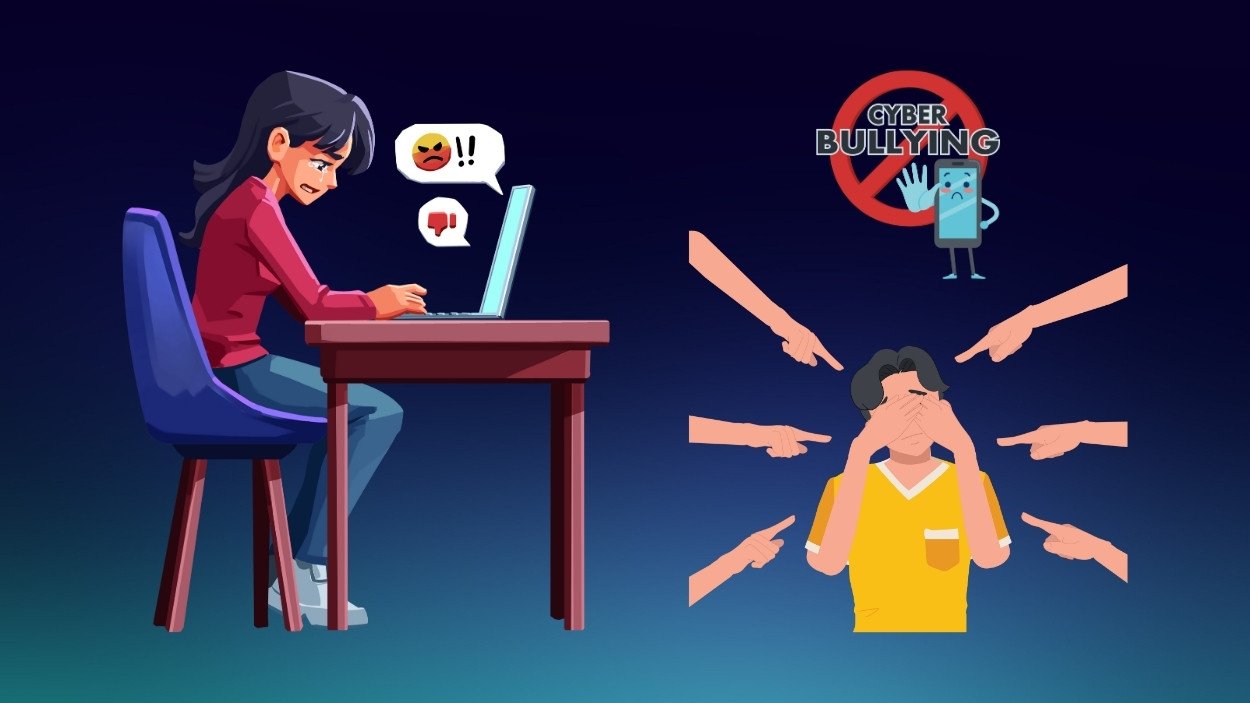


Cyberbullying is a growing concern in the digital age, and the latest data underscores just how pervasive it has become. Schools, social media platforms, and workplaces alike are grappling with the effects of online harassment, ranging from hurtful comments to exclusion, threats, and impersonation. For example, a U.S. high school might see a student withdraw from classes due to repeated online abuse, while a company may face reputational risk when an employee becomes a target on internal digital channels. Explore the full article to understand the latest statistics on cyberbullying and the trends shaping its future.
Editor’s Choice
- 58.2% of U.S. teens reported lifetime victimisation of cyberbullying in 2025, up from 33.6% in 2016.
- 32.7% of U.S. teens aged 13-17 said they experienced cyberbullying in the last 30 days.
- 21.6% of students aged 12-18 who reported being bullied said it also happened online or by text.
- 67% of U.S. teenagers said they experienced some form of cyberbullying on social media in 2025.
- 27.7% of female students ages 12-18 reported being bullied online or by text, compared with 14.1% of male students.
- 32.7% is the estimated 30-day victimisation rate in 2025, up from 16.5% in 2016.
- Nearly 1 in 5 U.S. high-schoolers stayed home from school because of cyberbullying.
Recent Developments
- A 2025 study found that 25% of adolescents experiencing cyberbullying showed PTSD symptoms comparable to adverse childhood experiences.
- AI tools detect cyberbullying but also generate risks, with deepfake attacks expected to increase by 40% in 2025.
- Reports indicate 34% higher online harassment rates for minority groups and women compared to others.
- TikTok users aged 13-17 report 44% exposure to online harassment, higher than Snapchat or Instagram users.
- Nearly 90% of teens experience cyberbullying, prompting schools to adopt trauma-informed methods.
- New laws in 2025 criminalize sharing non-consensual deepfake images with penalties up to 3 years in prison.
- Cyberbullying victimization is shifting from younger children to older adolescents, with social media access rising by 30% since 2023.
- 85% of youth on social media witness negative interactions, increasing risks of victimization and perpetration.
- Platforms report a surge in harmful content, including identity-based harassment, with abusive tweets rising by 20% globally since 2024.
- Trauma-informed schools report 30% improvements in student resilience and behavior after implementing supportive programs.
What is Cyberbullying?
- 32.7% of US teenagers reported being cyberbullied in 2023.
- 32.7% of students experienced cyberbullying in the last 30 days.
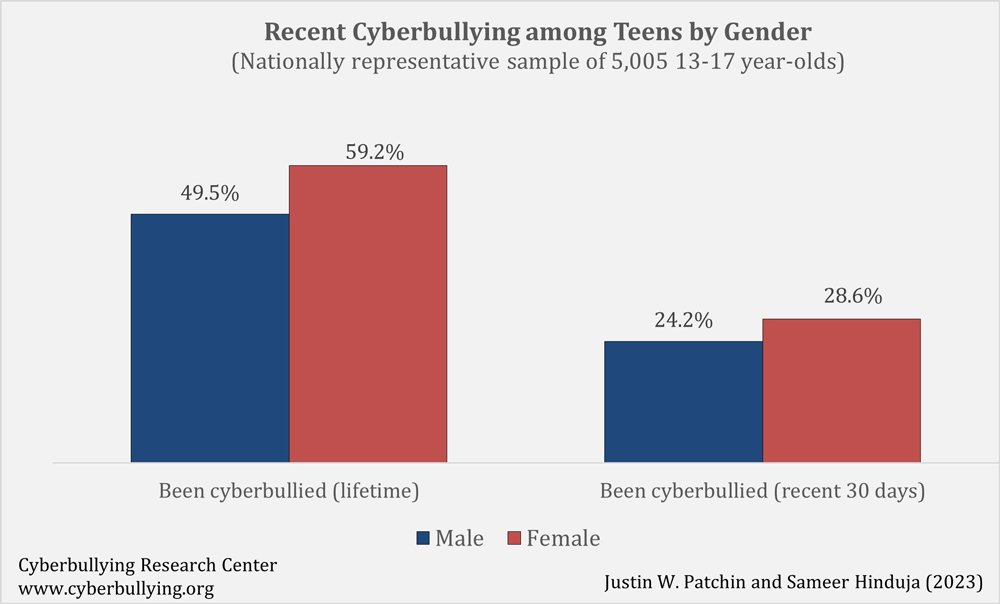
- 59.2% of girls and 49.5% of boys have experienced cyberbullying in their lifetime.
- 77.5% of cyberbullying victims faced mean or hurtful comments online.
- In 2023, 19.2% of teens missed school days due to cyberbullying.
- Cyberbullying prevalence among Indian adolescents is around 19% but ranges from 1.3% to 39.05%.
- 42% of young individuals reported cyberbullying on Instagram, with 37% on Facebook.
- About 30% of teens reported being cyberbullied at some point in their lives.
- Reporting rates have improved, with 66% of youth telling a parent about cyberbullying in 2025.
- Victims of cyberbullying are up to 135% more likely to contemplate or plan suicide.
General Cyberbullying Statistics
- Lifetime cyberbullying victimisation rose from 33.6% in 2016 to 58.2% in 2025 among U.S. teens.
- The 30-day victimisation rate reached 32.7% in 2025.
- 59% of U.S. teens reported being bullied or harassed online.
- 21.6% of students aged 12-18 who reported being bullied said it occurred online or by text.
- Teens in low-income households (< $75 000) experienced twice the cyberbullying rate of higher-income teens.
- 32.7% of teens aged 13-17 reported cyberbullying in the past 30 days.
- 74% of U.S. teens felt social-media sites were doing only a “fair” or “poor” job addressing cyberbullying.
- 46% of U.S. teens said they experienced some form of cyberbullying in their lives.
- 59% of U.S. teens in 2025 experienced some form of cyberbullying on social media.
- Among younger children (“tweens”), about 20.9% had been cyberbullied, had bullied someone, or had witnessed cyberbullying.

Teen Cyberbullying by Gender
- 59.2% of females indicated that they had been cyberbullied at some point in their lives, maintaining the same meaning while rephrasing the original statement.
- 49.5% of males reported experiencing cyberbullying at some time in their lives, expressed with different wording but unchanged figures.
- The data demonstrates that girls face lifetime cyberbullying at a significantly higher rate than boys, preserving the original idea and emphasis.
- 28.6% of females encountered cyberbullying during the past 30 days, restated with identical numerical details.
- 24.2% of males reported cyberbullying within the previous month, rewritten without altering the statistics.
Cyberbullying by Age Group
- Among teens aged 13-17, 32.7% experienced cyberbullying in the past 30 days.
- Among students ages 12-18, 21.6% of those bullied said it happened online or by text.
- About 15% of tweens reported having been cyberbullied.
- Middle schools report higher cyberbullying rates than elementary or high schools.
- A U.S. survey found that as age increased from 10 to 18, the likelihood of cyberbullying rose incrementally.
- Among teens, 59.2% of girls reported lifetime cyberbullying vs 49.5% of boys.
- In 2023, 19.2% of students missed school due to cyberbullying, up from 10.3% in 2016.
- Younger adolescents reported higher trauma scores from cyberbullying than older teens.
Cyberbullying in Schools
- About 19% of students ages 12–18 reported being bullied at school.
- 21.6% of these students said the bullying occurred online or by text.
- Around 10% of U.S. students stayed home at least once a year because of cyberbullying.
- An estimated 2.75 million U.S. students skipped school due to cyberbullying.
- 15.8% reported cyberbullying and 25.9% reported school bullying in 12 months.
- 59.7% of cyberbullying victims were also school-bullying victims.
- Cyberbullying occurred weekly in 37% of middle schools, 25% of high schools, and 6% of elementary schools.
- One in three young people globally experienced online bullying, and one in five skipped school because of it.
- Up to 20% of cyberbullying victims considered leaving school.
Top Reasons Teens Are Being Cyberbullied
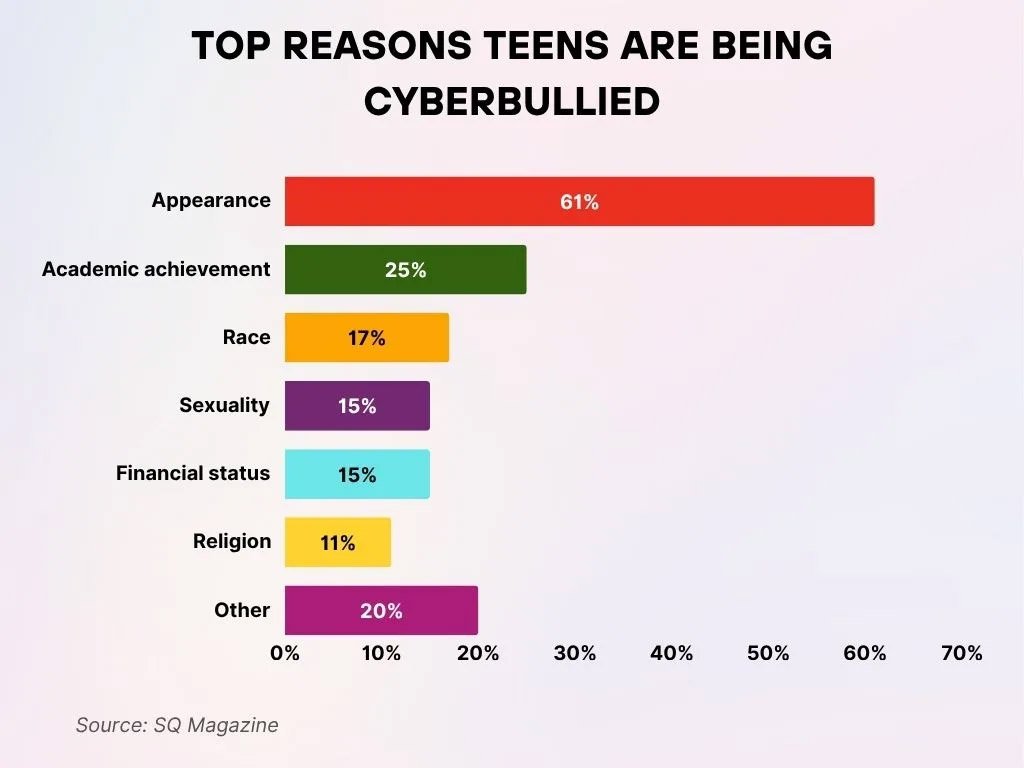
- 61% of teens indicate they were cyberbullied because of their appearance, marking it as the most frequent cause.
- 25% explained that their academic performance was the factor that led to them being targeted online.
- 17% say they were bullied based on their race, underscoring the ongoing presence of racial prejudice in digital environments.
- Both sexuality and financial status were identified by 15% of participants as motives behind the bullying they experienced.
- 11% report being cyberbullied due to their religion, revealing that intolerance continues to surface across online platforms.
- 20% mention various other reasons, emphasizing that cyberbullying can arise from a broad array of personal traits or situations.
Global Cyberbullying Statistics
- About 33% of young people globally reported being victims of cyberbullying.
- One in six school-aged children in Europe experienced cyberbullying.
- 65% of global respondents listed cyberbullying as their top online worry.
- Parental concern about cyberbullying reached 40–49% in many developed countries.
- Lifetime cyberbullying rates reached 70% in China, 58% in Singapore, and 53% in India in some studies.
- 93% of global cyberbullying victims reported negative mental-health effects.
- 39% of UK children ages 8–17 experienced bullying, with 84% reporting it happened via a device.
- A quarter of children and teens globally had cyberbullied someone within five years.
- Half of students ages 13–15 worldwide experience peer violence, much of it digitally linked.
Most Common Types of Cyberbullying
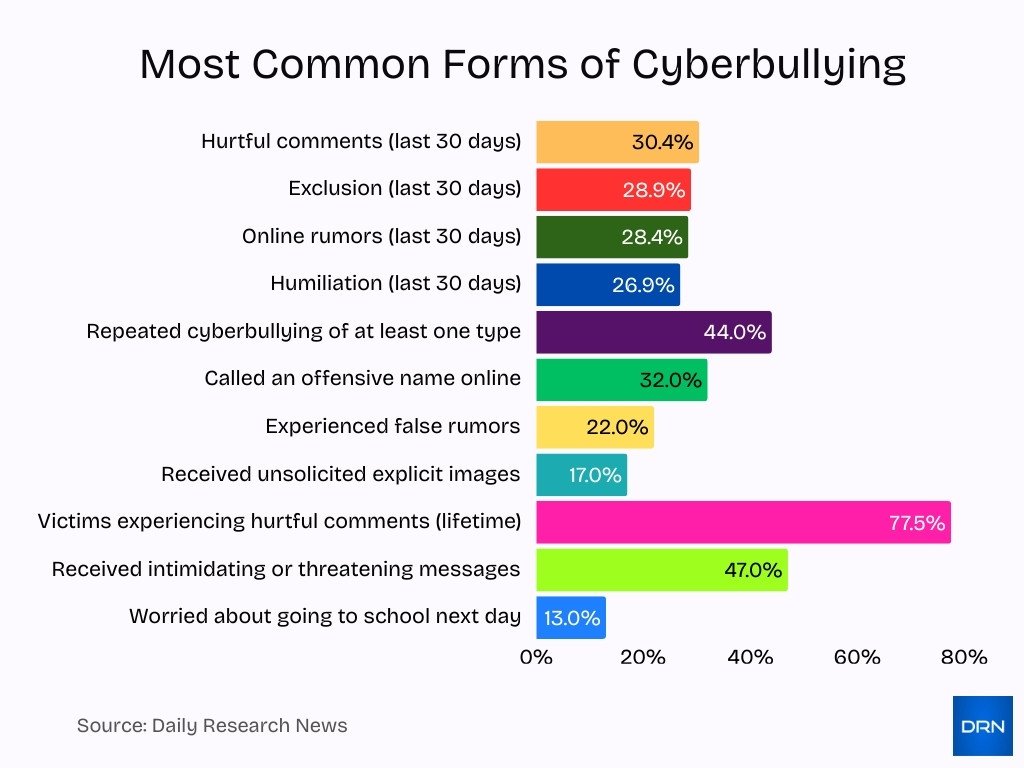
- 30.4% experienced hurtful comments, 28.9% exclusion, 28.4% online rumors, and 26.9% humiliation in the last 30 days.
- 44% reported repeated cyberbullying of at least one type.
- 32% had been called an offensive name online.
- 22% experienced false rumors, and 17% received unsolicited explicit images.
- 77.5% of victims experienced hurtful comments online.
- 47% had received intimidating or threatening messages.
- Common types include harassment, cyberstalking, impersonation, doxxing, and non-consensual image sharing.
- 13% said cyberbullying made them worried about going to school the next day.
Cyberbullying Rates Across Social Media Platforms
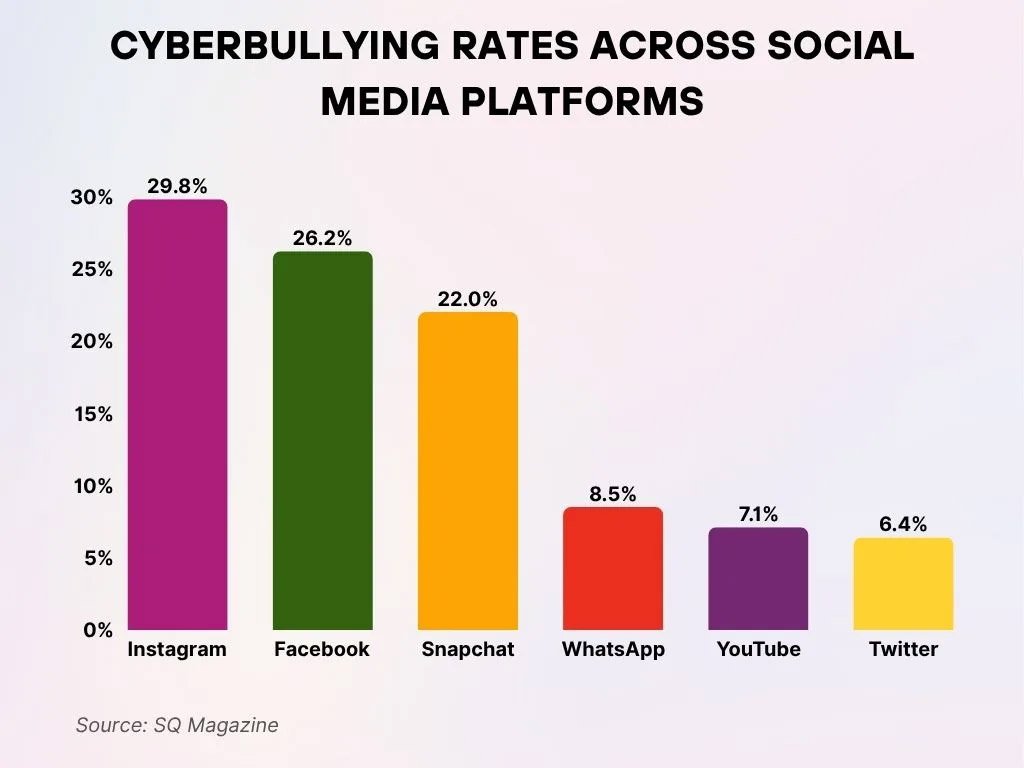
- Instagram emerges as the leading platform for reported cyberbullying, with 29.8% of all incidents taking place there.
- Facebook comes in next, representing 26.2% of cyberbullying cases among users of social media.
- Snapchat holds the third position, with 22% of its users encountering bullying behaviors on the platform.
- WhatsApp records 8.5% of cyberbullying reports, indicating that concerns persist even within messaging-centric apps.
- YouTube represents 7.1% of cyberbullying activity, despite its primary focus on content consumption.
- Twitter shows the smallest proportion in this dataset, with 6.4% of its users reporting experiences of bullying.
Impacts of Cyberbullying
- Students facing both school bullying and cyberbullying show higher psychological distress.
- Cyberbullying victims show significantly higher rates of depression, anxiety, and stress.
- 93% of victims report at least one negative mental-health outcome.
- 13% feared going to school, and 20% skipped class due to cyberbullying.
- 26% felt their school performance suffered, and up to 20% considered leaving school.
- Victims face higher rates of anxiety, depression, suicidal ideation, and lower well-being.
- 5.4 million U.S. students skip school annually due to bullying.
- 74% of teens believe platforms are doing a poor job of addressing harassment.
Mental Health Effects of Cyberbullying
- 93% of cyberbullying victims report negative mental-health effects.
- Cyberbullying victimisation is linked with greater depressive and somatic symptoms.
- Female depression prevalence reached 41.5% among victims.
- 77% of high school students who use social media heavily showed a higher risk of electronic bullying and sadness.
- 41% developed social anxiety, 37% experienced depression, and 20% skipped class.
- Victims are at increased risk of insomnia, PTSD symptoms, and poor sleep.
- Emotional regulation issues and low support increase vulnerability.
- Being cyberbullied increases the risk of self-harm and mood disorders.
Cyberbullying and Suicide Rates
- 17.1% of adolescents show suicidal behavior, with 11.9% having suicidal thoughts linked to cyberbullying victimization.
- Cyberbullied adolescents have more than 4 times higher odds of suicidal thoughts and attempts than those not cyberbullied.
- Victimization by bullying globally is reported in 35.3% of adolescents, increasing suicidal ideation.
- Anti-bullying laws correlate with 13–16% reductions in suicide rates among targeted youth groups.
- About 20% of cyberbullied teens report self-harm thoughts or feeling unsafe.
- Frequent cyberbullying increases suicide attempt odds by 3 to 5 times compared to non-victims.
- Combined online and offline bullying poses the highest suicide risk in adolescents.
- Suicide attempts occur in 8.4% of adolescents with cyberbullying involvement.
- Girls and marginalized groups see a 9% drop in suicidal ideation with anti-bullying laws.
- Cyberbullying increases the risk of suicidal behavior independent of in-person bullying effects.
Risk Factors for Cyberbullying
- 24.4% of students reported cyberbullying victimization in the past six months.
- Adolescents with late sleep patterns showed significantly increased cyberbullying risk.
- Cyberbullying victimization is 1.7 times higher among frequent social media users.
- Youth identifying as LGBTQ+ face cyberbullying rates 2 to 3 times higher than their peers.
- Spending over 3 hours daily online raises cyberbullying incidence by 41%.
- Poor academic performance correlates with a 35% higher likelihood of cybervictimization.
- Bystander-to-victim transitions increase vulnerability by up to 30%.
- Lack of parental supervision doubles the risk of being cyberbullied.
- Emotion regulation problems elevate cyberbullying risk by around 28%.
- Over 77% of high school students use social media frequently, linking to higher bullying and suicide risk.
Cyberbullying Among LGBT Youth
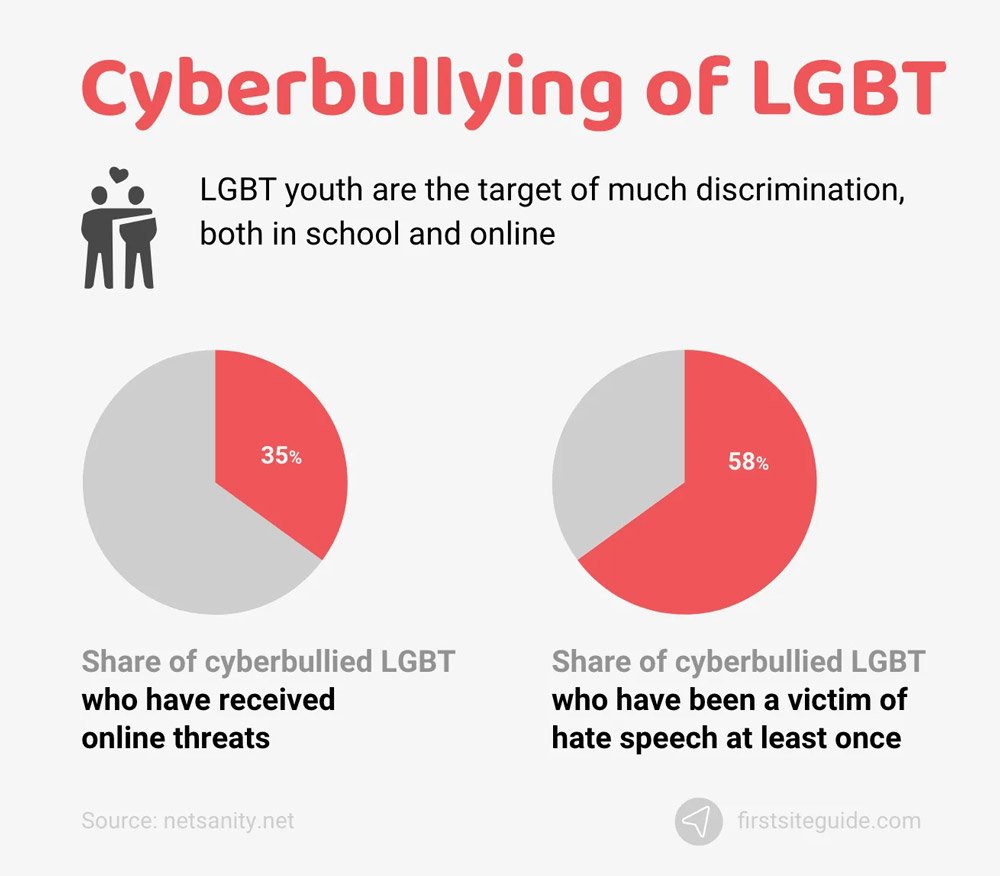
- 35% of cyberbullied LGBT youth have received online threats, emphasizing the seriousness and persistence of digital harassment.
- 58% of cyberbullied LGBT individuals have encountered hate speech at least once, demonstrating how widespread such hostile interactions are.
- The data illustrates how discrimination in online spaces mirrors real-world targeting, especially toward vulnerable groups such as LGBT teens.
Protective Factors Against Cyberbullying
- Higher family support lowers cyberbullying risk by approximately 8%.
- Students with positive peer relationships are significantly less likely to be cyberbullied.
- Schools with digital citizenship programs show up to a 28% reduction in cyberbullying incidents.
- Active parental awareness and involvement reduce cyberbullying victimization rates by about 10-15%.
- Access to mental health support can reduce long-term cyberbullying harm by around 20%.
- Reduced screen time and more offline engagement correlate with lower cyberbullying exposure by 15%.
- Effective platform moderation tools catch up to 54% of abusive content before it reaches victims.
- Victims are 2.5 times more likely to feel supported when friends intervene online.
- Schools with peer digital support programs experience 28% fewer unreported bullying cases.
- Teens who report cyberbullying incidents increase intervention effectiveness, but only 27% say platforms take meaningful action.
Reporting and Awareness Statistics
- Only 13% of teens said cyberbullying made them fear school, yet 20% skipped class.
- 53% of teens say cyberbullying is a major issue.
- 21% of parents report their children have experienced cyberbullying.
- Only about 40% of students feel comfortable reporting cyberbullying.
- Awareness events are increasing public engagement.
- Digital-safety training boosts awareness of reporting channels.
- Victims often feel unsafe reporting, despite widespread bullying.
Parental and Teacher Involvement
- Parental monitoring is one of the strongest protective factors.
- Teacher digital-safety training can reduce incidents by 10–12%.
- 60% of parents feel confident managing cyberbullying, though few know policies well.
- Female students report more bullying but tell adults less frequently.
- Peer-mentor and teacher-led programs reduce bullying by about 8%.
- Weekly parent-child conversations reduce bullying odds by about 20%.
- Clear school reporting protocols increase reports by 25%.
Legal and Policy Responses to Cyberbullying
- Anti-bullying laws correlate with 13–16% reductions in suicide rates.
- Nearly 80% of U.S. states require online harassment policies in schools.
- Nations are adopting digital-safety strategies as cyberbullying rises.
- Federal guidance emphasises platform accountability and transparency.
- Lawsuits against social-media firms are increasing.
- Fewer than 30% of victims say platform reporting tools help.
- Legal definitions often lag behind actual digital experiences.
Frequently Asked Questions (FAQs)
About 32.7% of U.S. teens aged 13–17 reported experiencing cyberbullying in the last 30 days.
The lifetime victimisation rate rose to approximately 58.2% in 2025.
Among surveyed platforms, kids on YouTube reported the highest rate at roughly 79%.
Approximately 21.6% of those students reported that the bullying also happened online or by text.
Conclusion
Cyberbullying remains a major concern across age groups, genders, platforms, and nations. The data show not just high prevalence but also serious consequences for mental health, school participation, and youth development. While risk factors help highlight where interventions are needed, protective factors such as parental monitoring, educator training, effective reporting systems, and supportive peer networks offer hope for mitigation.
Legal and policy responses are evolving, but meaningful change requires coordination among families, schools, platforms, and governments. Read on to dive deeper into each of these areas and explore targeted strategies for prevention and response.