

Gen Z now shapes the digital social sphere more than any previous generation. Roughly 95% of Gen Z are active social media users, making social platforms central to how they connect, learn, shop, and form identities. From media consumption to brand interactions, their habits are signaling what’s next in digital communication and engagement.
In business and education, Gen Z’s use of social content influences marketing strategies, product launches, and social learning paths. Brands track Gen Z trends to tailor ads, while institutions use social platforms to spread information and build communities. Explore the data below to understand where this generation spends its attention and why it matters.
Editor’s Choice
- 95% of Gen Z are active social media users as of 2025.
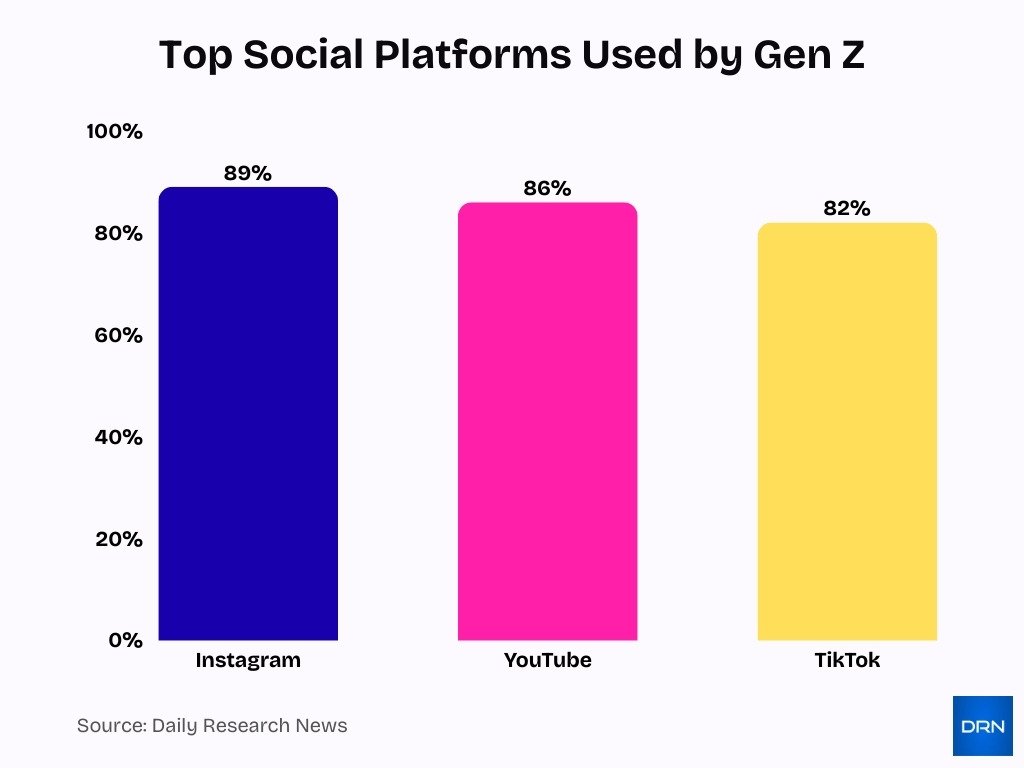
- Instagram leads with 89% Gen Z presence, closely followed by YouTube and TikTok.
- Gen Z members spend an average of 4–5 hours daily on social media in early 2025.
- Over 81% use social platforms daily, with more than half spending 3+ hours.
- YouTube usage among Gen Z tops 78–88%, depending on the survey.
- TikTok is the #1 product discovery tool for Gen Z shoppers.
- Gen Z now prefers social media over search engines for finding information.
Recent Developments
- A new Virginia law (effective 2026) limits under‑16 social media use to 1 hour daily by default.
- Reddit has surged in popularity among Gen Z in the UK, overtaking TikTok as a top-visited platform.
- Pinterest reports 50% of its 600M users are Gen Z, using it for identity and aesthetic exploration.
- Pinterest’s strategic pivot has led to it becoming the fastest‑growing Gen Z hub.
- TikTok continues dominating trends and discovery, though its growth varies by region.
- Social media platforms increasingly integrate shopping features to retain Gen Z attention.
- Gen Z’s preference for short‑form video formats continues to reshape platform content.
Most Used Social Media Platforms
- Instagram usage among Gen Z: ~89%.
- YouTube usage is around 84–88% for Gen Z.
- TikTok usage is approximately 82%.
- Snapchat remains popular, but is lower than the top three.
- TikTok reportedly has 150M+ Gen Z users in the U.S.
- Instagram and TikTok lead in engagement features like stories and reels.
- YouTube’s dominance includes long‑form content beyond short videos.
- Smaller, niche platforms (like Reddit, Discord) see growth among community‑oriented users.
Gen Z Social Media Overview
- 95% of Gen Z are active on social media as of 2025.
- Gen Z makes up roughly 25% of the U.S. social media audience.
- Gen Z uses social media for entertainment, news, shopping, and connection.
- Over 46% prefer social platforms over search engines for finding info.
- 78–88% use YouTube, depending on the report.
- Gen Z’s platform loyalty is fluid; they switch apps based on trends.
- Mobile devices account for 92% of social usage across all ages.
- Gen Z engages with brands, creators, and communities at higher rates than older cohorts.

Platform Preferences and Favorites
- Around 91% of Gen Z social media users are on Instagram, which they rank among their top platforms for daily social interaction and content discovery.
- Roughly 71–77% of Gen Z use TikTok to discover new products and news, cementing it as their leading hub for trending short‑form content.
- An estimated 93–97% of Gen Z report using YouTube, which remains their most used platform for long‑form educational and entertainment videos.
- About 35–40% of Gen Z use Snapchat primarily for 1:1 and group messaging, favoring it for private, short‑lived interactions.
- Gen Z on Pinterest saves 2.5x more Pins and create 66% more boards than other generations, reflecting its role as an identity and inspiration platform.
- Reddit had about 18 million Gen Z users in 2024, with adoption projected to reach 40.1% by 2028 as niche discussion communities grow.
- Around 80% of Gen Z watch short‑form videos (TikTok/Reels/Shorts) at least weekly, highlighting a strong preference for content‑plus‑community feeds over static profiles.
- Short‑form video generates 2.5x more engagement than long‑form content, and 73% of consumers prefer shorter videos, helping short‑form apps outperform traditional news feeds.
- Over 70% of Gen Z watch online videos for more than 3 hours daily, underscoring why video‑centric platforms dominate their attention.
Gen Z Daily Social Media Time Consumption Trends
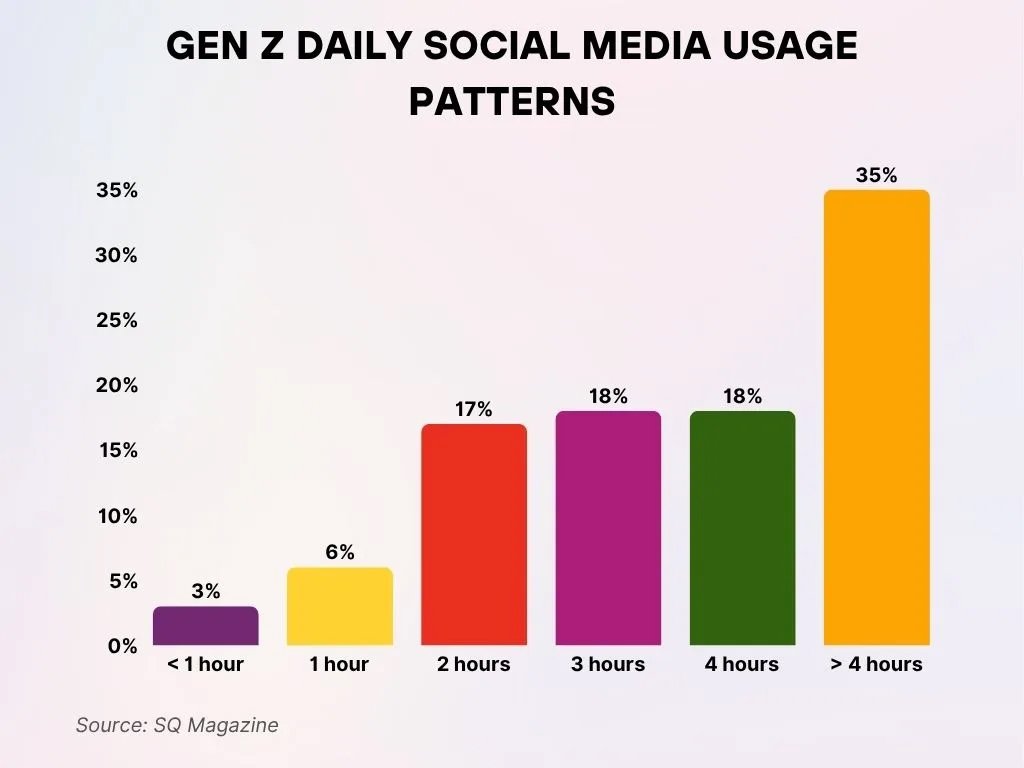
- Just 3% of Gen Z users spend less than 1 hour per day on social media, indicating minimal daily engagement.
- Around 6% of Gen Z users restrict their daily social media usage to exactly 1 hour.
- A significant 17% of Gen Z individuals spend approximately 2 hours per day on social media platforms.
- Daily usage of 3 hours and 4 hours is evenly split, with 18% of Gen Z reporting each time duration.
- The largest segment, accounting for 35%, spends more than 4 hours per day on social media, underscoring heavy usage patterns among Gen Z.
Content Consumption Habits
- 81% of Gen Z use social media daily, showing strong daily engagement with content.
- Over half (50%+) spend 3+ hours daily online, with much of that time on social platforms.
- Short-form video content (e.g., TikTok, Reels, Shorts) is favored by 67% of Gen Z, especially for humor and trends.
- Nearly 43% get news daily from social media platforms.
- Gen Z often prefers social media over search engines for information discovery, with 46% choosing platforms first.
- Entertainment remains key, 68% use social media mainly for entertainment and scrolling.
- Review videos influence purchases for about 67% of Gen Z, showing content’s role in decision‑making.
- Gen Z consumes content that blends fun, learning, and social interaction, illustrating diverse usage.
Content Creation and Posting Behavior
- Around 52% of Gen Z say they prefer posting less often but having deeper conversations in comments or DMs rather than frequent broadcasting to everyone.
- Messaging‑first apps like WhatsApp and Discord now capture about 60%+ of Gen Z’s daily social time, outpacing traditional public‑feed platforms.
- Only about 5% of Gen Z remain completely passive on social platforms, while 95% regularly like, comment, or send DMs when scrolling.
- Roughly 70% of Gen Z say they post more stories or short video clips than permanent feed posts on major platforms like Instagram and TikTok.
- Nearly 64% of Gen Z report valuing authentic, in‑the‑moment content over highly polished feeds, driving more casual real‑time posting.
- Platforms whose algorithms prioritize engagement and watch time over vanity metrics like follower count see a 20–30% higher posting rate among Gen Z users.
- About 58% of Gen Z creators say interactive tools such as polls, Q&A, and duet/remix features make them post more frequently.
- On TikTok and YouTube, over 75% of Gen Z content consumed is video, with text‑only or static image posts making up well under 25% of their feed.
Gen Z Social Media Following Preferences and Trends
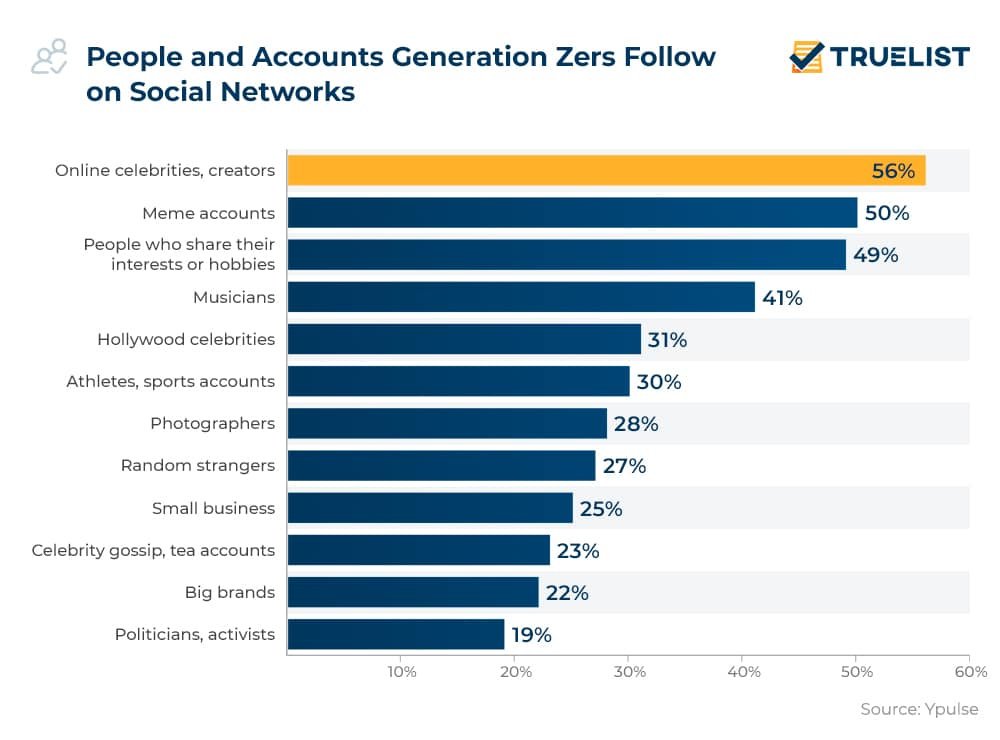
- Online celebrities and creators dominate Gen Z followings, with 56% of users choosing digital-first influencers over traditional fame.
- Meme accounts are followed by 50%, underscoring Gen Z’s strong preference for humor, relatability, and viral content.
- People sharing similar interests or hobbies attract 49%, highlighting Gen Z’s focus on community-driven and niche content.
- Musicians engage 41% of Gen Z users, reflecting the continued influence of music culture on social platforms.
- Hollywood celebrities are followed by 31%, showing lower appeal compared to online-native personalities.
- Athletes and sports accounts capture 30%, indicating steady but not dominant interest in sports-related content.
- Photographers are followed by 28%, signaling appreciation for visual storytelling and creative expression.
- Random strangers attract 27%, pointing to Gen Z’s openness to organic discovery and authentic voices.
- Small businesses are followed by 25%, suggesting rising support for independent and local brands on social media.
- Celebrity gossip and tea accounts engage 23%, reflecting curiosity-driven and entertainment-focused consumption.
- Big brands are followed by only 22%, indicating low engagement with traditional corporate accounts.
- Politicians and activists rank lowest at 19%, showing limited interest in political or advocacy content among Gen Z.
Engagement Behavior and Interactions
- 67% of Gen Z engage with short‑form videos like TikTok and Instagram Reels.
- The majority actively like, comment, share, or message, not just scroll.
- Gen Z prefers content that invites interaction (polls, challenges).
- Platforms that enable community and dialogue (e.g., Reddit) are gaining traction.
- Visual and interactive posts outperform static content in engagement metrics.
- DMs and story replies are core engagement tools for Gen Z.
- Engagement spikes during peak entertainment hours (evenings and weekends).
- Gen Z responds more to peer and influencer content than traditional ads in apps.
Messaging and Private Communication
- Around 72% of Gen Z say group chats are their main way to coordinate and talk with friends daily, compared with about 28% who rely more on public posts.
- Messaging apps now dominate time spent, with Gen Z spending more minutes in WhatsApp, Discord, and iMessage than on traditional social feeds on a typical day.
- Snapchat serves as a hybrid platform for 69% of Gen Z, who use it primarily for private chat and stories rather than public posting.
- WhatsApp’s Gen Z usage grew 18% year‑over‑year, reflecting a strong shift toward privacy‑oriented and encrypted messaging for everyday conversations.
- About 61% of Gen Z explicitly prefer encrypted messaging platforms, showing how much private, secure chats matter to their communication habits.
- Group chats are nearly universal, with 72% of Gen Z participating in at least two active groups used for planning, coordination, and social updates.
- Ephemeral formats like Stories and disappearing chats account for a large share of Snapchat’s usage, helping drive its 52 minutes per day average among Gen Z.
- In many regions, especially India, Gen Z leans heavily on WhatsApp and similar messengers, with short‑form video usage on these platforms up 22% year‑over‑year.
- Voice messaging in chat apps is up 37% among Gen Z, further replacing traditional phone calls for close peer communication.
- Messaging and communication activities account for about 19% of Gen Z’s social media use purpose, second only to entertainment and scrolling at 68%, highlighting DMs as a core behavior.
Social Media Usage by Purpose
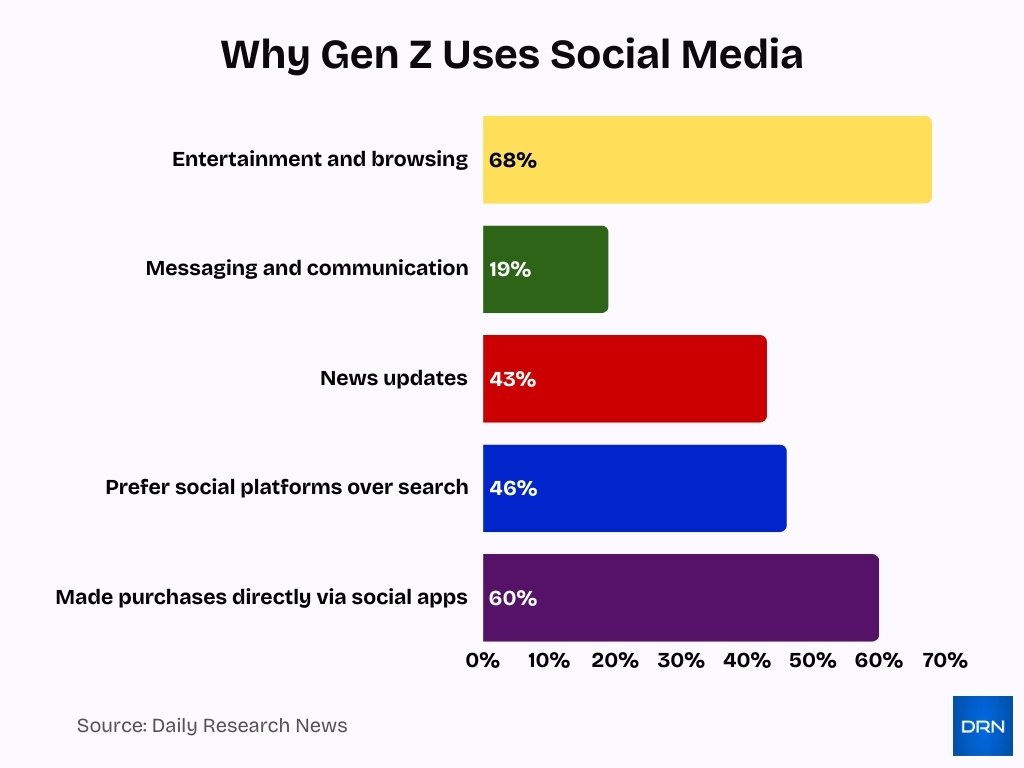
- 68% use social media mainly for entertainment and browsing content.
- About 19% use it primarily for messaging and communication.
- Nearly 43% turn to social platforms for news updates.
- Roughly 46% prefer social platforms over search engines to find information.
- Gen Z increasingly uses social media for meal planning and lifestyle inspiration.
- 60% say they’ve made purchases directly via social media platforms.
- Product discovery on social media continues to outpace traditional search habits.
- Interactive features like polls and guides help Gen Z find content tailored to their interests.
News Consumption Through Social Media
- In 2025, 42.9% of Gen Z reported getting their news daily from social media platforms, highlighting social media as a core news channel.
- Among Gen Z, 83% are most likely to get news from online platforms, with 71% specifically citing social media as a news source.
- One study found 72% of Gen Z encounter news on social media, with a majority seeing it daily, making feeds their first point of exposure.
- TikTok is the top discovery platform for Gen Z, with 63% using it specifically for news discovery alongside other information.
- Platforms like Instagram and TikTok are the main news channels for Gen Z, with brands noting these two as their most used for staying up to date on news.
- Gen Z is notably less exposed to traditional news outlets and instead prefers getting news from social media sites such as Instagram.
- Vertical video is considered a non‑negotiable format for Gen Z news, with hooks in the first 3 seconds crucial to keeping their attention.
- About 46% of Gen Z now prefer social platforms like TikTok and Instagram over search engines for finding information, including news.
- Social media’s dominance means social feeds often reach Gen Z with news faster than TV or print, reshaping breaking-news consumption patterns.
- Heavy news use on social shapes attitudes, with Gen Z described as a skeptical, socially conscious generation whose political views are influenced by online content.
Social Commerce Adoption Across Different Generations
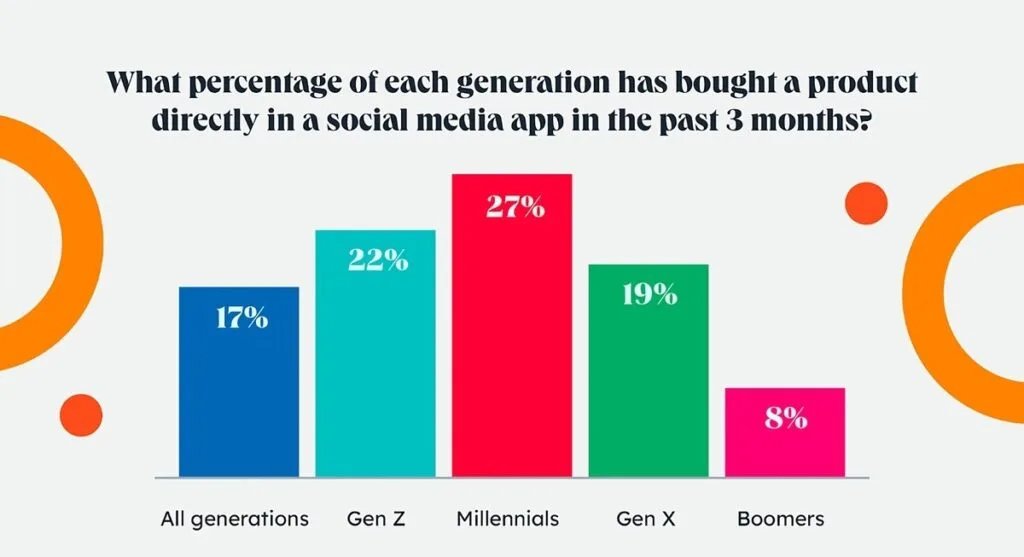
- 27% of Millennials have completed purchases directly within social media apps, making them the most active generation in social commerce adoption.
- 22% of Gen Z consumers have also purchased products on social platforms, demonstrating strong and growing adoption.
- 19% of Gen X shoppers have made purchases through social media apps, indicating moderate engagement with social commerce.
- Only 8% of Boomers have used social media applications for shopping, highlighting limited digital commerce participation.
- When considering all generations together, the average social media shopping rate stands at 17%, reflecting overall adoption levels.
Influencers and Creator Impact
- 76% of Gen Z follow at least one influencer on social platforms.
- 45% of Gen Z follow more than 10 influencers.
- 52% trust social media influencers for product or brand advice more than traditional ads.
- 56% are more likely to try a product recommended by an influencer.
- Research shows 82% of Gen Z learn about new products via influencer marketing.
- Micro‑influencers (10K–100K followers) are especially effective, accounting for the largest share of influence.
- Live shopping events hosted by creators boost impulse purchases.
- YouTube creators rank high in trust, with many Gen Z users reporting a connection to long‑form influencers.
- TikTok influencers now drive a large share of product discovery, surpassing Instagram in some categories.
Brand Interactions and Customer Care
- About 73% of Gen Z follow at least one brand on social media.
- Gen Z users are 59% more likely to follow brand accounts compared with older groups.
- 69% will visit a store based on a retailer’s social posts.
- 80% discover new retailers through social media.
- Gen Z expects responsive customer care, with many preferring support via social DM over email.
- Interactive brand content (polls, live Q&A) boosts perceived responsiveness and trust.
- User‑generated ads outperform traditional advertising.
- Memes and culturally relevant ads lead to higher organic reach with this cohort.
- Gen Z values transparency in brand interactions, especially around pricing and policies.
Social Media and Mental Health
- Approximately 87% of Gen Z say social media negatively affects their mental health.
- 82% of Gen Z report that social media negatively impacts their body image.
- A one-week social media detox reduces depression symptoms by 24.8% in young adults.
- 57% of Gen Z took a social media detox in the past year.
- Over 3 hours daily on social media doubles the risk of mental health issues.
- 41% of Gen Z users feel anxious, sad, or depressed due to social media.
- Micro-influencers in wellness achieve 7-10% engagement rates on coping content.
- #Mentalhealthmatters hashtag reached 14.9 million posts on TikTok in 2025.
Key Website Experience Factors That Matter Most to Gen Z
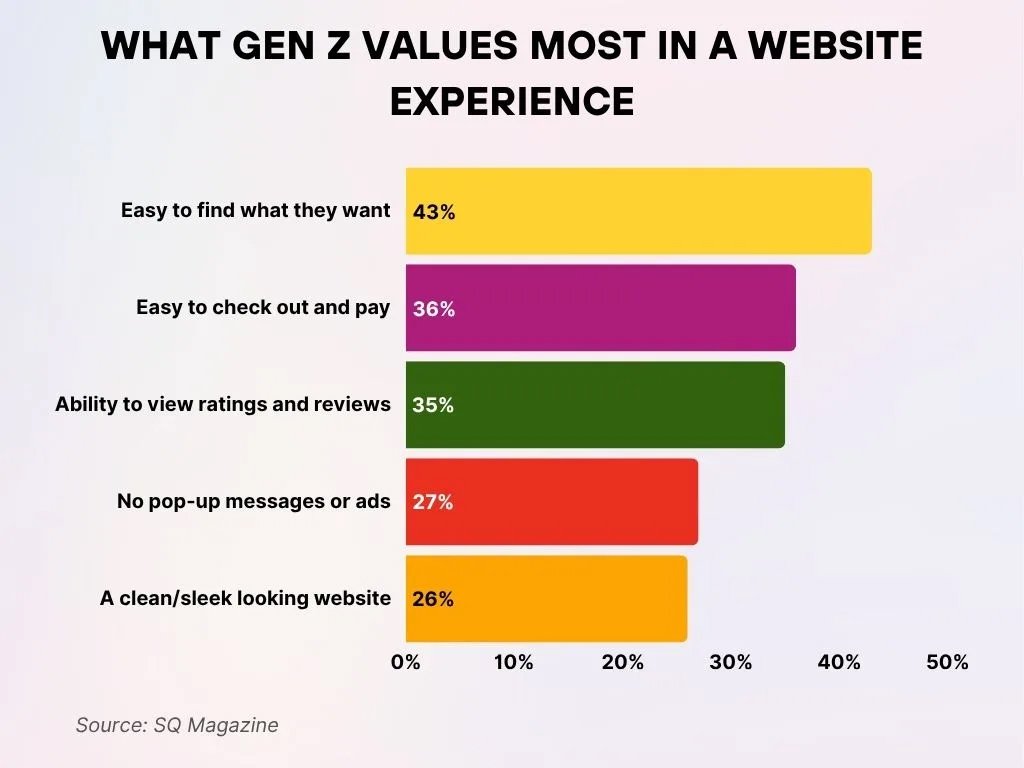
- 43% of Gen Z state that the most important factor is easy website navigation that helps them find what they want quickly and without friction.
- 36% of Gen Z users prioritize a smooth checkout and payment process, strongly emphasizing convenience and efficiency during transactions.
- 35% of Gen Z value access to ratings and reviews, clearly reflecting their need for trust, credibility, and social proof before making decisions.
- 27% of Gen Z prefer websites with no pop-up messages or ads, highlighting a strong dislike for distractions while browsing.
- 26% of Gen Z consumers appreciate a clean and sleek website design, underlining the importance of visual appeal and simplicity in the overall experience.
Digital Wellbeing and Detoxing
- 63% of Gen Z planned a social media break in early surveys.
- Heavy users (35%) spend 4+ hours daily on social platforms.
- Gen Z increasingly seeks tools that limit screen time and notifications.
- Well‑being content that supports healthy usage patterns is gaining traction.
- Younger teens especially favor platforms that offer built‑in break reminders and usage insights.
- Some users adopt weekly “digital Sabbaths” to reduce stress and improve focus.
- Digital wellbeing communities on platforms like Reddit support peer accountability.
- Gen Z values platforms that balance connection with mindful usage features.
Privacy, Safety, and Trust
- Roughly 44% of Gen Z feel comfortable sharing personal data only when they trust a brand’s security measures.
- 81% are concerned about data privacy on social platforms.
- Only 14% fully trust platforms with personal information.
- Platforms with clear privacy controls (e.g., Discord, Reddit) are perceived as safer.
- End‑to‑end encryption is a priority for many in private messaging.
- 70% read privacy policies before accepting terms.
- TikTok ranks lowest in trust among major platforms, with 38% expressing concerns over data practices.
- 54% use ad blockers or privacy tools, highlighting proactive safety behavior.
Future Trends in Gen Z Social Media Use
- Around 70% of Gen Z watch online videos for 3+ hours daily, cementing short‑form clips as their primary engagement format on social platforms.
- TikTok’s average engagement rate of about 2.8% is over 4x higher than Instagram Reels’ 0.65%, underscoring Gen Z’s preference for hyper‑engaging short‑form video feeds.
- Roughly 70% of Gen Z already use AI tools, but only 52% say they trust them, reinforcing demands for transparent AI‑generated content labeling in social feeds.
- About 62% of Gen Z prefer brands that share authentic, relatable content, and 55% say human‑written posts are more engaging than AI content, favoring human‑centric narratives.
- Surveys show 81% of Gen Z spend over 1 hour daily on social media, and nearly 60% spend 3+ hours, creating strong momentum for serialized, episodic content formats.
- Instagram, YouTube, and TikTok reach 89%, 84%, and 82% of Gen Z, respectively, giving AR/VR effects and immersive brand experiences massive built‑in distribution.
- Interactive features like polls, quizzes, and livestreams are common activities for Gen Z, with participation rates helping drive a 7.7% surge in their social media usage in one year.
- About 74% of Gen Z use TikTok as a search tool, and 51% prefer it over Google, indicating social platforms’ growing role in discovery and social commerce journeys.
- A forecast shows Gen Z social media usage jumped 7.7% in a year, while platforms emphasizing well‑being and safety are increasingly favored to manage this intense screen time.
Frequently Asked Questions (FAQs)
About 94–95% of Gen Z report using at least one social media platform daily in 2025.
Gen Z averages around 4–5 hours per day on social media, with surveys showing up to 5.1 hours in early 2025.
Instagram ~89%, YouTube ~84%, and TikTok ~82% are the top platforms among Gen Z users.
Around 77% of Gen Z made purchases influenced by social media in the last six months.
Conclusion
Gen Z’s social media presence is defined by authentic engagement, creator‑first influence, and purposeful consumption. Platforms that support privacy, promote well‑being, and enable meaningful interaction will thrive. Their preferences for short‑form video, trusted influencer voices, and community‑centered experiences continue to reshape digital communication and marketing strategies.
As privacy concerns and digital wellness rise, brands and platforms must evolve to meet Gen Z’s values and expectations. Explore these trends further to understand what shapes the next chapter of social media engagement.