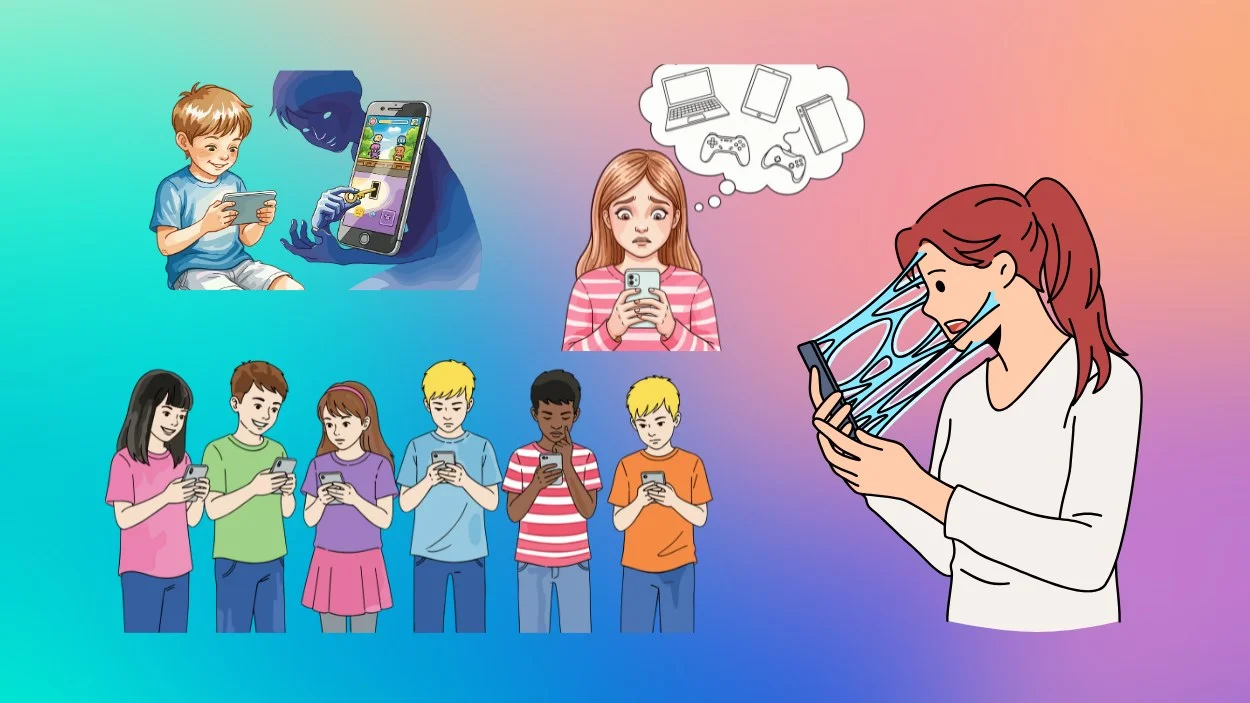


Social media use continues to shape nightly routines and sleep patterns across age groups in the U.S. and globally. With platforms like TikTok, Instagram, and Facebook deeply woven into daily life, users report later bedtimes and shorter sleep durations linked to evening scrolling and alerts. This shift matters not just for rest but for work performance, mental health, and long‑term wellbeing. In workplaces and classrooms alike, employees and students are increasingly citing digital engagement as a reason for fatigue and diminished focus. Explore how current data reveal the multifaceted links between online activity and the sleep you get, or lose.
Editor’s Choice
- 76% of U.S. adults use social media within an hour before bed, indicating near‑bedtime engagement remains widespread in 2025.
- 61% of teens report waking during the night at least once to check their phones.
- 43% of Gen Z adults say social media notifications cause lost sleep in 2025.
- Every hour of screen time in bed is tied to a 59% greater risk of insomnia, according to large cohort data.
- Daily screen use before bedtime is linked to ~50 minutes less sleep each week across age groups.
- Problematic social media use correlates with poorer sleep quality more strongly than general use in recent research.
- Recent surveys show that nighttime scrolling behavior disrupts circadian rhythms and melatonin production.
Recent Developments
- A January 2026 U.S. survey found that “revenge bedtime procrastination” costs Americans an average of 332 hours of sleep per year, often linked to late‑night screen engagement.
- App developers are introducing new features to help reduce doomscrolling and encourage healthier nighttime habits.
- Daily nighttime screen use is now shown to be associated with delayed bedtime by up to 15+ minutes and overall sleep loss.
- Emerging sleep wellness trends like sleepmaxxing are gaining traction online, highlighting both positive and questionable internet‑driven approaches to improving rest.
- New public health discussions are focusing on digital habits and sleep hygiene education for teens and parents.
- Broader research links extended screen and social media use with increased daytime fatigue and mood disruption.
- Behavioral health experts emphasize limiting evening notifications as part of improving sleep schedules.
What Is the Relationship Between Social Media and Sleep?
- Social media engages reward pathways that can delay bedtime and extend wake time.
- Higher social media activity right before bed is linked to shorter total sleep duration in adults and young users.
- Emotional arousal from content can increase cognitive alertness, making falling asleep harder.
- Blue light exposure from screens suppresses melatonin, delaying sleep onset.
- Habitual notifications and alerts fragment sleep cycles throughout the night.
- Regular social media checking correlates with increased daytime sleepiness and functional impairment.
- Bidirectional links exist where poor sleep may lead to more evening social media use, creating a feedback cycle.
- Problematic use shows a stronger negative impact on sleep quality than casual engagement.
Social Media Platforms Most Commonly Linked to Anxiety
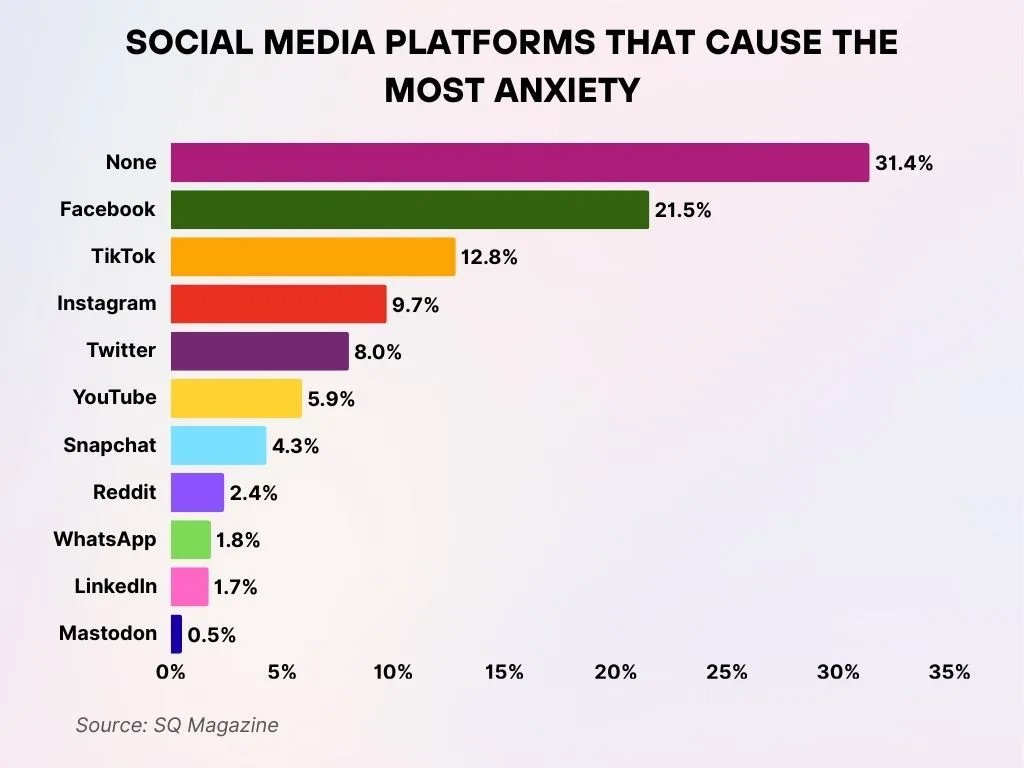
- Facebook ranks as the leading anxiety-inducing platform, impacting 21.5% of users.
- TikTok follows closely at 12.8%, indicating elevated anxiety levels among short-form video consumers.
- Instagram contributes to anxiety for 9.7% of respondents, highlighting the pressure created by highly curated visual content.
- Twitter accounts for 8%, potentially driven by news overload, public discourse, and online arguments.
- YouTube causes anxiety for 5.9% of users, despite being perceived as a primarily entertainment-focused platform.
- Snapchat affects 4.3%, possibly due to ephemeral messaging, social comparison, and peer pressure.
- Reddit is cited by 2.4% for causing anxiety, likely stemming from heated discussions and exposure to negative content.
- WhatsApp impacts 1.8%, showing anxiety linked to messaging overload and social response expectations.
- LinkedIn is reported by 1.7% of users, reflecting career-related stress, professional comparison, and job pressure.
- Mastodon, a niche social platform, causes anxiety for just 0.5% of users.
- Notably, 31.4% of respondents stated that none of the social media platforms caused them anxiety.

Time Spent on Social Media and Sleep Duration
- Users scrolling social media after 23:00 show 70% higher odds of late sleep onset.
- Evening screen use delays bedtime by 9–15 minutes, especially in evening chronotypes.
- One extra hour of bedtime screen time reduces sleep by 24 minutes nightly.
- 93% of Gen Z lose sleep staying up past bedtime for social media.
- Daily screen users get 50 fewer minutes of sleep weekly than non-users.
- Very high social media users (5+ hours) face higher odds of poor sleep outcomes.
- Social media 30 minutes before bed raises sleep disturbance odds by 1.62 times.
- 5+ hours daily on social media links to 45% poor sleepers among students.
Frequency of Social Media Checking and Sleep Disturbance
- Frequent social media checking before bed increases the odds of sleep disturbance by ~1.62× compared with rarely checking it right before sleep.
- About 36%–51% of teens aged 12–18 report waking at night to check their phone or social apps, showing how checking reinforces fragmented sleep.
- Higher social media frequency correlates with greater daytime sleepiness among adolescents due to interrupted nights.
- Adolescents with no parental bedtime tech rules check social media more often and report worse sleepiness.
- Adults who frequently check social media in the 30 minutes before sleep tend to have later bedtimes and shorter overall sleep duration.
- Daytime social media checking behavior is linked to more persistent wakefulness at night, even independent of total use earlier in the day.
- The perceived importance of social media heightens the association between checking frequency and sleep disruption.
- Notifications prompting checking at night can disrupt sleep cycles and contribute to cumulative sleep debt.
Social Media’s Impact on Teen Sleep, Mental Health, and Well-Being
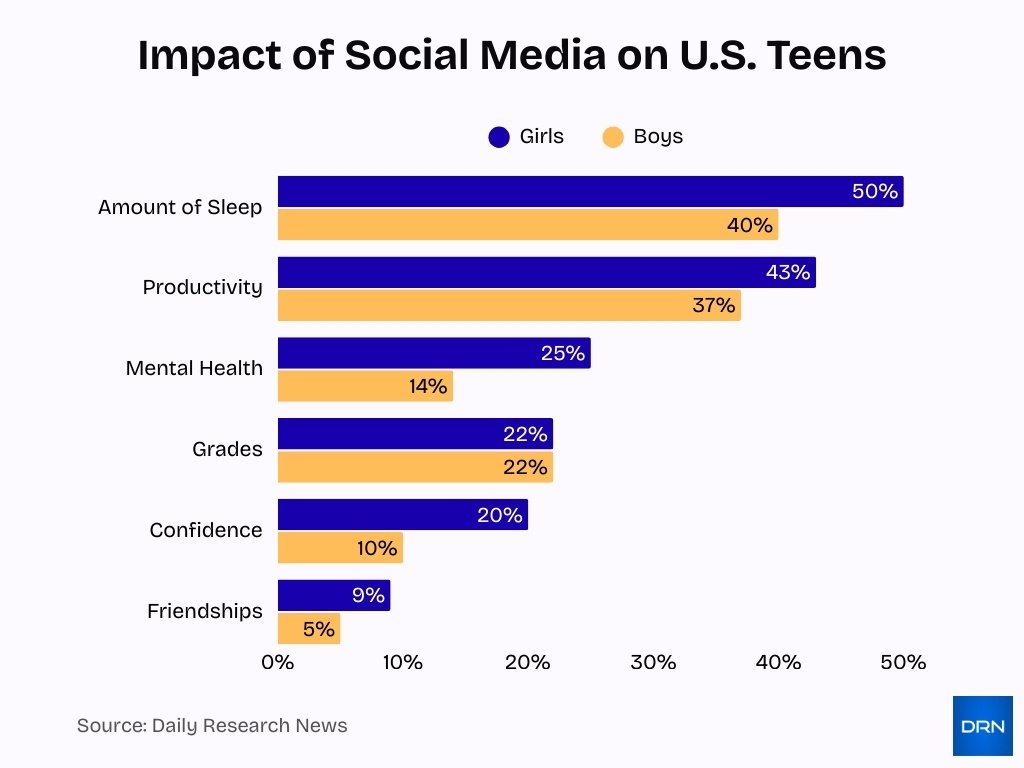
- Sleep disruption is the most reported issue, with 50% of girls and 40% of boys saying social media has reduced their amount of sleep.
- Productivity declines are widespread, affecting 43% of girls and 37% of boys, highlighting the link between social media use and daily performance.
- Mental health impacts are significantly higher among girls, with 25% of girls reporting harm compared to just 14% of boys.
- Academic performance is equally affected across genders, as 22% of girls and boys say social media has negatively impacted their grades.
- Confidence levels are more vulnerable among girls, with 20% of girls reporting reduced confidence versus 10% of boys.
- Friendships are the least affected area, yet the impact remains uneven, reported by 9% of girls and 5% of boys.
- Overall, girls consistently report higher negative effects across nearly all categories, underscoring gender disparities in how social media affects sleep, mental health, and self-perception.
Bedtime Social Media Use and Sleep Quality
- Social media use during the 30 minutes before sleep is independently linked to disturbed sleep quality in young adults.
- Adults with frequent bedtime screen use are significantly more likely to report short sleep and daytime sleepiness.
- Increased bedtime engagement on social apps tends to delay sleep onset and reduce restorative sleep stages.
- Nighttime social media users often experience poorer sleep continuity and more awakenings than those who abstain.
- Excessive bedtime media use correlates with higher incidences of insomnia symptoms in adults, particularly older cohorts.
- Social networking at night can enhance cognitive arousal, delaying the ability to wind down.
- Using social platforms in bed is associated with subjective reports of light, non‑restorative sleep upon waking.
- Adults reporting frequent bedtime social media use also tend to engage in late‑night checking and notifications, worsening sleep quality.
Nighttime Screen Time and Sleep Latency
- Each additional hour of nighttime screen use reduces total sleep duration by 24 minutes.
- One hour of bedtime screen time increases insomnia risk by 59%.
- Frequent social media checks in the 30 minutes before bed raise sleep disturbance odds by 1.62.
- Every 10 minutes of bedtime interactive screen time delays sleep onset by 10 minutes.
- 61.7% of young adults with high screen time report poor sleep quality.
- Blue light from devices causes up to 55% melatonin suppression after 2 hours of exposure.
- 48.1% of excessive screen users show excessive daytime sleepiness (ESS >10).
- Daily screen use before bed links to ~50 minutes less sleep per week in adults.
- Nighttime screens correlate with higher Epworth Sleepiness Scores, indicating delayed onset.
Social Media Use and Insomnia Symptoms
- Heavy evening social media use is linked to a higher likelihood of insomnia symptoms than light users.
- Insomnia symptoms increase as the frequency and duration of nighttime social engagement increase.
- In adult populations, bedtime digital media correlates strongly with reports of difficulty initiating and maintaining sleep.
- Social media use adds cognitive arousal, a known driver of persistent insomnia.
- Older male users show particularly strong links between nightly social media use and clinical insomnia measures.
- Users who engage with social platforms right before sleep tend to wake up feeling restless or unrefreshed.
- Habitual bedtime screen engagement may sustain insomnia even after daytime reduction.
- Reports suggest that insomnia severity correlates with the timing and content engagement level of social media use.
Social Media Use and Daytime Sleepiness
- Adolescents who checked social media more frequently had 0.76 higher daytime sleepiness scores.
- Social media posting frequency accounted for 7% more variance in daytime sleepiness.
- Social media checking frequency accounted for 8% more variance in daytime sleepiness.
- Greater perceived social media importance raised daytime sleepiness by B=0.36.
- Adolescents without bedtime tech rules showed stronger social media effects on sleepiness (B=-0.34).
- 93% of Gen Z lost sleep staying up past bedtime for social media.
- 77.14% of medical students used social media 2-5 hours daily, linked to daytime sleepiness.
- Very high social media users were 70% more likely to fall asleep after 11 PM.
- Social media addiction prevalence was 17.7% among students, tied to poor sleep and daytime dysfunction.
Sleep Recommendations by Age Group
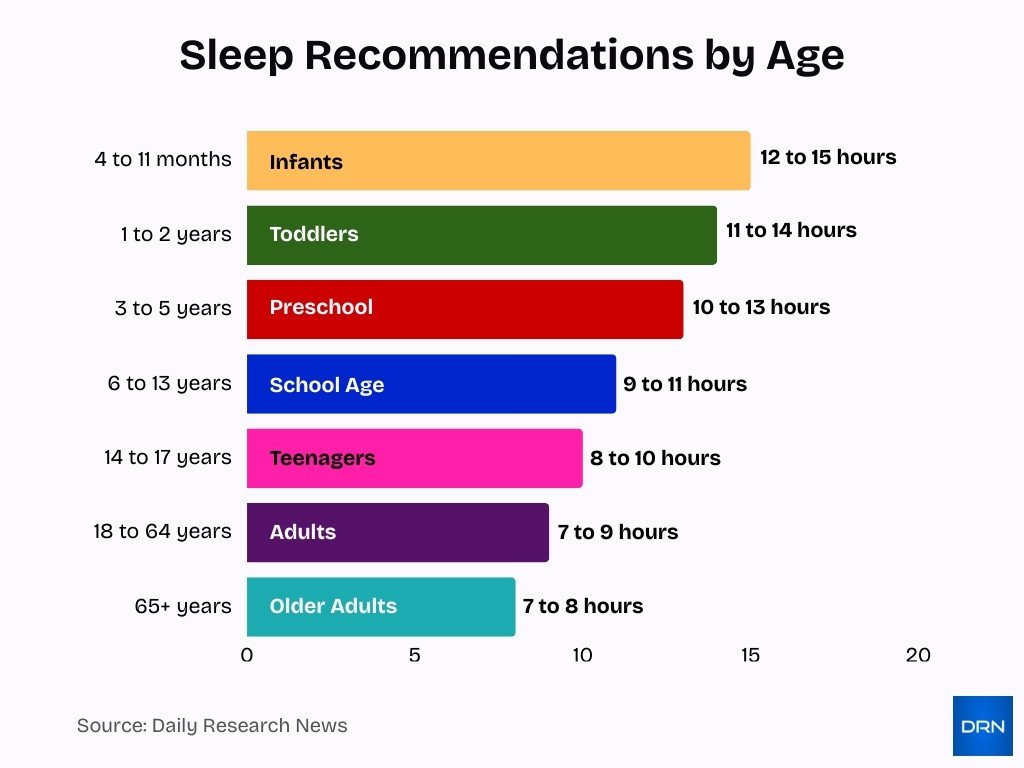
- Infants (4–11 months) require the highest amount of sleep, with a recommended 12 to 15 hours per day, highlighting the critical role of sleep in brain development and physical growth.
- Toddlers (1–2 years) should get 11 to 14 hours of sleep daily, supporting motor skill development, learning capacity, and emotional regulation.
- Preschool children (3–5 years) need 10 to 13 hours of sleep, which is essential for memory formation, behavior control, and early cognitive development.
- School-age children (6–13 years) are advised to sleep 9 to 11 hours per night, helping improve academic performance, attention span, and immune function.
- Teenagers (14–17 years) require 8 to 10 hours of sleep, yet often experience sleep deficits due to biological clock shifts and increased screen exposure.
- Adults (18–64 years) should aim for 7 to 9 hours of sleep, a range linked to optimal productivity, mental health, and reduced chronic disease risk.
- Older adults (65+ years) are recommended 7 to 8 hours of sleep, reflecting changes in sleep architecture while maintaining cognitive and physical health.
Social Media and Sleep in College Students and Young Adults
- ~66% of college students report poor sleep quality linked to nighttime social media use.
- 68% of students use social media at night, with 82.7% reporting bedtime use strongly tied to disrupted rest.
- College students using four or more platforms experience poorer sleep quality at ~71%.
- 93% of Gen Z admit to staying up past bedtime due to social media, leading to lost sleep.
- Young adults checking social media frequently have triple the sleep disturbance risk.
- Very high social media users are 70% more likely to fall asleep after 11 PM on school nights.
- 66%+ of medical students suffer poor sleep, spending avg 64 min on social media pre-bed.
- 17.7% prevalence of social media addiction among students is significantly linked to poor sleep.
- Very high users face 28% higher risk of nighttime awakenings from notifications.
- 30% of young adults show high sleep disturbance from avg 61 min daily social media.
Gender Differences in Social Media–Related Sleep Problems
- Some research notes gender differences in sleep patterns tied to how screens are used, with women spending more time on social media and men on gaming, leading to different sleep disruption patterns.
- Studies show women may be more likely to engage in prolonged nightly scrolling and emotional content engagement, linked to poor sleep quality.
- Evidence suggests gender may not always be a direct predictor of sleep disturbance from social media, but usage patterns vary by sex.
- Females may report more emotional arousal from social comparisons on social media, which is tied to delayed sleep onset.
- In adolescent samples, female users often show stronger correlations between social media use and poor sleep outcomes.
- Males more often attribute screen use to gaming, which also interrupts sleep timing, but through different behavioral patterns.
- All genders, however, experience blue light melatonin suppression and delayed circadian rhythms due to nightly screen use.
- Differences in coping mechanisms and emotional processing may uniquely amplify sleep impacts by gender.
How Sleep Shapes Overall Well-Being and Flourishing
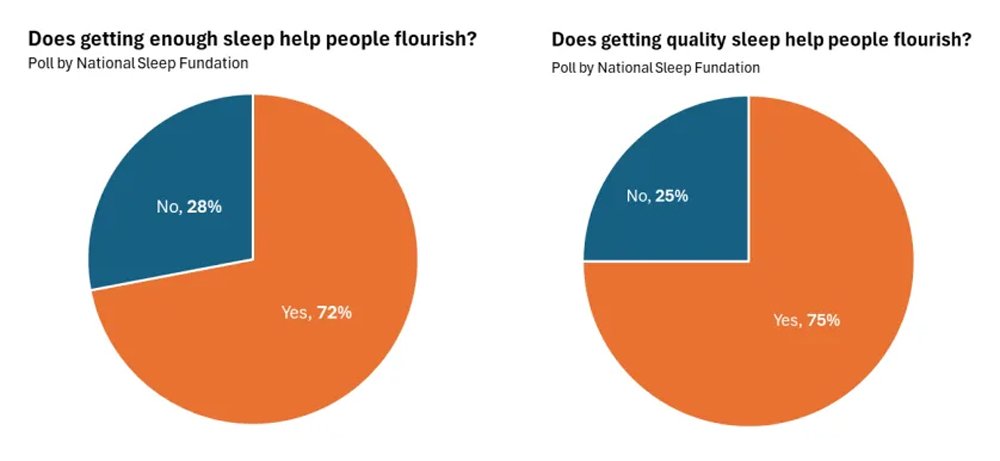
- 72% of respondents believe that getting enough sleep plays a key role in helping people flourish in life.
- Only 28% stated that adequate sleep does not contribute to personal flourishing.
- An even higher 75% agree that quality sleep significantly helps individuals flourish.
- Just 25% believe that sleep quality has no impact on overall flourishing.
- Overall, the data clearly show that both the quantity and quality of sleep are widely regarded as essential for well-being and long-term success.
Fear of Missing Out (FOMO) and Sleep Loss
- A significant majority of young adults experience poor sleep quality, with 68% showing a high FOMO correlation (r = 0.52) to sleep disorders.
- College students with higher FOMO exhibit poorer sleep quality, indicated by a mean PSQI score of 6.80 (SD = 3.15).
- FOMO demonstrates a moderate positive correlation (r = 0.41, p < .001) with poorer sleep quality in college samples.
- Average FOMO score among young adults stands at 21.45 (SD = 6.50), linked to elevated sleep disturbances.
- Nighttime social media use driven by FOMO predicts poor sleep quality independently in 525 university students.
- FOMO contributes to 37% of the variation in anxiety-related symptoms, exacerbating sleep fragmentation.
- Mobile phone dependency via FOMO indirectly affects sleep quality with an effect of 0.013 (95% CI: 0.003–0.023).
- 68% of participants with high FOMO reported poor quality sleep in a mixed-methods analysis.
- FOMO significantly predicts sleep quality variance by 27% (β = -0.42, p < .001) in PSQI models.
Social Comparison on Social Media and Sleep Problems
- Adolescents using social media 5+ hours daily are 2.14 times more likely to have late sleep onset on school days.
- Very high users (5+ hours) show 36% higher odds of trouble falling back asleep after nighttime awakenings.
- Frequent social media checking accounts for 8% additional variance in daytime sleepiness among teens.
- Social media posting frequency explains 7% more variance in heightened daytime sleepiness.
- 17.7% of medical students exhibit social media addiction, strongly tied to poor sleep quality.
- Upward social comparison orientation correlates with sleep disturbance at r = 0.12 (p = 0.003).
- Nighttime social media users before bed are 62% more likely to face sleep disturbances.
- Social media’s importance for interactions adds 9% variance to daytime sleepiness levels.
- Girls comprise 28.4% of very high users (5+ hours), facing worse sleep outcomes.
- 34% of adolescents take over 30 minutes to fall asleep, a trend linked to high social media use.
Impact of Sleep Deprivation on Academic Performance Concerns
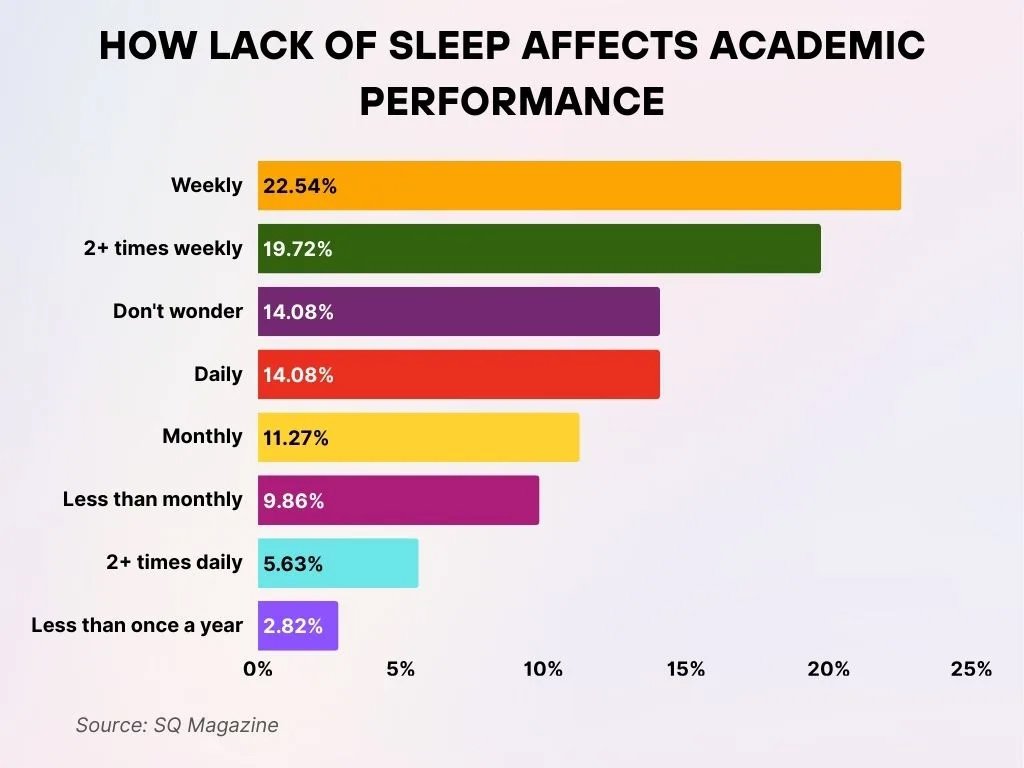
- 22.54% of respondents, representing the largest group, stated that they worry weekly about how lack of sleep affects their academic performance.
- 19.72% reported thinking about it multiple times per week, indicating frequent concern closely linked to sleep deprivation.
- 14.08% said they wonder about it daily, while another 14.08% reported that they do not wonder about it at all, showing a clear split in awareness.
- 11.27% reflect on it monthly, suggesting occasional awareness of sleep’s impact on academic studies.
- 9.86% reported thinking about it less than monthly, pointing to infrequent concern regarding sleep and academics.
- A smaller 5.63% said they worry 2+ times daily, highlighting severe and persistent concern over sleep-related academic effects.
- Just 2.82% admitted thinking about it less than once a year, making it a rare concern for this group.
Social Media Notifications and Nighttime Awakenings
- Nearly one-third of young adults check social media often in the 30 minutes before bed, raising sleep disturbance odds by 62%.
- 32.9% of young adults experience high sleep disturbance, linked to frequent pre-bedtime social media checks.
- Heaviest social media users (>5 hours/day) are 70% more likely to go to bed late than light users.
- 93% of Gen Z stay up past bedtime due to social media, causing lost sleep.
- 21% of adults wake up at night to check their phone notifications, increasing sleep loss.
- 16.2% of adolescents report being awakened by phone notifications during sleep.
- Teens using social media >3 hours/day are more likely to wake during the night.
- 68% of young adults have poor sleep quality, with Facebook Messenger users facing 70% higher odds.
- Nighttime notifications are significantly associated with global sleep problems and daytime sleepiness.
Blue Light Exposure From Social Media Apps and Melatonin Suppression
- Blue light from screens inhibits melatonin production, a hormone that signals sleep readiness.
- Extended screen use at night can delay circadian rhythms, making users feel alert later.
- Melatonin suppression is a key mechanism linking nighttime device use to poorer sleep quality.
- Young adults using phones in bed report a longer time to fall asleep due to light exposure.
- Blue light intensity increases with proximity and brightness settings on mobile devices.
- Using dim settings or dark mode can slightly reduce melatonin interference.
- Screen light exposure late at night correlates with sleep latency and shorter sleep duration.
- Cumulative nightly exposure is linked to chronic sleep pattern disruption over time.
Frequently Asked Questions (FAQs)
76% of U.S. adults report engaging with social media within an hour before going to bed in 2025, indicating very high pre‑sleep usage.
43% of Gen Z adults report losing sleep due to social media notifications, reflecting significant sleep disruption from alerts.
61% of teens say they wake up at least once during the night to check their phones, showing frequent sleep fragmentation.
Each extra hour of screen use in bed is linked with a ~59% higher risk of insomnia, alongside roughly 24 minutes less sleep per hour of screen time.
Conclusion
As social media use deepens in daily life, its links to sleep disruption are clear across demographic groups. Current research shows frequent nighttime use, notifications, emotional engagement, and fear of missing out all contribute to poorer sleep quality and shorter duration. For college students, adults, and adolescents alike, mechanisms like blue light melatonin suppression and cognitive arousal disrupt sleep readiness and continuity.
While gender patterns vary, the overarching trend is that digital engagement near bedtime compromises rest and mental well‑being. Practicing digital boundaries, minimizing nighttime notifications, and fostering healthier screen habits can help mitigate these effects and support better sleep health.