

Yahoo remains a notable name in technology, even as its workforce has shifted in size and focus over the years. Once a major internet pioneer, the company has reorganized under private ownership and faced workforce changes tied to strategic pivots, particularly in advertising and media services. These changes have real consequences, for example, workforce reductions impact company culture and innovation capacity, while hiring trends influence Yahoo’s ability to compete with larger tech peers. Below, we dive into the latest workforce numbers, trends, and what they mean for Yahoo’s future.
Editor’s Choice
- Yahoo’s employee count varies widely across sources, reflecting restructuring and reporting differences.
- As of late 2025, Yahoo’s workforce is estimated to be around ~10,000 employees.
- Other industry estimates put Yahoo’s headcount near 4,480 workers in 2023.
- Yahoo laid off over 20% of staff in a major restructuring in 2023.
- Axes’ ad division cuts impacted nearly half of ad tech roles.
- Yahoo’s acquisition by Apollo Global Management took place in 2021.
- The company size range on LinkedIn shows 5,001–10,000 employees.
Recent Developments
- In 2023, Yahoo announced layoffs affecting more than 20% of its workforce as part of a major restructuring.
- The cuts aimed to reshape the ad tech business and narrow strategic focus.
- Nearly 1,600 positions were slated for elimination as part of these workforce cuts.
- Approximately 1,000 employees were laid off in an initial round.
- Layoffs targeted Yahoo’s supply-side platform and native ad tech units.
- The reorganization shifted investment into the demand-side platform business.
- Leadership changes included an increased focus on core media products like Yahoo News and Yahoo Sports.
- Acquisition moves in 2024 included buying the AI-driven news platform Artifact to bolster tech capabilities.
Historical Yahoo Headcount
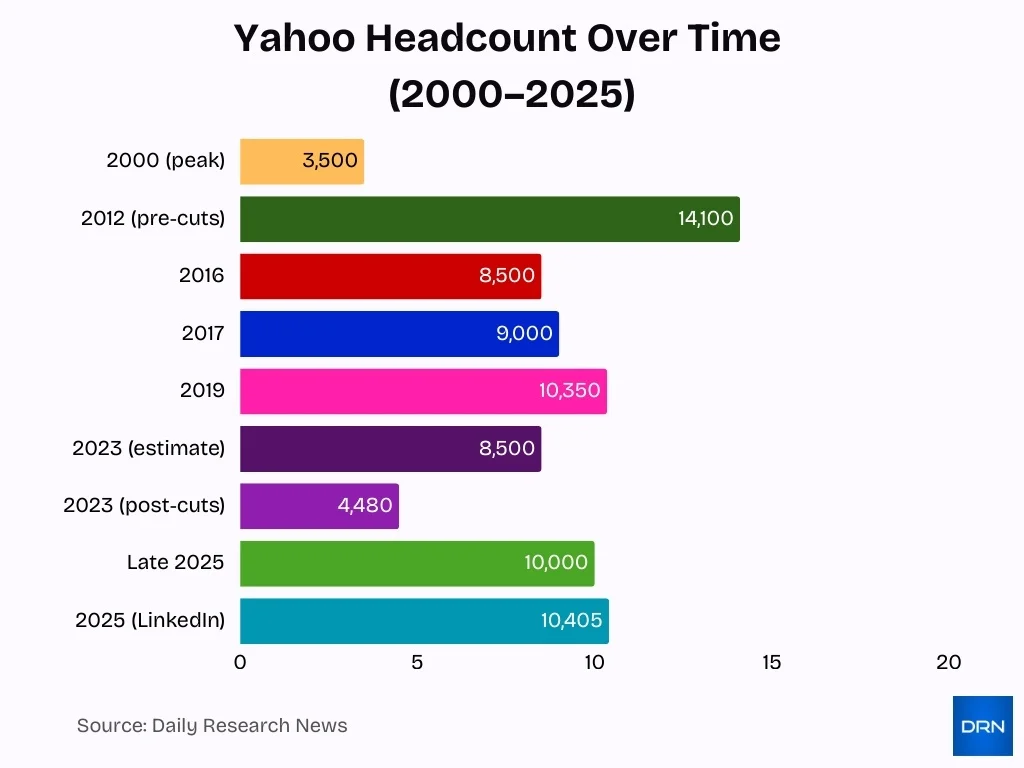
- Yahoo employed ~10,350 people in 2019 before the Apollo acquisition effects.
- The workforce peaked at 3,500 employees by the end of 2000 during its growth years.
- In 2012, Yahoo cut 2,000 jobs, or 14% of its 14,100 workforce.
- By the end of 2016, headcount stood at 8,500 employees.
- Yahoo reduced its employee count to 9,000 employees and 1,000 contractors by the end of 2017, post-layoffs.
- In 2023, the company laid off ~1,600 staff, over 20% of the total workforce.
- Pre-2023 major cuts, estimates placed the workforce at 8,000–9,000 employees.
- Post-2021 buyout led to over 20% reductions in key divisions like ad tech.
Yahoo Total Employee Count
- Yahoo’s official LinkedIn profile lists a company size between 5,001 and 10,000 employees as of 2025.
- Some data firms estimate Yahoo’s global headcount at around ~10,000 employees by the end of 2025.
- Other sources cite about 4,480 employees as of December 2023, reflecting post‑layoff figures.
- The discrepancy suggests different reporting methods or the inclusion of affiliate and subsidiary employees.
- Yahoo historically employed around 10,350 people in 2019, before major restructuring.
- Corporate listings often group Yahoo within the software and media sector, affecting how employees are tallied.
- Employee counts can vary seasonally based on hiring and layoffs.
- Independent employment data sites may overestimate compared to official reports.

Current Yahoo Workforce Size
- As of late 2025, some business directories estimate Yahoo’s workforce at ~10,000 employees globally.
- LinkedIn’s company profile lists 10,405 employees affiliated with Yahoo.
- A contrasting estimate places the workforce at ~4,480 professionals, likely after cuts.
- Workforce ranges often fall between 5,000 and 10,000, depending on the data source.
- Yahoo operates across multiple continents, with teams in North America, Europe, and Asia.
- Headcount fluctuated notably during restructuring in 2023 and 2024.
- Yahoo’s employee figures have become more conservative compared with the pre‑layoff era.
- External directories sometimes include contractors, widening the estimated workforce.
Yahoo Layoffs and Job Cuts
- In 2023, Yahoo announced layoffs impacting 20% of its workforce.
- These cuts affected more than 1,600 employees overall.
- The initial layoff wave cut around 1,000 jobs in early rounds.
- Planned reductions targeted Yahoo’s ad tech operations.
- Layoffs reflected strategic shifts rather than purely economic contraction.
- Half of the ad tech division was affected by the restructuring.
- Employee reductions were among the largest workforce events in recent Yahoo history.
- Cuts were announced as part of streamlining efforts under new leadership.
Yahoo Workforce by Business Segment
- Yahoo maintains a total workforce of approximately 4,500 employees post-2023 restructuring.
- The ad tech segment faced the deepest cuts, reducing headcount by nearly 50% by the end of 2023.
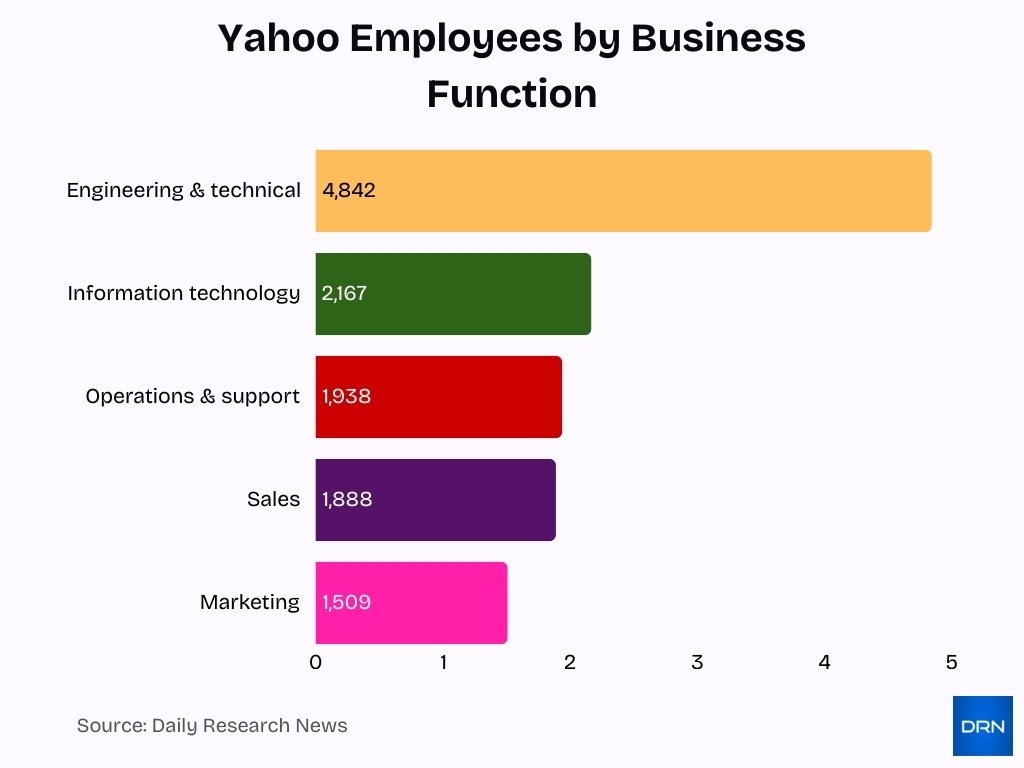
- Engineering & technical staff comprises 4,842 employees, the largest segment supporting products like Mail and Search.
- Information technology roles account for 2,167 positions across platform development.
- Operations and support functions employ 1,938 workers, including HR and finance.
- Sales and marketing teams total 1,888 and 1,509 employees, respectively, focused on advertising revenue.
- Media segments like News and Sports retain editorial staff amid broader tech patterns post-2023.
- Remote roles prevail in software engineering and support, exceeding 71% with bachelor’s degrees or higher.
- Women represent 39% of the workforce, with 61% men across all segments.
Impact of 2023 Layoffs on Headcount
- The 2023 workforce reduction at Yahoo saw plans to cut ~20% of its global staff, impacting more than 1,600 employees as part of restructuring.
- Approximately half of the ad tech division faced layoffs due to underperformance and strategic pivoting.
- Layoff plans split the cuts into roughly 12% immediate and 8% later in the year as operations shifted.
- The workforce reduction significantly pulled down overall headcount figures compared with pre‑layoff totals.
- These cuts likely contributed to the variance in reported employee counts, for example, 8,500 vs 4,480 depending on source and timing.
- Sector‑specific layoffs were heavier in advertising and technology units than in media and content teams.
- Post‑layoff, departments saw organizational reshaping rather than uniform cuts across functions.
- The cuts reflected broader tech sector trends of workforce optimization following economic headwinds since 2022.
Yahoo Workforce After Apollo Acquisition
- Apollo Global Management acquired 90% of Yahoo in 2021, shifting management and strategic priorities.
- Post‑acquisition strategies included integrating AI capabilities into core products, affecting staffing needs.
- The company moved away from some low‑growth ad tech units after Apollo’s takeover.
- Apollo’s ownership brought a more performance‑oriented focus that resulted in cost restructuring and workforce trimming.
- Key acquisitions under Apollo, like the AI news platform Artifact in 2024, likely increased demand for specialized tech talent.
- Strategic workforce shifts under private equity ownership often aim to enhance profitability and reduce legacy operational costs.
- The post‑acquisition period saw emphasis on media properties like Yahoo Sports and Yahoo Finance staffing.
- Changes reflect a typical transition under private equity where core capabilities are prioritized for long‑term growth.
Workforce by Region and Country
- Yahoo employs approximately 4,480 people globally as of late 2023, with a major concentration in Sunnyvale, California.
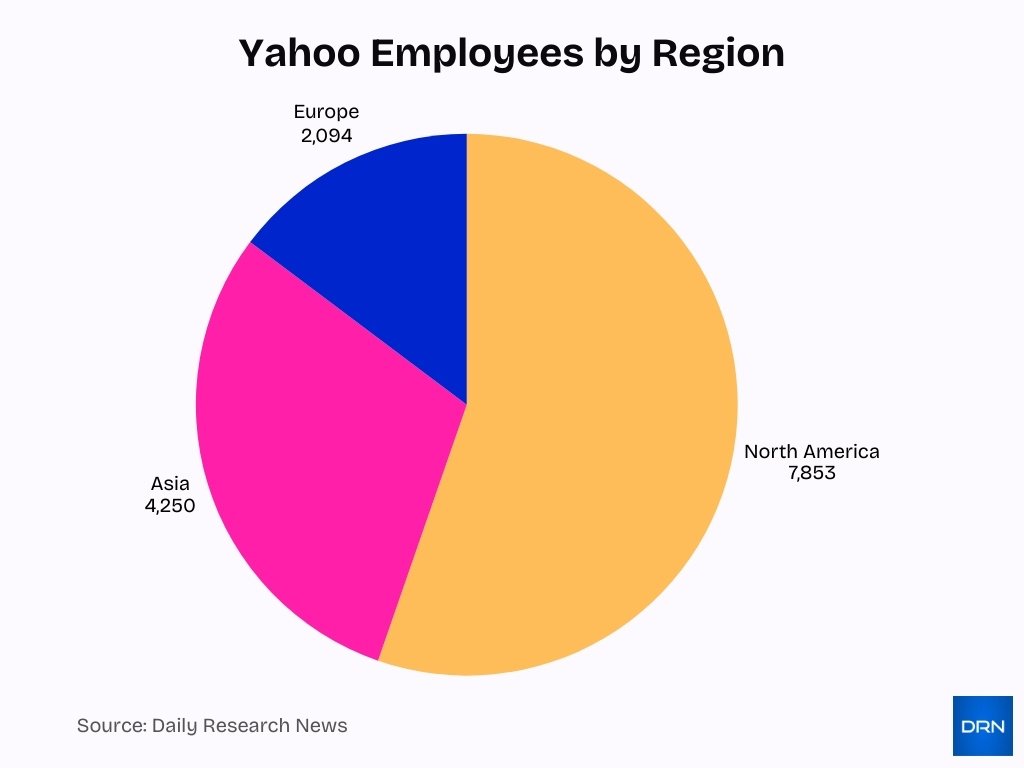
- North America houses the largest workforce segment at around 7,853 employees.
- Asia follows with roughly 4,250 staff, supporting technology and product roles.
- Europe maintains about 2,094 employees across markets like Germany and the UK.
- Asia-Pacific operations include a significant presence in India and Australia.
- The United States accounts for over 50% of Yahoo’s website traffic, mirroring likely staffing focus.
- India features engineering teams with average salaries of ₹29.8 lakhs annually.
- Remote-friendly hiring spans at least 10 countries, enhancing geographic flexibility.
- 71% of employees hold at least a bachelor’s degree across regions.
Remote and Hybrid Yahoo Employees
- Remote and hybrid work models expanded across the tech industry post‑pandemic.
- In 2024–25, many professional roles continued to offer hybrid or remote options, including at Yahoo.
- Across U.S. workplaces in 2024, ~40% preferred hybrid and ~35% preferred remote work, a trend influencing Yahoo hires.
- Hybrid work adoption has roughly doubled since 2020 in many tech functions.
- Remote/hybrid flexibility helps Yahoo recruit from broader talent pools outside core office locations.
- Productivity and employee satisfaction trends show hybrid workers often fare better than fully remote peers.
- Roles in development, product, and support are more likely to offer hybrid arrangements.
- Remote work policies remain adaptive, with some teams still choosing office collaboration.
Yahoo Employee Demographics
- ~39% of Yahoo’s workforce is female, and ~61% is male, reflecting a gender gap common in tech.
- The most common ethnicity at Yahoo is White (~49%).
- Around 20% of employees identify as Asian.
- Approximately 18% of workers are Hispanic or Latino.
- Employees aged 20–30 years form the largest age group (~46%).
- Roughly 30% are aged 30–40 years, and ~10% are over 40 years old.
- ~71% have at least a bachelor’s degree, indicating a highly educated workforce.
- Average employee tenure at Yahoo is about 4.1 years, suggesting moderate retention.
Gender Representation and Workforce Balance at Yahoo
- Among executives, women account for approximately 43% of leadership positions across the organization.
- Within engineering roles, male dominance is more pronounced, with roughly 74.9% male representation compared to about 25.1% female participation.
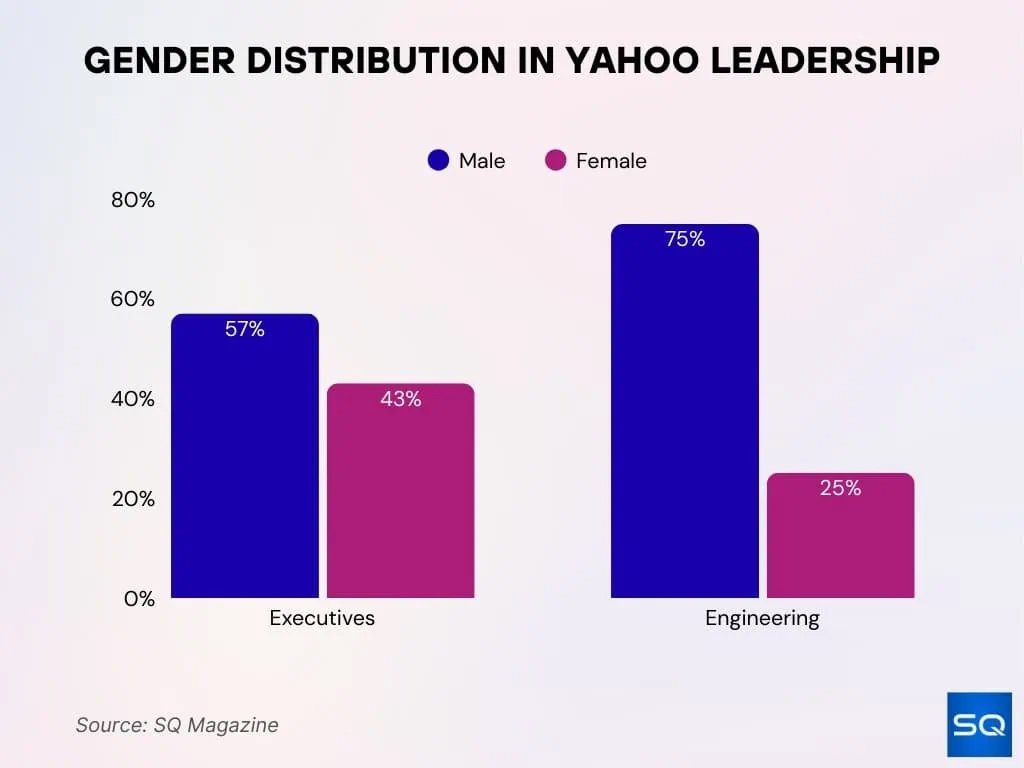
- Overall, nearly 39% of Yahoo employees are female, while approximately 61% are male across the total workforce.
- Women remain underrepresented in tech-core functions at Yahoo when compared with their presence in non-technical roles.
- Yahoo publishes gender pay reports for select regional units as part of ongoing efforts to monitor and address pay equity.
- Despite existing inequities, Yahoo maintains a Diversity, Equity & Inclusion (DEI) rating of around 4.2 / 5, based on internal employee survey feedback.
- The share of women in leadership roles generally exceeds their overall workforce representation, yet it continues to lag in technical and engineering leadership positions.
- Historical initiatives and past controversies, including lawsuits or formal claims, have periodically highlighted concerns around bias or unequal treatment within specific organizational units.
Yahoo Employee Turnover and Attrition Rate
- In the broader U.S. labor market, the average voluntary turnover rate was about 13.0% in 2025, down from 17.3% in 2023, indicating easing attrition trends across industries.
- Yahoo does not publicly publish an exact turnover rate, but tech companies commonly face higher turnover due to competitive hiring and shifting project demands.
- Many tech firms saw turnover near 15% on average, meaning roughly 150 employees leave per 1,000 annually.
- Industry data shows that turnover has been historically elevated post‑pandemic but is trending downward as hiring stabilizes.
- National surveys note that turnover tends to be higher among younger workers, who make up a notable share of Yahoo’s workforce.
- Voluntary departures, resignations, often comprise 60% or more of turnover in tech roles, driven by career moves or remote/hybrid preferences.
- Attrition impacts retention of senior technical talent, especially in competitive markets where remote options and compensation drive decisions.
- Employee lifecycle programs at tech companies, including training and career progression, significantly influence turnover trends.
Employee Tenure Breakdown and Workforce Stability
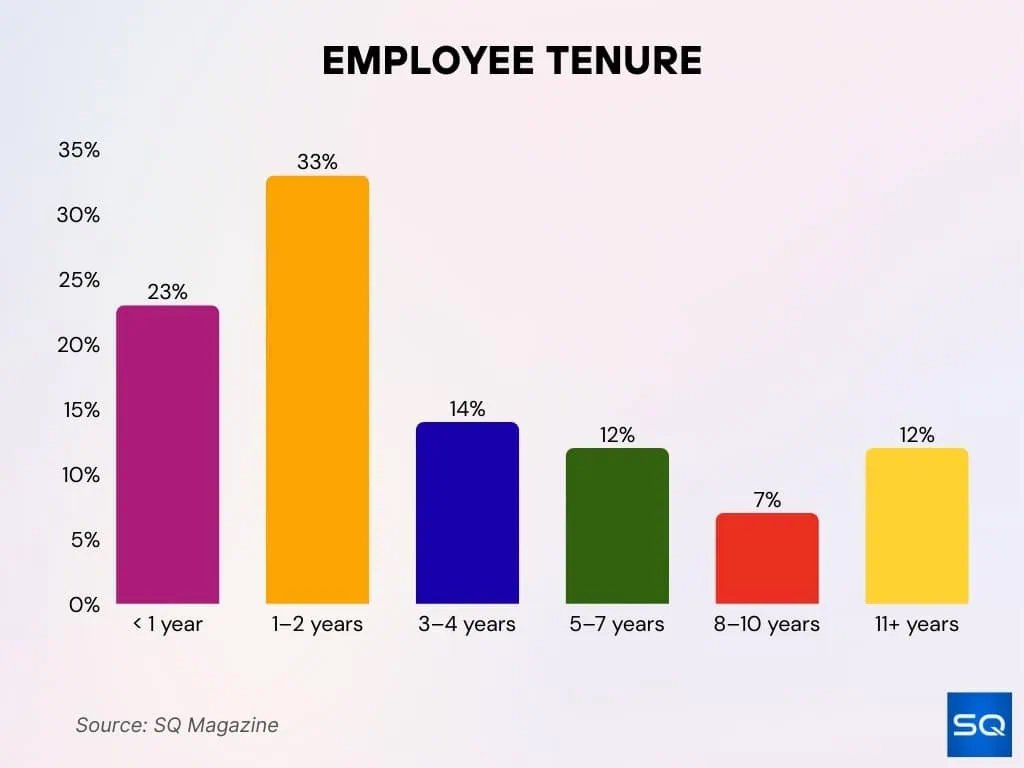
- 33% of employees fall in the 1–2 years tenure category, making it the largest workforce segment.
- A significant 23% of employees have been with the company for less than 1 year, highlighting recent hiring momentum.
- Combined, 56% of the workforce has a tenure of under 2 years, indicating a young and rapidly evolving employee base.
- Employees with 3–4 years of tenure account for 14%, reflecting a moderate mid-level retention layer.
- Around 12% of employees have stayed for 5–7 years, showing a stable core of experienced staff.
- Only 7% of the workforce falls within the 8–10 years tenure bracket, suggesting limited long-term retention at senior levels.
- Long-tenured employees with 11+ years of experience represent 12%, underscoring the presence of a small but seasoned workforce segment.
- Overall, the tenure distribution suggests a front-heavy workforce structure, with stronger early-stage employment concentration than long-term retention.
Yahoo Hiring Trends and New Additions
- Yahoo continues to list open roles across engineering, product, design, operations, and support on its careers portal.
- In 2025–2026, tech hiring broadly showed mixed momentum; many firms maintained current staff while others planned cautious expansion.
- About 40% of employers globally planned to increase headcount, with another 40% holding steady, indicating moderate hiring outlooks.
- In the U.S., tech‑related employment growth remained slow, reflecting broader economic factors that affect Yahoo’s recruitment environment.
- Time to hire in 2025 shortened compared with 2024, with quicker initial screening indicating efficiency improvements in recruiting pipelines.
- Skill‑centric hiring, especially in AI, cloud, and product domains, has trended upward as tech companies refine workforce priorities.
- Remote and hybrid hiring modes have expanded Yahoo’s reach, allowing talent acquisition beyond traditional office hubs.
- Hiring platforms report ongoing interest in tech roles with an emphasis on digital, product, and data expertise.
Engineering and Technical Staff Count at Yahoo
- Exact breakdowns of Yahoo’s engineering headcount aren’t publicly disclosed, but directories indicate significant representation in technical roles such as software development, platform engineering, and data science.
- Yahoo’s R&D presence, including research teams historically associated with units like Yahoo Labs, comprised hundreds of researchers and engineers in specialized functions.
- Engineering staffing often mirrors the company’s product investments, especially in advertising tech, mail, search, and AI‑related products.
- Technical roles account for a sizeable share of total employment, though considerably smaller than at larger tech peers.
- Advances in AI integration and platform modernization likely influence demand for engineers with relevant skills.
- Global trends suggest hiring emphasis on software and IT roles has grown even amid wider tech hiring slowdowns.
- Demand for specialized technical talent often results in competitive compensation and retention strategies.
- Engineering teams typically have lower turnover than customer support functions due to specialized expertise requirements.
Sales and Marketing Staff Count at Yahoo
- Yahoo’s sales department employs 867 professionals focused on advertising revenue.
- The marketing staff at Yahoo totals 1,714 across content promotion and partnerships.
- The sales team size reached 1,565 members under the current leadership.
- Marketing employees numbered 1,509 in detailed departmental breakdowns.
- Sales organization listed at 1,928 in workforce directories.
- Yahoo cut over 20% of its total staff in 2023, impacting ad sales units.
- Ad tech layoffs eliminated 1,600+ positions, over 50% of that division.
- Sales and marketing roles show a median pay of $167K in the US.
- The total workforce stood at 4,480 by end-2023, down from prior peaks.
Yahoo Employee Count vs Competitors
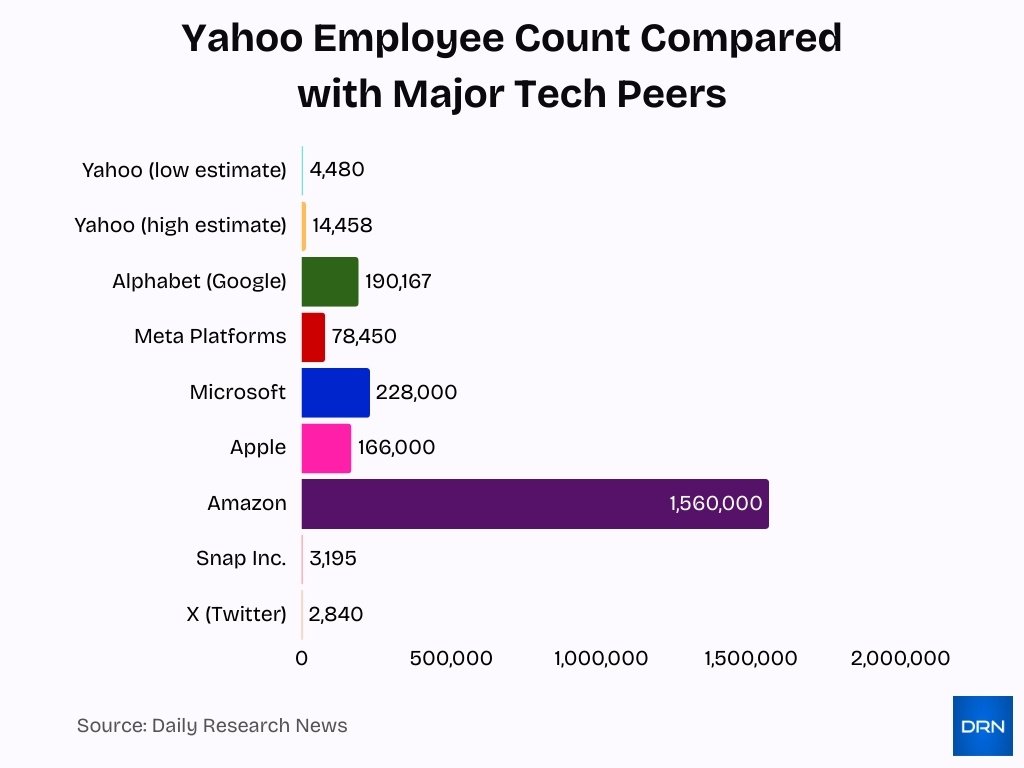
- Yahoo reports approximately 4,480 to 14,458 employees across sources, with recent estimates around 8,500–13,847.
- Alphabet (Google) employs 190,167 people as of September 2025, dwarfing Yahoo’s scale.
- Meta Platforms maintains a workforce of 78,450 employees as of late 2025.
- Microsoft has 228,000 employees in fiscal year 2025.
- Apple operates with 166,000 employees globally as of September 2025.
- Amazon boasted 1.56 million full- and part-time workers worldwide in early 2025.
- Snap Inc., a smaller ad tech rival, employs 3,195 to 4,911 people.
- X (formerly Twitter) runs with about 2,840 employees post-layoffs.
- Yahoo’s headcount reflects a 20% workforce reduction in ad tech by end-2023.
Future Outlook for Yahoo Employment
- The broader tech labor market in 2026 is expected to remain cautious, with selective hiring and greater emphasis on in‑demand skills like AI and cloud computing.
- Compensation trends suggest companies will balance competitive pay with cost control amid economic uncertainty.
- Remote work preferences continue to shape labor supply and retention strategies in tech.
- Yahoo’s future employment may center on strategic areas such as AI‑enabled products, platform services, and media operations.
- Ongoing industry shifts could lead to more project‑based and contract‑augmented staffing models.
- Automation and AI tools may reshape job scopes, especially in operational and support functions.
- Competitor growth in next‑generation tech may influence Yahoo to adjust staffing to match innovation priorities.
- Economic conditions and digital advertising trends will be key determinants of hiring and retention patterns in 2026.
Frequently Asked Questions (FAQs)
~10,000 employees (approximately 10K) according to current workforce listings.
About 4,480 employees were reported at Yahoo as of December 2023.
LinkedIn lists Yahoo with a company size of 5,001–10,000 employees.
Yahoo’s employee count declined by roughly 9.0% over that period, according to trend data.
Conclusion
Yahoo’s workforce landscape reflects a company navigating transformation amid tech industry headwinds, restructuring, and evolving strategic priorities. While exact employee counts vary by source, most estimates place the company in the low‑to‑mid thousands of employees, notably smaller than major tech peers like Google and Microsoft. Workforce trends underscore the importance of specialized engineering and sales roles, remote work adaptation, and careful hiring amidst broader labor market shifts.
As Yahoo adapts its workforce to focus on core competencies such as AI integration, media, and digital services, its employment dynamics offer insight into how legacy tech brands are reshaping talent strategies for the future.