

The metaverse has evolved from a speculative concept to a measurable digital economy with real users, revenue forecasts, and emerging industry trends. Today’s statistics show expanding interest across gaming, social platforms, enterprise use, and virtual asset markets, translating to tangible business decisions and investments. For instance, brands are integrating metaverse experiences for consumer engagement, and companies are exploring it for remote collaboration and virtual events.
With documented user growth and market forecasts stretching into the next decade, the data underscores both momentum and skepticism facing the metaverse. Let’s explore the latest figures shaping this space.
Editor’s Choice
- The global metaverse market size was $105.40 billion in 2024 and is forecast to reach $139.07 billion in 2025, growing at a 46.4% CAGR through 2030
- 600+ million active users are engaging in metaverse environments as of 2026.
- North America remains a dominant market, holding a significant regional share.
- By 2030, some reports forecast the metaverse could exceed $900 billion to over $1 trillion in total global value.
- 25% of participants are expected to spend at least one hour daily in the metaverse by 2026.
- Startups and enterprise ecosystems include thousands of active companies and innovators.
Recent Developments
- Meta Platforms is significantly shifting away from high‑risk metaverse investments, discontinuing some VR initiatives like Horizon Workrooms.
- Meta has cut about 10% of Reality Labs staff, signaling reduced focus on traditional metaverse projects.
- Several internal VR studios under Meta were closed in early 2026, consolidating efforts toward wearable tech.
- Meta’s strategic pivot includes increased investment in AI and wearable devices over fully immersive VR experiences.
- Budget planning suggests Meta may reduce its metaverse budget by up to 30% in 2026.
- Industry sentiment reflects broader skepticism and reallocation of capital from flagship virtual environments to adjacent technologies.
- Other major players like Apple and Google continue laying the groundwork in AR/VR tools without rolling out fully unified metaverse worlds.
Projected Growth of the Global Metaverse Market Size
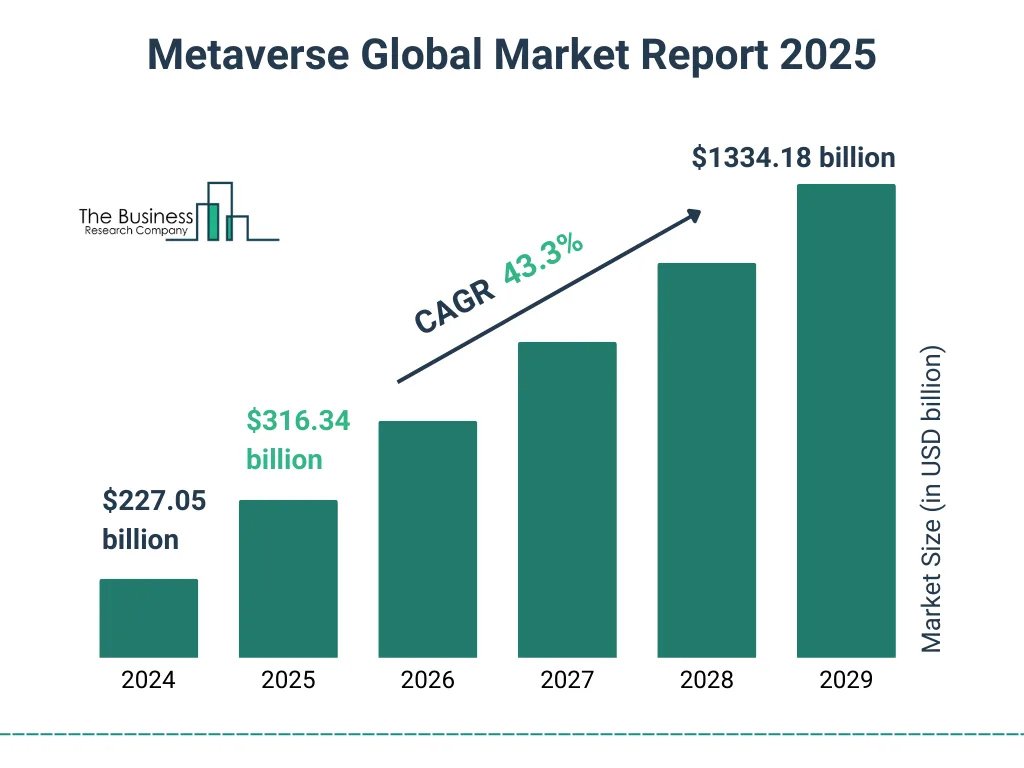
- The global metaverse market size in 2024 is valued at $227.05 billion, reflecting its rapidly emerging economic scale.
- By 2025, the market is projected to grow to $316.34 billion, clearly indicating a strong and accelerating upward trend.
- This expansion continues into 2026, with the metaverse market expected to significantly surpass previous years in overall valuation.
- A robust compound annual growth rate (CAGR) of 43.3% is forecasted for the period between 2024 and 2029, underscoring sustained momentum.
- By 2028, the global metaverse market is anticipated to approach the trillion-dollar milestone, highlighting its scale.
- The worldwide metaverse market is estimated to reach an impressive $1,334.18 billion by 2029, demonstrating its massive long-term growth potential.
Revenue Projections
- Global metaverse market to reach $1,303.4 billion by 2030 at 48% CAGR.
- Metaverse revenue projected at $1.1 trillion by 2030 with 39.3% CAGR.
- Metaverse industry expected to hit $1,007.31 billion by 2035 at 45.2% CAGR.
- The software segment in the metaverse is forecasted to grow to $646.8 billion by 2030.
- Gaming metaverse revenue to expand to $648.24 billion by 2034 at 38.59% CAGR.
- The metaverse advertising market is projected at $7.5 billion by 2030.
- NFTs in the metaverse to reach $3,078.7 million by 2033 with 24.8% CAGR.
- E-commerce in the metaverse is forecasted to reach over $200 billion by 2030.
- Overall, metaverse revenue is expected to hit $54.50 billion by 2028 at 25.5% CAGR.

Market Size by Component
- Software dominated with a 41.6% revenue share in the metaverse market in 2024.
- Hardware commanded 73.21% market share among metaverse components in 2023.
- Services are expected to achieve the highest CAGR during the metaverse forecast period.
- Enterprise metaverse platforms hold a software at over 48% revenue share in 2024.
- AR/VR hardware market valued at $1.3 billion in 2023, reaching $4.1 billion by 2033 (12.3% CAGR).
- The spatial computing market grows from $3.98 billion in 2025 to $23.45 billion by 2030 (42.53% CAGR).
- Blockchain in metaverse games hit $4.5 billion in 2022, projected to reach $39.2 billion by 2030 (31.4% CAGR).
- Just 14% of businesses fully adopted the AR/VR metaverse due to cost barriers in 2025.
- The total metaverse market reached $105.40 billion in 2024, with 46.4% CAGR to 2030.
U.S. Public Opinion on the Metaverse
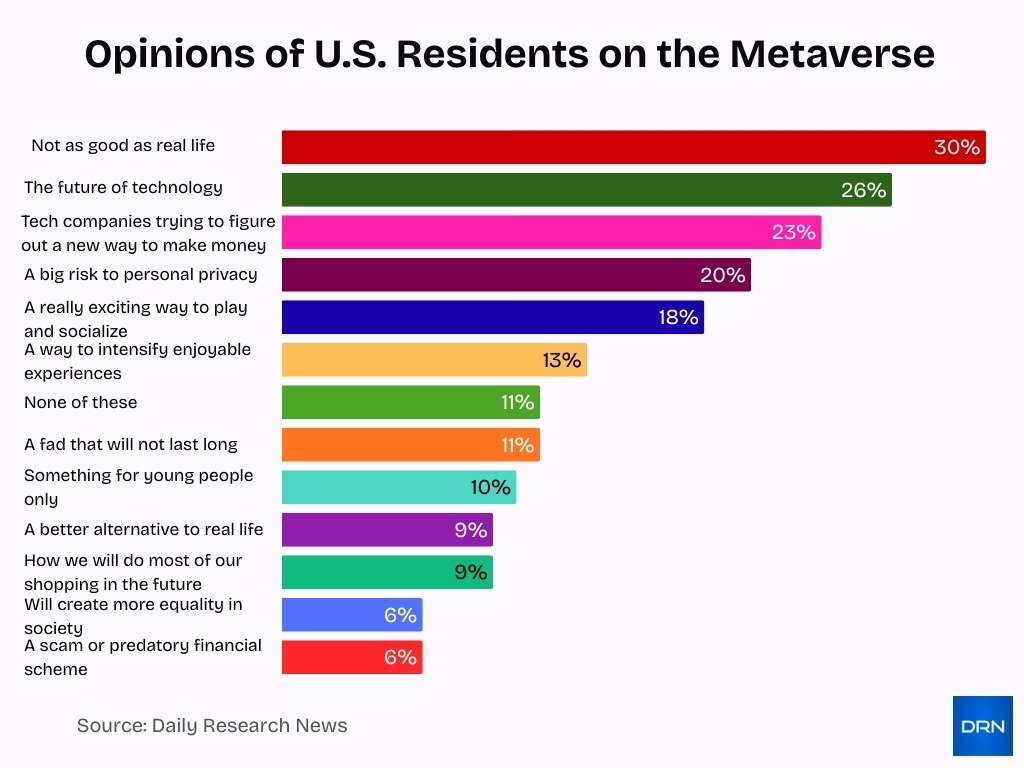
- 30% of U.S. residents believe the metaverse is not as good as real life, making this the most common perception.
- 26% describe the metaverse as the future of technology, reflecting a strong belief in its long-term potential.
- 23% feel the metaverse is mainly tech companies exploring new ways to make money, signaling skepticism toward corporate motives.
- 20% view the metaverse as a major risk to personal privacy, highlighting ongoing trust and data-security concerns.
- 18% consider it a really exciting way to play and socialize, showing appeal among entertainment-focused users.
- 13% believe the metaverse can intensify enjoyable experiences, suggesting added value for immersive activities.
- 11% say none of these opinions apply, indicating uncertainty or neutral sentiment.
- Another 11% think the metaverse is a fad that will not last long, pointing to doubts about its longevity.
- 10% perceive the metaverse as something meant only for young people, implying generational limitations.
- 9% see it as a better alternative to real life, showing minimal support for full virtual replacement.
- 9% believe the metaverse will shape how most shopping is done in the future, hinting at commerce-driven use cases.
- Only 6% think the metaverse will create more equality in society, reflecting limited social optimism.
- Another 6% view it as a scam or predatory financial scheme, underscoring persistent distrust among a small but notable group.
Platform-Wise Market Size
- Large platforms like Roblox reported about 70 million daily active users in 2026.
- Fortnite Creative maintains around 30 million users focused on creation and social engagement.
- VRChat saw record weekend concurrent users near 149,000 around Jan 1, 2026.
- Many other niche platforms account for millions more globally.
- Mobile‑first experiences continue to lead in user accessibility compared to dedicated VR hardware.
- Platform engagement varies widely depending on content genres and demographic appeal.
Market Size by Technology
- Extended reality markets are projected to exceed $100 billion by 2026.
- Hardware device markets show steady growth tied to consumer adoption.
- Software engines, platform creation tools, and middleware generate recurring revenues.
- Spatial computing growth signals broader technological importance beyond pure metaverse labels.
- Blockchain integration supports virtual goods, identity, and ownership frameworks.
- AI‑driven automation and personalization tech underpins next‑gen metaverse interactions.
Regional Market Share
- North America dominated the global metaverse market with a 70.70% share in 2025.
- Asia Pacific is projected to grow at the highest CAGR of 48.0% from 2023 to 2030.
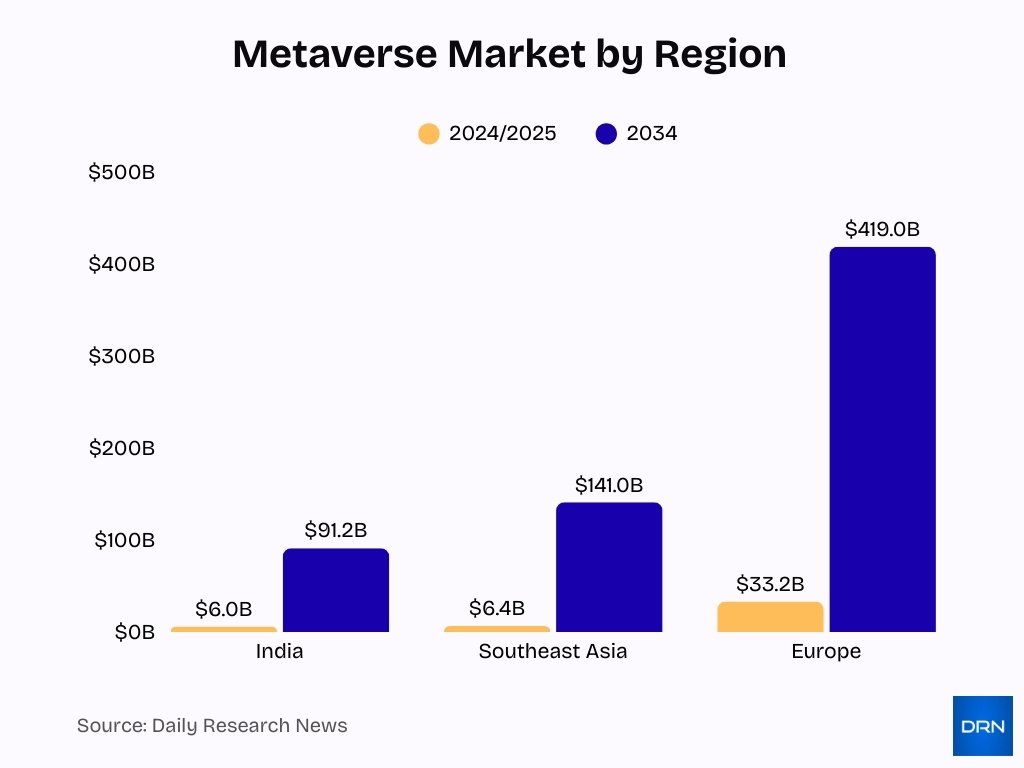
- India‘s metaverse market reached $6.0 billion in 2025, projected to hit $91.2 billion by 2034 at 35.4% CAGR.
- Southeast Asia‘s metaverse market was valued at $6.4 billion in 2025, expected to reach $141.0 billion by 2034.
- Europe’s metaverse market hit $33.2 billion in 2024, forecasted to grow at 32.5% CAGR to $419.0 billion by 2033.
- Latin America metaverse market generated $1,546.4 million in 2024, with a 44.8% CAGR projected from 2025-2030.
- The North America metaverse market size stood at $900.13 billion in 2025.
- The Middle East and Africa metaverse communication network market is expected to grow at over 35% CAGR from 2026 to 2033.
- The global metaverse market is valued at $1,273.58 billion in 2025.
User Demographics
- The metaverse has over 600 million active users worldwide as of 2026.
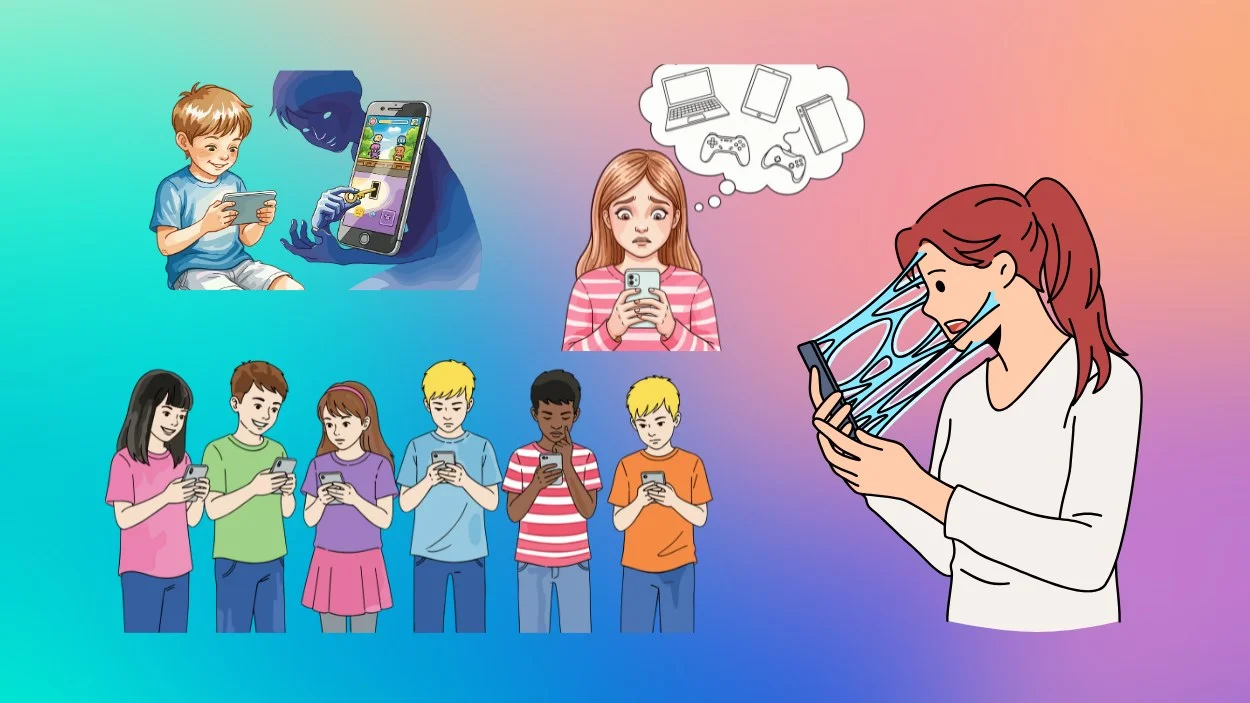
- Approximately 51% of users are 13 or younger, and 83.5% are under 18.
- Daily active user counts vary widely by platform and region, with major platforms seeing tens of millions of engaged users.
- A global sentiment study found a significant portion of respondents expect extended reality (XR) to impact virtual learning, entertainment, and work.
- Metaverse adoption skews young, with Generation Alpha and Gen Z forming the core user base.
- Organizations project that 30% of companies will offer products or services tied to metaverse experiences.
- Despite high youth participation, a meaningful share of adults express interest based on work or creative opportunities.
- Users from diverse socioeconomic backgrounds participate, with mobile access expanding entry points across demographics.
Metaverse Game Players by Age: Key Insights
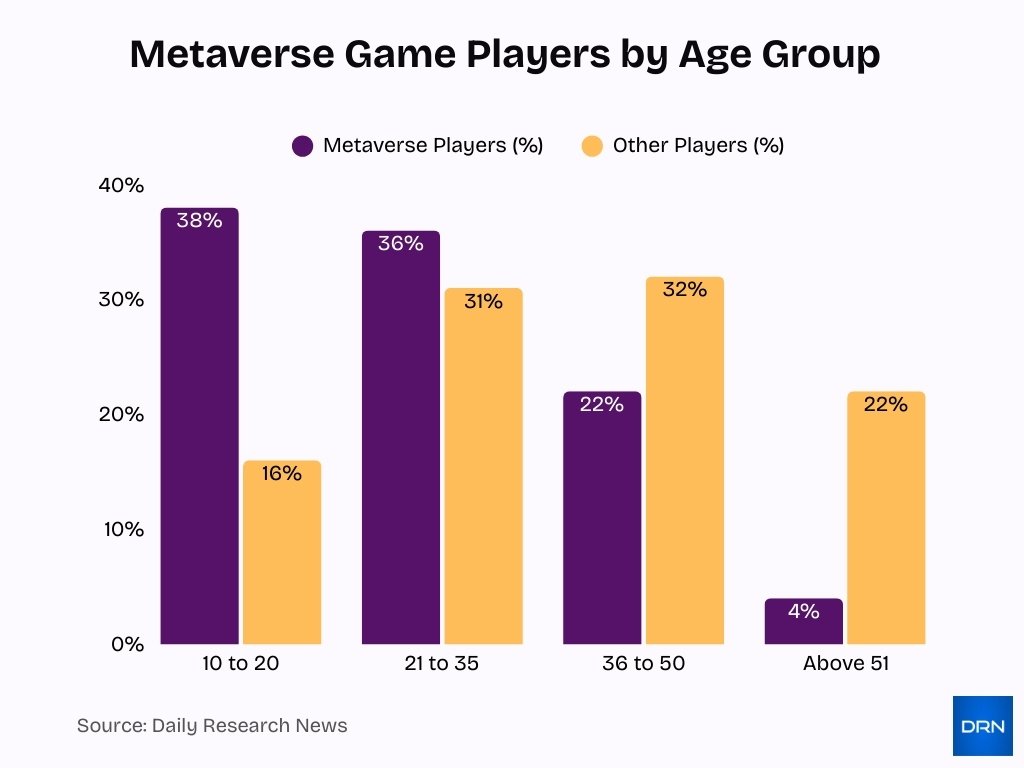
- Younger audiences dominate metaverse gaming, with 38% of metaverse players aged 10 to 20, compared to just 16% among other game players, highlighting strong early adoption.
- Young adults form a major user base, as 36% of metaverse gamers fall within the 21 to 35 age group, slightly ahead of 31% for other players, indicating sustained interest beyond teenage users.
- Participation drops among middle-aged users, with only 22% of metaverse players aged 36 to 50, while this age group represents a higher 32% share of other players, showing a preference for traditional gaming formats.
- Older adults remain largely underrepresented, as just 4% of metaverse players are above 51, compared to 22% of other players, signaling a significant adoption gap.
- Overall, metaverse gaming skews heavily toward younger demographics, while older age groups show slower adoption, suggesting untapped growth potential with improved accessibility and use cases.
User Engagement and Monthly Active Users
- Roblox reached 151.5 million daily active users in 2026.
- Metaverse platforms hit over 400 million monthly active users.
- Gartner predicts 25% of people will spend 1 hour daily in the metaverse by 2026.
- VRChat peaked at nearly 150,000 concurrent users on New Year’s 2026.
- Minecraft has 204 million monthly active users.
- Fortnite averages over 1 million daily active players.
- Roblox DAU/MAU ratio is 20.92%, showing strong engagement.
- Zepeto draws 20 million monthly active users, mainly Gen Z.
- 65% of metaverse users keep sessions under 1 hour.
- 56% of users visit the metaverse 2–3 times weekly.
Public Sentiment Toward the Metaverse: How People Truly Perceive It
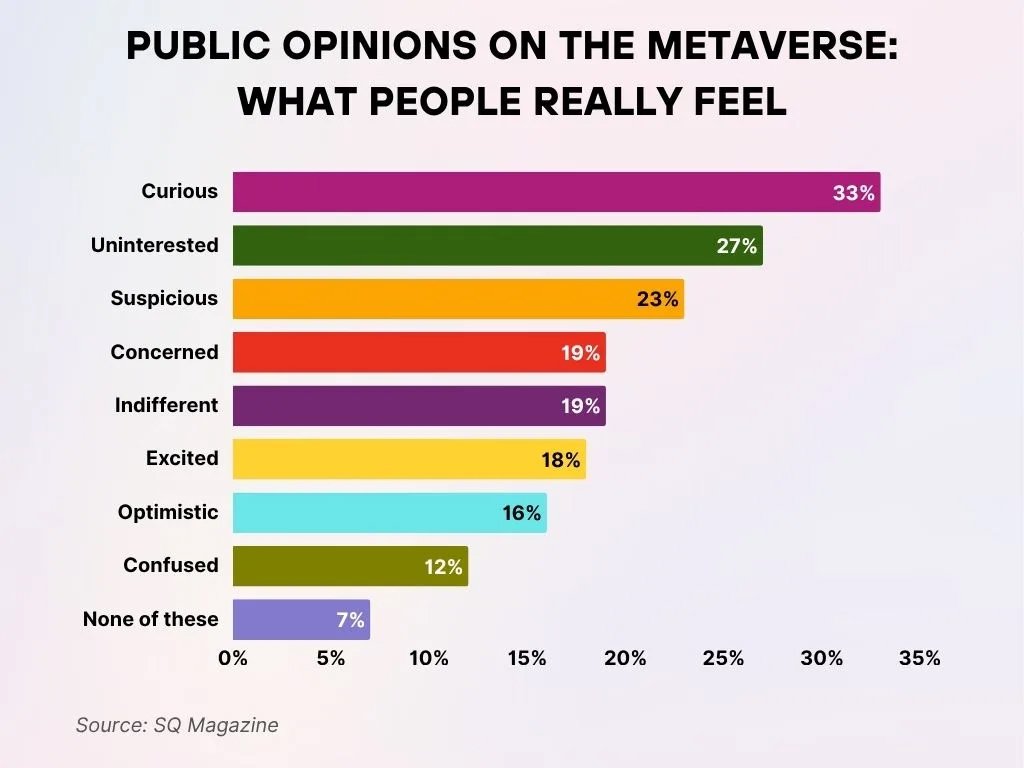
- 33% of respondents say they feel curious about the metaverse, positioning curiosity as the most prevalent sentiment overall.
- 27% report being uninterested, indicating that a sizeable segment currently does not perceive clear value or relevance in the concept.
- 23% express feeling suspicious, highlighting notable trust and concern issues related to potential impacts on privacy and society.
- 19% of participants reported feeling concerned, while another 19% felt indifferent, underscoring mixed emotional responses ranging from caution to detachment.
- 18% of people say they are excited, representing a smaller but highly enthusiastic audience anticipating the metaverse’s future potential.
- 16% describe themselves as optimistic, suggesting the presence of positive expectations despite widespread skepticism.
- 12% admit they feel confused, pointing to a clear need for better public education and clearer explanations around the metaverse.
- Only 7% stated that none of these sentiments applied, demonstrating that the vast majority hold a defined opinion on the metaverse.
Major Platforms and Leading Companies
- Roblox reports 88.9 million daily active users in Q4 2024, maintaining strong metaverse engagement.
- VRChat hit a record of nearly 150,000 concurrent users during the New Year’s Eve 2025–26 transition.
- Improbable raised $150 million to launch MSquared, its blockchain-compatible metaverse network.
- Meta’s Reality Labs laid off over 1,000 employees in January 2026, shifting to AI wearables amid $71 billion losses since 2021.
- AMAZE VR concerts achieved 75% seat sale rates with a 9.9 audience rating for select events.
- Unity powers 71% of mobile games and holds 42–45% of the $38.61 billion game engines market in 2025.
- NVIDIA Omniverse surpassed 300,000 downloads and 252+ enterprise deployments for metaverse tools in 2025.
- The global metaverse market is valued at $1,273.58 billion in 2025, projected to reach $10,808.57 billion by 2034.
- Metaverse NFT sales hit $6.5 million across 13,927 transactions in August 2025, up 27% monthly.
Key Investments and Sector‑Wise Investment Trends
- Global metaverse market reaches $203.7 billion in 2025, growing at 44.4% CAGR from $130.5 billion in 2024.
- Over 2600 investors participated in more than 11,000 funding rounds with an average of $18 million per round.
- Andreessen Horowitz invested $491.5 million across 12 metaverse companies.
- Alibaba Group contributed $270 million to 8 metaverse firms, including $60 million in Nreal AR.
- North America holds 43.8% market share in the metaverse, dominating investments.
- The sector employs over 1 million people globally, adding 121,000 new employees last year.
- Over 27,000 patents filed in the metaverse, with 18.18% yearly growth led by the USA (12,600).
- 1.5 billion users expected to engage in metaverse experiences by 2025.
- The VR/AR devices segment was valued at $32.77 billion in 2023, holding 45% share.
Events and Concerts in the Metaverse
- Virtual concerts within metaverse environments have gained traction, where artists appear as digital avatars performing to global audiences.
- Platforms like Roblox, Fortnite, and Minecraft have hosted virtual events drawing millions of participants worldwide.
- Metaverse event organizers report growing demand for immersive live experiences beyond traditional streaming formats.
- Some in‑game music events reach crossover audiences that rival mid‑tier real‑world concert attendance.
- The interactive nature of these concerts, chat, mini‑games, and avatar interaction extends engagement beyond passive viewing.
- Brand activations tied to virtual concerts offer additional sponsorship revenue streams in metaverse ecosystems.
- Organizers are experimenting with tiered access passes and NFT‑based attendance tokens.
- Cultural institutions also explore virtual showcases, including digital art unveilings and multimedia installations.
Technology Leaders’ Outlook on the Metaverse’s Growth Trajectory
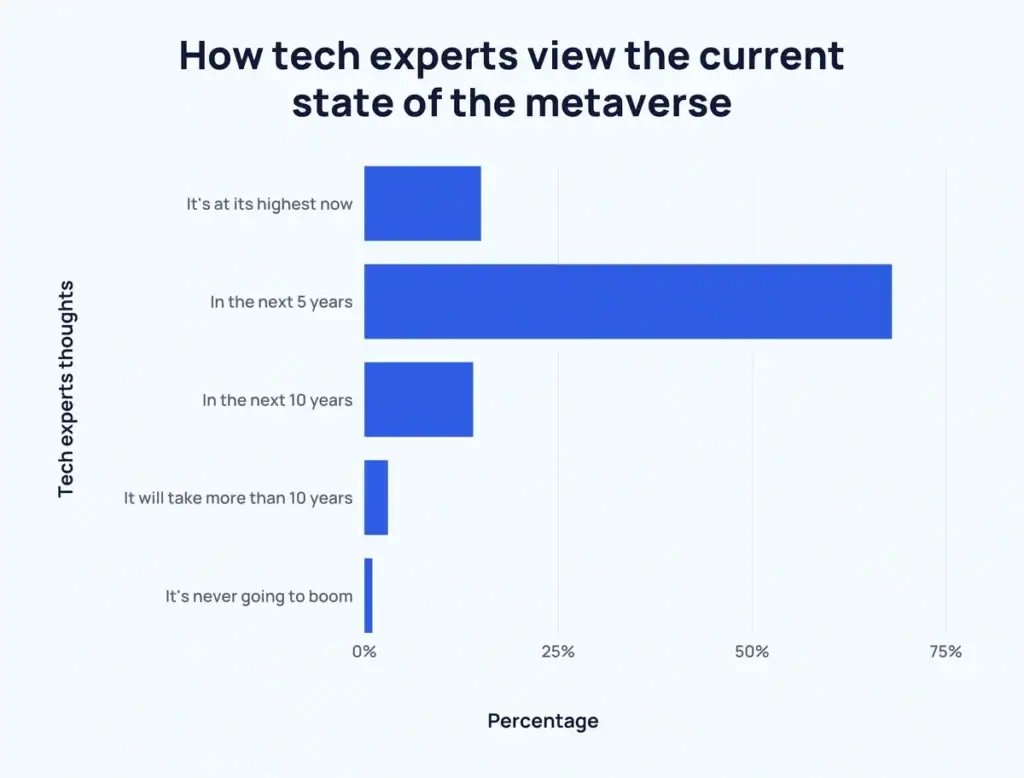
- A clear majority of tech experts (over 70%) believe the metaverse will experience a major boom within the next 5 years, highlighting strong confidence in short-term market growth.
- Around 15% of experts think the metaverse will reach its peak in the next 10 years, pointing to expectations of a slower and more gradual development cycle.
- Approximately 10% say the metaverse is already at its highest point today, indicating notable skepticism about future expansion prospects.
- A small segment, roughly 3%, believes it will take more than 10 years for the metaverse to boom, reflecting a long-term and cautious growth outlook.
- Only about 1% feel the metaverse will never boom, signaling very limited pessimism among technology experts.
Benefits and Negative Aspects of the Metaverse
- Metaverse tools cut aviation training costs by 60% through immersive simulations.
- VR training reduces time by 75%, from 8 to 2 hours per session.
- 71% of students report higher engagement in metaverse STEM learning.
- The metaverse fashion market is projected to reach $45 billion by 2025.
- 69% of workers want more immersive virtual collaboration tools.
- 77% of respondents fear the metaverse causes societal harm via addiction.
- 47% cite addiction to simulated reality as the top metaverse peril.
- Meta’s Horizon Worlds has under 200,000 monthly active users.
- VR users face harmful content every 7 minutes on average.
- Metaverse real estate grows at 31% CAGR through 2030.
Upcoming Trends
- Interoperability between separate metaverse environments is increasingly prioritized by developers.
- Spatial computing, blending AR, VR, and real‑world data, is expected to lead next‑generation user experiences.
- A pivot toward mobile‑first metaverse access is underway, enabling broader participation without costly hardware.
- Enterprise adoption of mixed‑reality tools for hybrid work scenarios is trending upward.
- NFTs and tokenized assets may evolve toward standardized ownership models across platforms.
- AI‑driven personalization promises more adaptive virtual environments.
- Focusing on accessible social features aims to deepen user engagement beyond purely gaming use cases.
- Educational and vocational trainers increasingly integrate immersive modules, expanding beyond entertainment.
Frequently Asked Questions (FAQs)
The global metaverse market is projected to reach approximately $226.8 billion in 2026, according to recent forecasts.
The metaverse market is anticipated to grow at a CAGR of around 46.4 % from 2025 to 2030.
As of the latest estimates, there are approximately 700 million active monthly metaverse users worldwide.
Some long‑term projections indicate the metaverse market could reach around $7,171.5 billion by 2035 at a CAGR of roughly 46.7 % beyond 2025.
Conclusion
The metaverse stands at a crossroads of innovation and skepticism. Market growth remains promising according to multiple forecasts, yet major players such as Meta are recalibrating strategies and reallocating resources based on emerging usage patterns and technology performance. Investment continues in software, blockchain infrastructure, and enterprise tools, even as concerns around privacy, engagement sustainability, and real‑world impact persist.
Virtual events and immersive experiences continue to evolve, reflecting both the excitement and the uncertainty defining the metaverse’s trajectory. As trends shift toward interoperability, mobile access, and practical applications beyond gaming, stakeholders across sectors will watch closely how adoption shapes the next wave of digital connection and commerce.
Hover or focus to see the definition of the term.