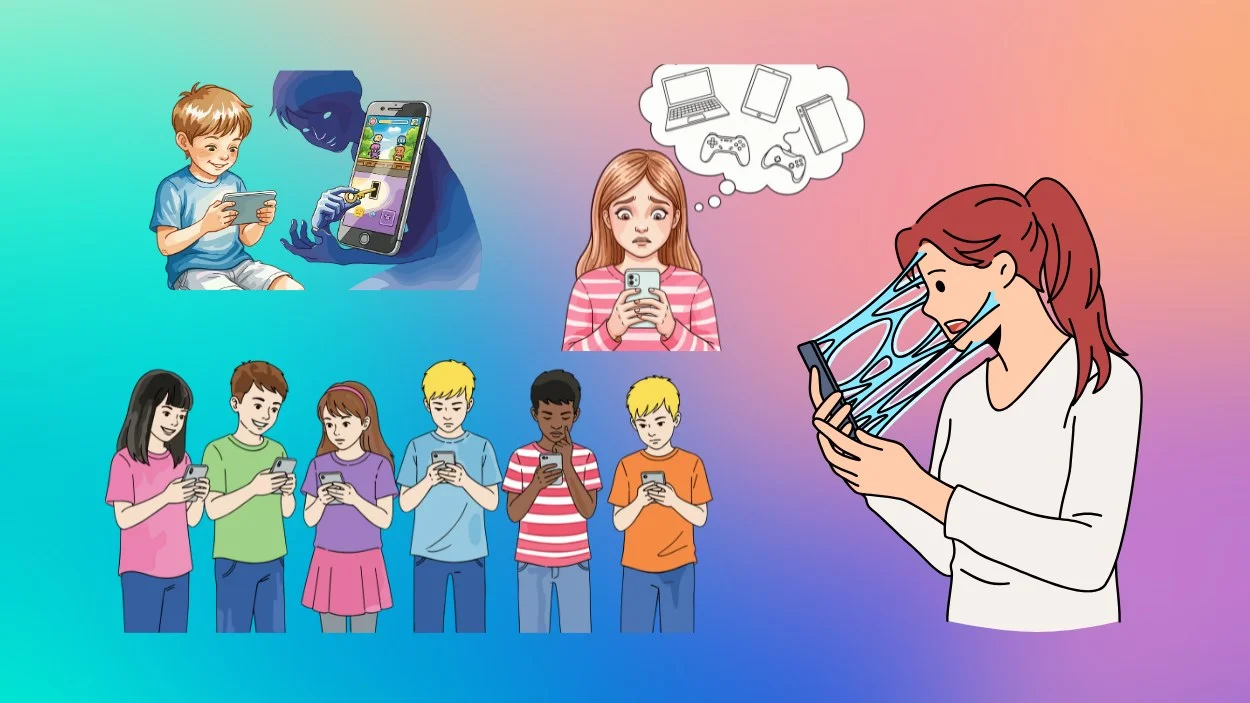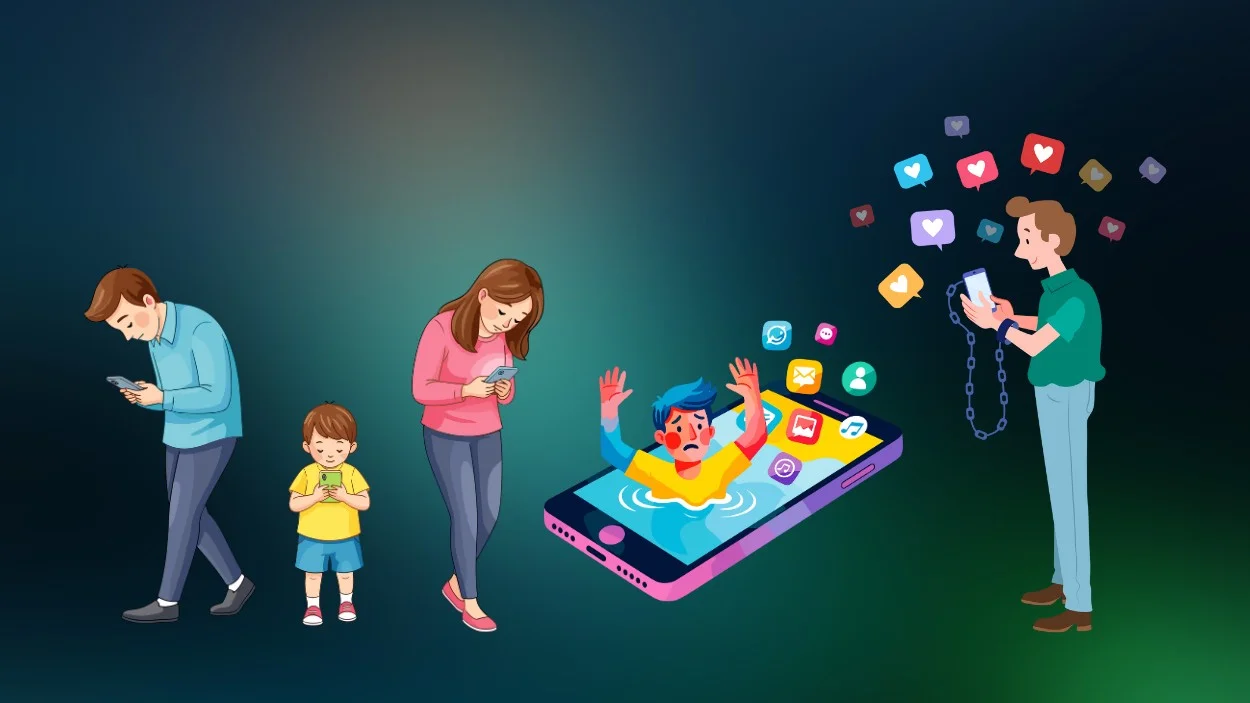


Smartphone addiction is now a major public health concern in the U.S. and around the world. Recent data shows rising dependency across ages, with compulsive checking habits and anxiety when separated from devices becoming increasingly common. This digital reliance affects daily routines, social behavior, and mental health in measurable ways. In industries like education and workplace productivity, excessive smartphone use now competes with attention and focus, forcing schools and employers to rethink policies. Healthcare providers are also tracking their impact on sleep, anxiety, and depression diagnoses. Explore the numbers below to understand the scale and trends of smartphone addiction.
Editor’s Choice
- 57% of Americans say they are addicted to their phones in 2025, up from previous years.
- 88.6% of U.S. adults check their phone within 10 minutes of waking up.
- The average American checks their phone 144 times per day.
- 66% of people experience some level of phone separation anxiety, nomophobia.
- Global smartphone addiction prevalence estimates around 26.99% across populations.
- Teen screen time reached an average of 4.6 hours per day in 2025.
- Smartphone addiction has been linked to higher rates of depression and anxiety in multiple studies.
Recent Developments
- In 2025, research continues to link heavy smartphone use with mental health concerns, including anxiety and depression.
- Schools around the world are enacting policies to reduce smartphone use due to addiction concerns.
- Legislative changes aim to curb youth smartphone use during school hours to improve focus and reduce compulsive behavior.
- Advances in digital detox programs and youth intervention centers have expanded in regions with high smartphone dependency rates.
- Studies emphasize compulsive use patterns rather than total screen time as a stronger predictor of mental health risks.
- Clinicians are exploring AI-driven behavioral interventions to help reduce screen dependency.
- Continued meta-analyses highlight smartphone addiction’s global rise, especially among young adults and adolescents.
- Emerging research focuses on the design elements of apps that reinforce addictive use patterns.
Global Smartphone Addiction Prevalence
- Around 26.99% of individuals worldwide are estimated to show signs of smartphone addiction.
- Over 3.8 billion people, nearly 48% of the world’s population, are considered addicted to their phones.
- Global prevalence among children and young adults ranges from 10% to 67%, depending on regional studies.
- Meta-analysis data indicate problematic use increases annually across diverse populations.
- French adult studies show 66.7% exhibit compulsive smartphone behaviors.
- International research suggests smartphone addiction is more common in urbanized, high-connectivity countries.
- The global count of addicted users rises yearly as smartphone penetration grows.
- Smartphone dependence trends correlate with broader internet and app usage increases in developed markets.
Countries Exhibiting the Highest Levels of Problematic Smartphone Use
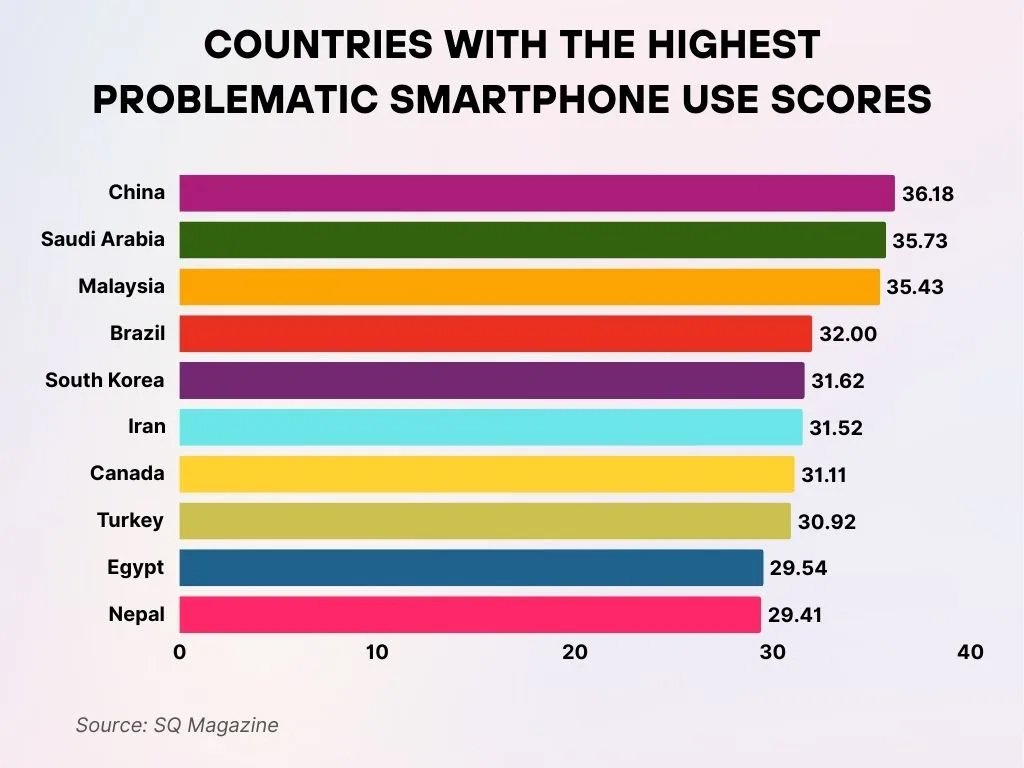
- China recorded the highest smartphone addiction score at 36.18, indicating an exceptionally elevated level of problematic smartphone use.
- Saudi Arabia followed closely, registering a smartphone addiction score of 35.73, which reflects a similarly high dependency on mobile devices.
- Malaysia reported a high problematic smartphone use score of 35.43, underscoring significant digital reliance among users.
- Brazil demonstrated substantial smartphone dependency with a recorded score of 32.00, highlighting notable usage concerns.
- South Korea registered a problematic use score of 31.62, reflecting considerable challenges related to smartphone overuse.
- Iran recorded a score of 31.52, indicating widespread reliance on mobile technology across the population.
- Canada reported a problematic smartphone use score of 31.11, signaling meaningful levels of digital engagement issues.
- Turkey followed with a recorded score of 30.92, showing persistent smartphone usage concerns.
- Egypt exhibited comparatively lower levels of smartphone addiction with a score of 29.54, though the issue remains evident.
- Nepal had the lowest score in the group at 29.41, which is still concerning despite being comparatively lower.
- These findings emphasize the scale of smartphone overuse across multiple countries, underscoring the global prevalence of digital dependence.

Gender Differences in Addiction
- Some studies suggest women report higher self-perceived smartphone addiction, though findings vary.
- Social media addiction trends show 34% of women admit addiction vs. 26% of men.
- Nomophobia prevalence may be higher in female populations in specific studies.
- Men and women may use phones differently, affecting addiction patterns.
- Gender-linked studies reveal mixed results, with some showing minimal difference in compulsive use behavior.
- Behavioral research suggests marketing and social app engagement may influence gender-based usage.
- Anxiety related to phone separation has been reported across genders, but with varying intensity.
- Continued research is needed to clarify how gender influences long-term addiction trajectories.
Age and Generation Statistics
- Teens aged 13-17 average 7 hours 22 minutes of daily screen time, equating to 43% of waking hours.
- 71% of U.S. teens feel anxious or irritable without their smartphone for over 30 minutes.
- Gen Z reports the highest smartphone addiction feelings at 56%, compared to 29% for Baby Boomers.
- Young adults aged 18-22 show 40% self-reported social media addiction rates in the U.S.
- 76.3% of Gen Z spend more time on smartphones than preferred, versus 51.6% of Baby Boomers.
- Teenagers with over 4 hours daily screen time face 27.1% anxiety rates, double those with less.
- 82% of high school students struggled to avoid phones during class in 2025.
- Daily smartphone screen time drops from 6 hours 5 minutes for Gen Z to 3 hours 31 minutes for Baby Boomers.
- 50% of teens self-identify as smartphone addicted, the highest among all age groups.
Student and Academic Impacts
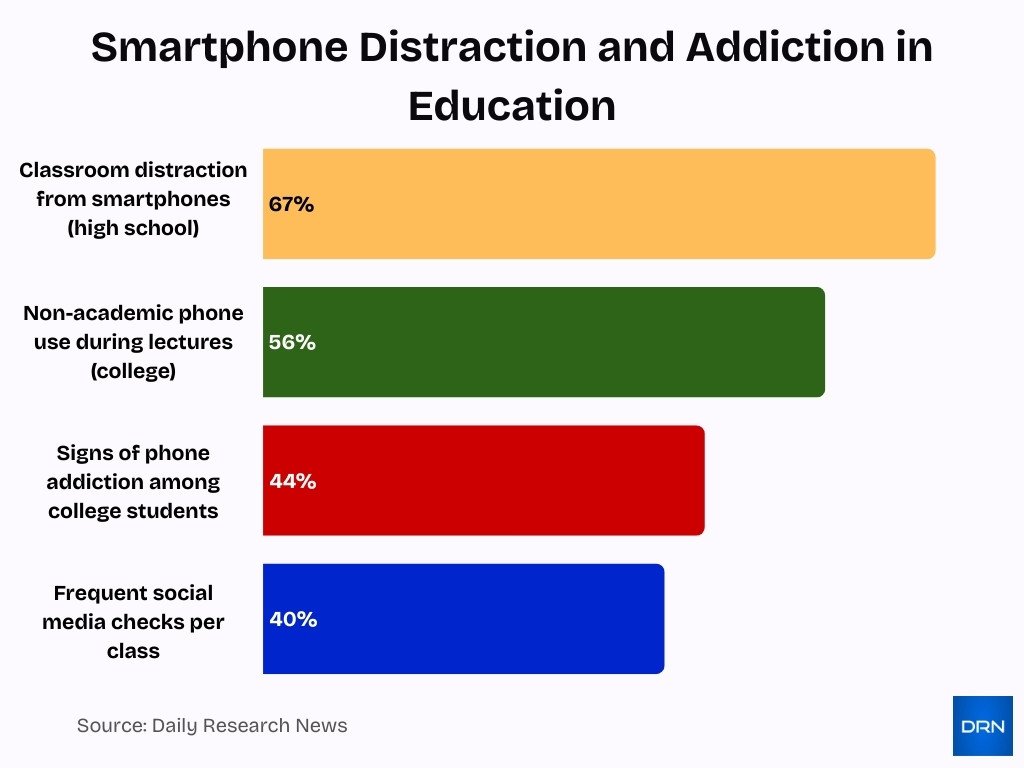
- 67% of high school students say smartphones are a distraction in class.
- 44% of college students show signs of phone addiction, affecting concentration and grades.
- Smartphone use negatively correlates with GPA in university students.
- 56% of college students admit to using their phones during lectures for non-academic purposes.
- Digital distractions rank as a top barrier to academic productivity.
- Schools are increasingly banning smartphones during school hours.
- Students with higher screen time tend to score lower on tests.
- 40% of students check social media multiple times per class.
- Educational psychologists warn of impaired memory retention due to multitasking on phones.
Teen and Youth Addiction Rates
- 84% of teens say they are on their phones almost constantly or several times an hour.
- Over 70% of U.S. teens feel anxious when they don’t have their phones with them.
- 62% of teens acknowledge being addicted to their phones.
- Teen smartphone usage averages 4.6 hours per day, excluding schoolwork.
- 41% of teens say they feel distressed when unable to check notifications.
- 29% of youth report disrupted family time due to excessive phone use.
- 59% of teens admit to losing sleep due to late-night phone use.
- Over 1 in 3 teens have attempted a social media detox due to feeling overwhelmed.
- Girls aged 13–17 are more likely to report compulsive smartphone behaviors than boys.
- 52% of teenagers feel they use their phone more than they should.
Daily Screen Time Averages
- The average U.S. adult spends 3 hours and 15 minutes per day on their smartphone.
- Teenagers spend 4.6 to 7 hours daily on smartphones outside of schoolwork.
- iPhone users unlock their devices 80 times a day.
- Global smartphone users spend 4.8 hours per day on average.
- Millennials and Gen Z exceed 5 hours of daily mobile screen time.
- Screen time increased 13% between 2023 and 2025.
- 40% of users admit to losing track of time while scrolling.
- Daily app notifications continue to rise across platforms.
Monthly Android Social Media Screen Time
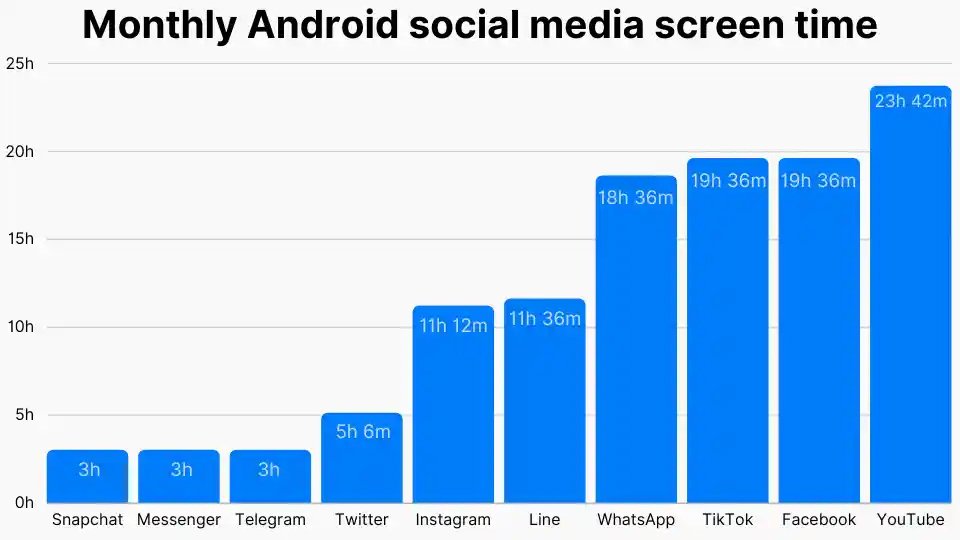
- YouTube dominates with the highest monthly screen time recorded at 23 hours 42 minutes.
- Facebook and TikTok are evenly matched, each reporting 19 hours and 36 minutes of monthly usage.
- WhatsApp users collectively spend 18 hours and 36 minutes per month on the platform.
- Line and Instagram come next, logging 11 hours 36 minutes and 11 hours 12 minutes, respectively.
- Twitter users maintain an average monthly usage of 5 hours and 6 minutes.
- Snapchat, Messenger, and Telegram each register 3 hours of usage per month.
Phone Check Frequency Stats
- People check their phones 144 times per day on average.
- 71% of Americans check their phones within 10 minutes of waking up.
- 52% of people feel uneasy if they cannot check their phones regularly.
- Users tap their phones 2,617 times per day on average.
- Teens check their phones up to 200 times daily.
- The top 10% of users touch their phones over 5,400 times per day.
- 1 in 3 people check their phones during meals.
- Phone checking is often unconscious and habitual.
Social Media Addiction Link
- Around 70% of teens and young adults in the US are considered addicted to social media, with over 60% of college students reporting addiction symptoms.
- Psychologists estimate 5–10% of Americans meet formal criteria for social media addiction, showing clinically significant impairment.
- Global internet users now spend an average of about 141–143 minutes (≈2 hours 20+ minutes) per day on social media platforms.
- The typical social media user spends 2 hours 23 minutes daily, accounting for about 35.8% of their total online time.
- Teenagers are the heaviest users, with teen girls spending nearly 3 hours per day on social media, far above adult averages.
- More than 1 in 10 adolescents (11%) show problematic social media behavior, struggling to control use and experiencing negative consequences.
- Among teens, 50% self-report feeling addicted to their smartphones, with average use around 9 hours per day, amplifying social app exposure.
- Studies indicate 20–30% of adolescents and young adults show signs of smartphone addiction, closely tied to constant social media checking.
- In global surveys, teenagers and young adults consistently emerge as the demographic most at risk of social media and smartphone addiction.
- In 2024, the average global social media time of 2 hours 21 minutes per day for users aged 16+ underscores how deeply platforms like TikTok and Instagram embed into routines.
Mental Health Consequences
- Teens with smartphone addiction are twice as likely to experience anxiety and nearly three times more prone to depression.
- 41% of adolescents suffer from smartphone addiction, with 61% reporting poor sleep quality.
- Teens spending over 5 hours daily on phones are twice as likely to show depression symptoms and 40% more for anxiety.
- 27% of teens with 4+ hours daily screen time report anxiety, versus 12.3% with less exposure.
- Smartphone addiction positively correlates with depression (r=0.375), anxiety (r=0.253), and stress (r=0.328).
- 18.7% of older teens and 14.5% of younger ones experience problematic smartphone use tied to mental health issues.
- Heavy smartphone users exhibit reduced prefrontal cortex activity and impaired inhibitory control.
- 97% of adolescents use technology before bed, leading to shorter sleep, averaging 7.3 hours nightly.
- 40% of children with ADHD have smartphone addiction, worsening impulsivity, and attention deficits.
Relationship and Phubbing Stats
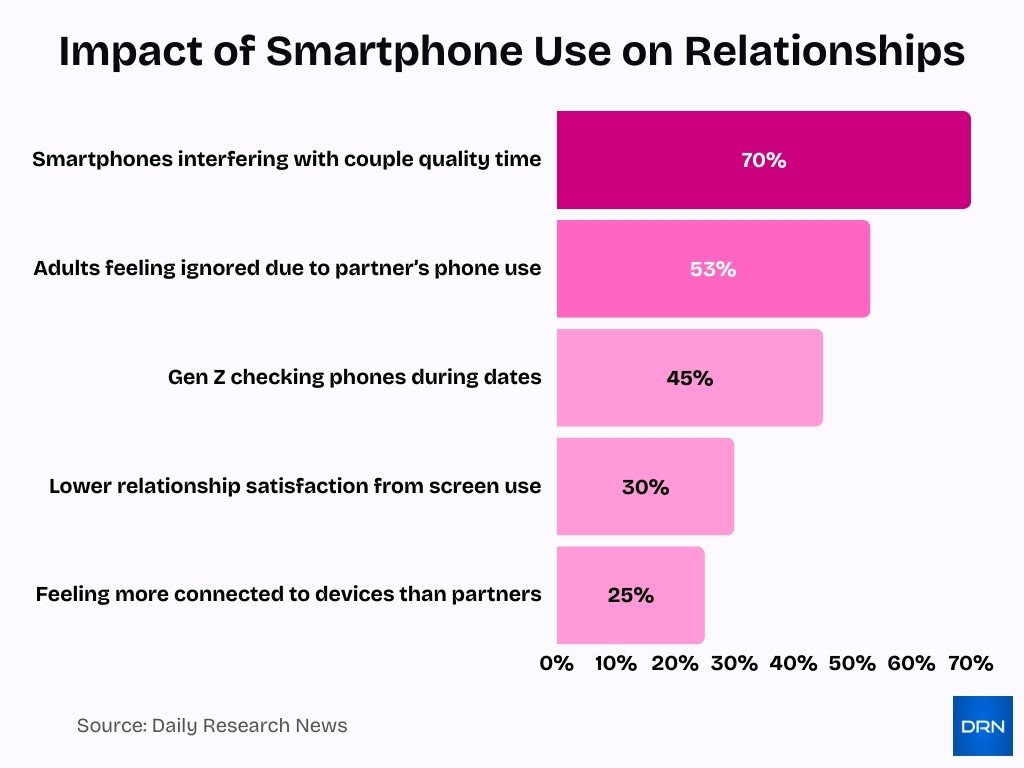
- 53% of adults feel ignored by a partner due to phone use.
- Phubbing is a growing source of interpersonal conflict.
- 70% of couples say smartphones interfere with quality time.
- 30% of people feel less satisfied in relationships due to partner screen use.
- 45% of Gen Z admit to checking phones during dates.
- Phubbing links to lower emotional intimacy.
- 25% of individuals feel more connected to their devices than to their partners.
- No-phone meal rules correlate with higher relationship satisfaction.
- Social media conflicts increasingly strain relationships.
Parental Concerns Overview
- 81% of parents worry about their child’s smartphone usage.
- 65% of parents attempt to limit screen time.
- 39% of children aged 8–12 now own smartphones.
- Many parents feel addicted to their own devices.
- 51% of parents say smartphones disrupt their child’s sleep.
- Only 34% of households maintain consistent digital rules.
- Digital parenting apps reduce excessive screen time by 23%.
- Smartphone ownership among 11-year-olds exceeds 68%.
- Safety and fear of missing out drive early phone access.
Physical Health Risks
- 95.6% of smartphone users report neck pain from prolonged device use.
- Evening blue light exposure suppresses melatonin by up to 27% (from 12.0 to 8.8 pg/mL).
- 58.18% of high screen-time users suffer from dry eye syndrome, confirmed by tear film tests.
- 39.7% of smartphone users experience thumb/wrist pain, rising with heavy daily usage.
- Each 2-hour increase in sedentary screen time raises obesity risk by 5%.
- 46% of frequent computer users report headaches from tech overuse.
- 68.1% of medical students have text neck syndrome, causing chronic posture pain.
- 10% most exposed to EMF face 11% higher risk of sleep disturbances.
Productivity Loss Data
- 62% of employees say smartphones distract them at work.
- Workers lose 2.5 hours per workday due to phone distractions.
- 1 in 3 employers discipline staff for phone-related issues.
- Notifications reduce task accuracy by 20–25%.
- Context switching increases task completion time.
- Productivity apps can become distractions themselves.
- 40% of remote workers struggle to focus due to mobile interruptions.
- Digital wellness programs improve focus by up to 30%.
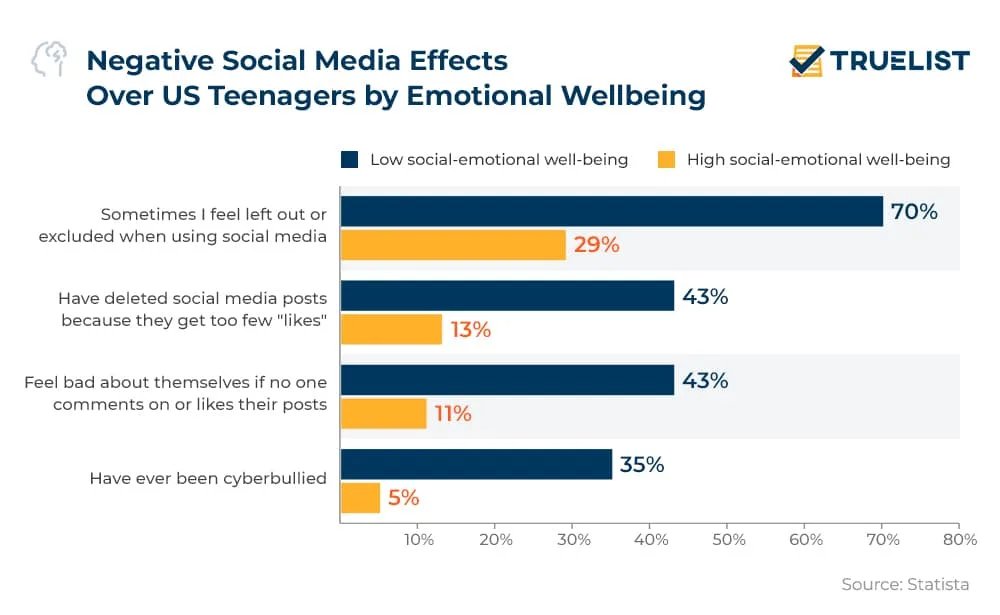
Adverse Impacts of Social Media on the Emotional Well-Being of Teenagers in the United States
- 70% of teenagers with low social-emotional well-being report feeling excluded while using social media, in contrast to 29% of teens with high emotional well-being.
- 43% of low well-being teens remove their social media posts because they receive few likes, whereas only 13% of teens with high well-being do the same.
- 43% of teenagers with low emotional well-being feel bad about themselves when their posts receive no engagement, compared with just 11% of teens who have high emotional well-being.
- 35% of low well-being teenagers have experienced cyberbullying, while this figure drops sharply to 5% among teens with high emotional well-being.
Nomophobia Prevalence
- 66% of people experience nomophobia, with 99% showing some level across populations.
- 77% of teens exhibit nomophobia symptoms, including 56% feeling anxious without phones.
- 1 in 2 adults panic over low phone batteries, mirroring 72% with anxiety at 20% charge.
- Nomophobia qualifies as a specific phobia subtype, affecting 51% moderately worldwide.
- 72% of teens check phones immediately upon waking, signaling stress from separation.
- Students with high nomophobia scores show a r = -0.35 correlation to lower GPA.
- Gen Z experiences the fastest nomophobia growth, with 60-70% moderate-to-severe cases.
- 59% with severe nomophobia report very frequent nighttime phone checking.
- 84.2% prevalence among middle/high schoolers, the highest after university students.
Driving Safety Dangers
- Distracted driving claims 3,275 lives annually in the U.S., accounting for 8% of all traffic fatalities.
- Gen Z and Millennials (ages 16-45) represent 72% of all distracted driving violations.
- Drivers spend an average of 1 minute 38 seconds per hour handling phones while driving.
- Texting while driving increases crash risk by 23 times compared to focused driving.
- Teen drivers face 3x higher crash risk when using phones behind the wheel.
- 47% of drivers admit to sending or receiving texts during recent drives.
- Over 400,000 injuries stem from smartphone distractions each year in the U.S.
- 5% of drivers in fatal crashes were distracted, often by cell phone use.
- Hands-free devices still delay reaction times by up to 37% versus undistracted driving.
- Distracted driving violations surged 48% in early 2024 amid rising smartphone reliance.
Prevention Strategies Stats
- Digital well-being apps reduce screen time by an average of 21%.
- 48% of parents actively use parental control apps to monitor children’s online activity.
- The digital detox retreats market is projected to grow at a 12.4% CAGR through 2034.
- Mindfulness training significantly reduces problematic smartphone use with correlations up to r = -0.399.
- 72% of parents of children aged 5-11 use parental controls to restrict device time.
- Screen time apps like Screen Time effectively reduce mobile phone use in 31% of tested cases.
- Post-pandemic screen time dropped to 2.7 hours daily while outdoor activity rose from 19% to 71%.
- Brief online mindfulness interventions significantly decrease multiple types of mobile phone addiction.
- 75% of parents check websites and apps used by children aged 5-11.
Frequently Asked Questions (FAQs)
57% of Americans said they are addicted to their phones in 2025.
The average smartphone user checks their phone about 144 times per day.
About 66% of people experience some level of nomophobia.
Global smartphone use reached an average of 4.6 hours per day in 2025.
Conclusion
Smartphone addiction has evolved into a multifaceted challenge impacting mental health, academic performance, personal relationships, and workplace productivity. The data shows individuals of all ages, especially teens and young adults, face growing difficulty separating from their devices. With screen time rising and compulsive checking becoming routine, concerns around nomophobia, sleep disruption, and emotional well-being continue to intensify.
At the same time, awareness and prevention efforts are expanding through digital well-being tools, education, and policy changes. The numbers make one thing clear: managing smartphone use is no longer optional but essential for healthier, more balanced lives.