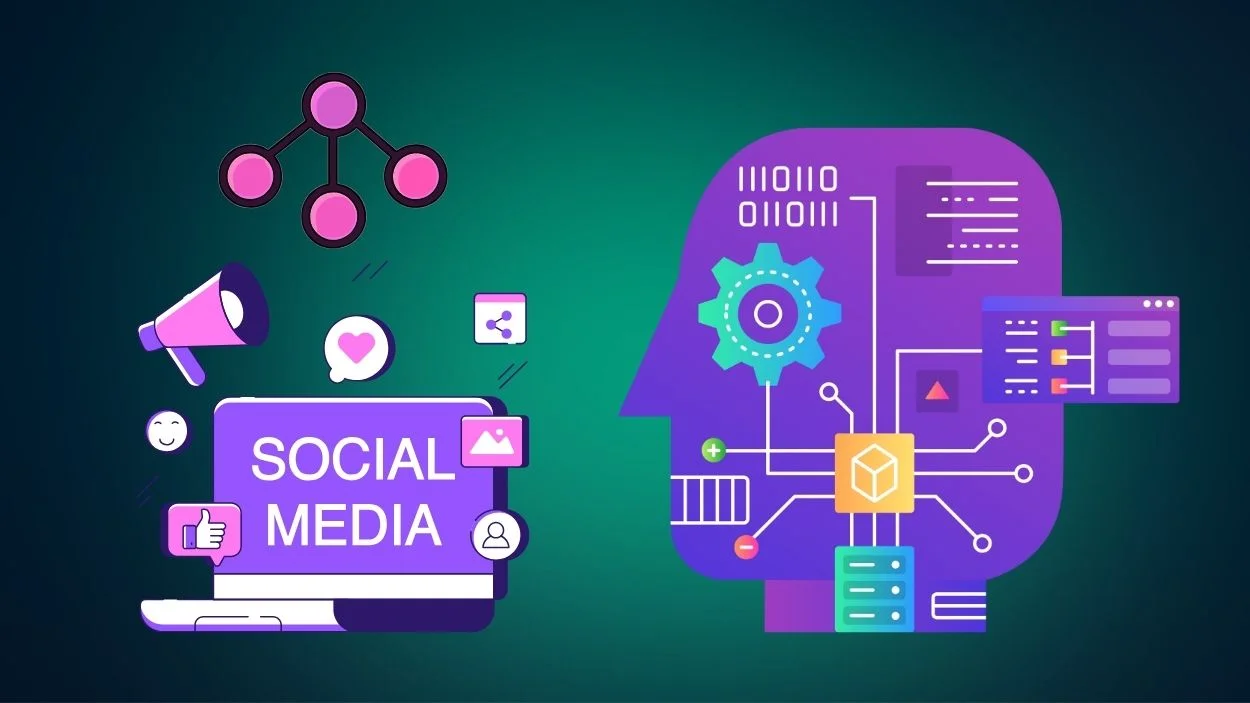


Social media algorithms now shape much of what we see online. Billions of users rely on these systems to determine which posts, videos, and ads appear in their feeds. In industries from marketing and e-commerce to news and entertainment, algorithmic choices directly influence visibility, reach, and engagement. Whether you’re a brand trying to grow an audience or a content creator hoping to stay relevant, algorithm behavior matters. Read on to see the latest statistics and what they mean for global usage, platform behavior, and engagement outcomes.
Editor’s Choice Stats
- Over 5.66 billion social-media user identities existed globally at the start of October 2025.
- Approximately 63.9% of the world’s population now uses social media as of early 2025.
- The average daily time users spend on social media globally is around 2 hours and 21 minutes.
- Typical global users now visit an average of 6.8 social platforms per month.
- In the U.S. in 2025, 84% of adults say they have ever used YouTube, making it the most used platform overall.
- Organic reach for many brands has dropped sharply; some report less than 2% reach on major platforms without paid support.
- In 2025, algorithms across major platforms (e.g., Facebook, Instagram, TikTok) rely on machine learning models using signals like watch time, engagement, and cross-format consumption to rank content.
Recent Developments
- The global social media user base grew by 4.1% in 2025, reaching about 5.24 billion users worldwide.
- Organic reach on brand pages has dropped by up to 30-50% due to algorithm updates throttling unpaid visibility.
- Algorithms in 2025 utilize deep learning and real-time data, processing over 50+ user signals for feed personalization.
- Multi-image posts (“carousels”) on platforms like Instagram show an average engagement rate of over 14%, outperforming short-form videos.
- The average user engages with 6.83 different social media platforms monthly, indicating rising cross-platform consumption.
- Over 70% of businesses now rely more heavily on paid advertising due to algorithm unpredictability affecting organic reach.
- Research in 2025 shows that 62% of users report increased trust in platforms that provide algorithm transparency.
- Social media advertising spend is projected to hit $306.4 billion in 2025, reflecting higher dependency on paid reach.
- Video content preferences show that 78% of consumers prefer short videos for product discovery, but engagement with short-form videos is flattening.
- Platforms like TikTok and Instagram now prioritize original and authentic content, with AI algorithms reducing the reach of recycled or low-quality posts by over 40%.
Global Social Media Reach & Usage Patterns
- As of 2025, about 5.24 to 5.66 billion people worldwide are active on social media.
- That corresponds to roughly 64% of the global population being active social media users.
- The global user base continues to grow steadily, adding tens of millions of users every quarter.
- On average, individual users now access or visit 6 to 7 different social platforms per month.
- Globally, the typical daily time spent on social media is about 2 hours, 19–21 minutes.
- Mobile devices remain dominant; about 92% of social media users globally access platforms from mobile.
- Regionally, emerging markets, including parts of Asia, Africa, and Latin America, contribute most of the growth, driven by mobile-first adoption and lower barriers to entry.
- In mature markets like the U.S., social media remains widespread. In 2025, 71% of U.S. adults use Facebook, and 50% or more report using Instagram.
- Video consumption continues rising globally, and platforms promoting video content tend to retain higher engagement per session compared with text or image-only posts.
Top Social Media Platforms by Active Users
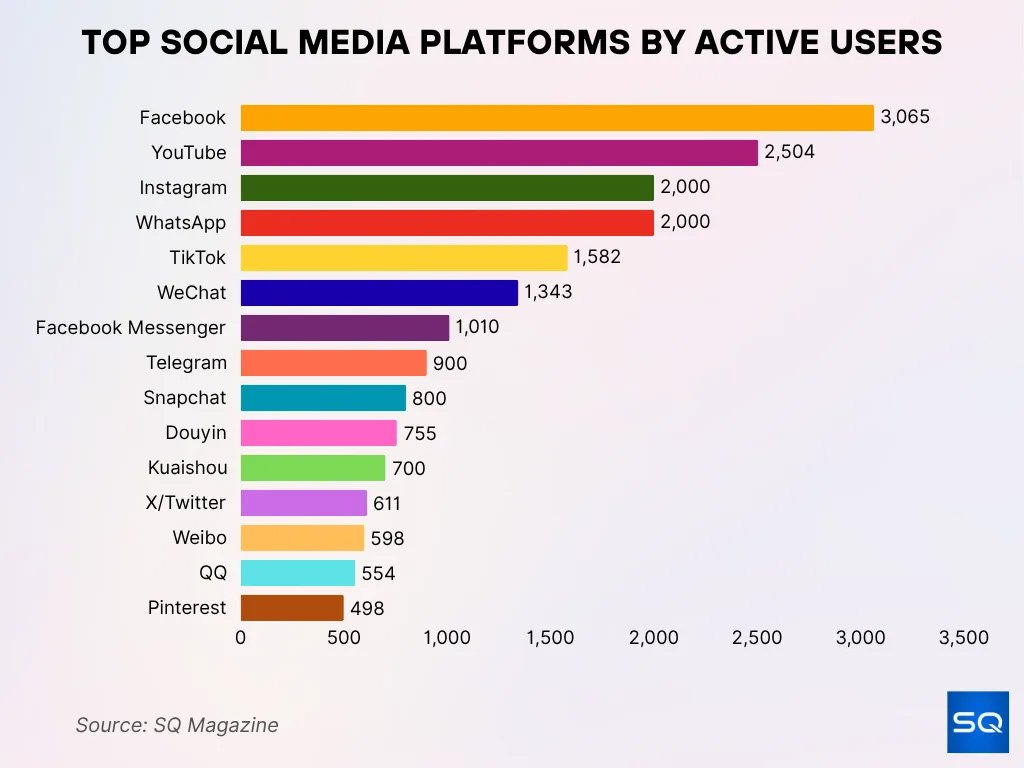
- Facebook remains the top social media platform with 3.07 billion active users, reinforcing its global dominance in digital reach.
- YouTube ranks second with 2.5 billion users, continuing to flourish through video-driven engagement and creator-focused monetization.
- Instagram and WhatsApp each hold 2 billion users, emphasizing Meta’s powerful ecosystem across global communication and social sharing.
- TikTok commands 1.58 billion active users, boosted by its viral short-form content and strong Gen Z appeal.
- WeChat reaches 1.34 billion users, underscoring its essential role in China’s digital ecosystem as an all-in-one platform.
- Facebook Messenger stays relevant with 1.01 billion active users, supporting widespread global communication.
- Telegram reaches 900 million users, expanding rapidly due to its privacy-centric design and support for massive groups.
- Snapchat draws 800 million users, resonating mainly with younger audiences through visual-first messaging.
- Douyin, the Chinese version of TikTok, has 755 million users, intensifying China’s booming short-video culture.
- Kuaishou follows closely with 700 million users, thriving particularly in lower-tier Chinese cities.
- X (formerly Twitter) accumulates 611 million users, continually adjusting its strategy under its ongoing rebranding.
- Weibo, China’s leading microblog site, reports 598 million users across its active base.
- QQ, a long-standing Chinese platform, still maintains 554 million active users.
- Pinterest closes the list with 498 million users, remaining strong in lifestyle, creativity, and shopping-focused interests.

Correlation Between Algorithm Changes and Engagement Rates
- Facebook’s engagement rates declined by approximately 36% after recent algorithm changes in 2025.
- Instagram saw a drop of around 16% in user engagement following its algorithm update.
- TikTok engagement decreased by about 34% correlating with its latest algorithm adjustments.
- Organic reach on Facebook now averages below 2%, meaning fewer than 2 followers per 100 see a typical post.
- Instagram’s average organic reach stands at roughly 3.5%, limiting visibility without paid promotion.
- Posts that combine video, stories, and reels see up to 50% higher engagement than static content.
- Brands experience up to 60% lower comment and share rates due to the deprioritization of organic content.
- Small businesses report a 45% increase in dependency on paid ads to maintain visibility since algorithm updates.
- Engagement rates on posts with higher dwell time and completion have improved by approximately 20%.
- Audience fragmentation across platforms contributes to a collective engagement rate decline of about 25% per platform.
Impact of Algorithms on Content Visibility and Organic Reach
- According to a 2025 industry update, average organic reach across major social platforms has fallen to historic lows, and many brands report less than 2% reach on unpaid posts.
- One 2025 review notes that organic reach for a typical brand post declined by about 41% in 2024.
- On Facebook in 2025, organic posts reportedly achieve as little as 2.6% follower reach, and on Instagram, organic reach averages near 4%.
- Fewer users are seeing brand and creator content in their feeds; most visibility now arises only via paid ads, reducing the value of unpaid content efforts.
- Saturation of content plays a big role; there is more content produced daily than users can consume, forcing algorithms to filter heavily.
- The shift to algorithmic curation has moved platforms away from chronological or network-based feeds toward highly personalized discovery.
- As a result, brands and creators face a “pay-to-play” environment, and visibility almost always requires paid promotion or advertising.
- Some content, especially short-form video or cross-format content, performs better under the algorithms than static posts, changing how visibility should be approached.
Influence of Algorithms on Advertising and Revenue
- Over 70% of marketers confirm algorithm changes have significantly shaped their social-media strategies in 2025.
- 84% of brands report positive returns on pay-per-click (PPC) advertising campaigns.
- Social media advertising spending is projected to reach $306.4 billion in 2025, representing 26.2% of total global ad spend.
- Average CPM on Meta platforms in 2025 is around $8.17, significantly increasing competition for visibility.
- Organic reach on major platforms has dropped to single digits, with averages as low as 1-2% on Facebook.
- Small businesses reliant on organic content face financial pressure as organic reach has declined by over 70% in recent years.
- Paid ads are driving growth, with 60% of social ad spend concentrated on Meta, reflecting a shift towards pay-to-play.
- Content optimized for algorithm signals generates up to 40% higher engagement rates than non-optimized posts.
- Hybrid marketing approaches combining organic content with paid boosts are used by over 65% of marketers in 2025.
- PPC campaigns create about 27.6% of new visitor traffic, outperforming many other marketing channels.
Most Widely Used Social Media Channels by Marketers
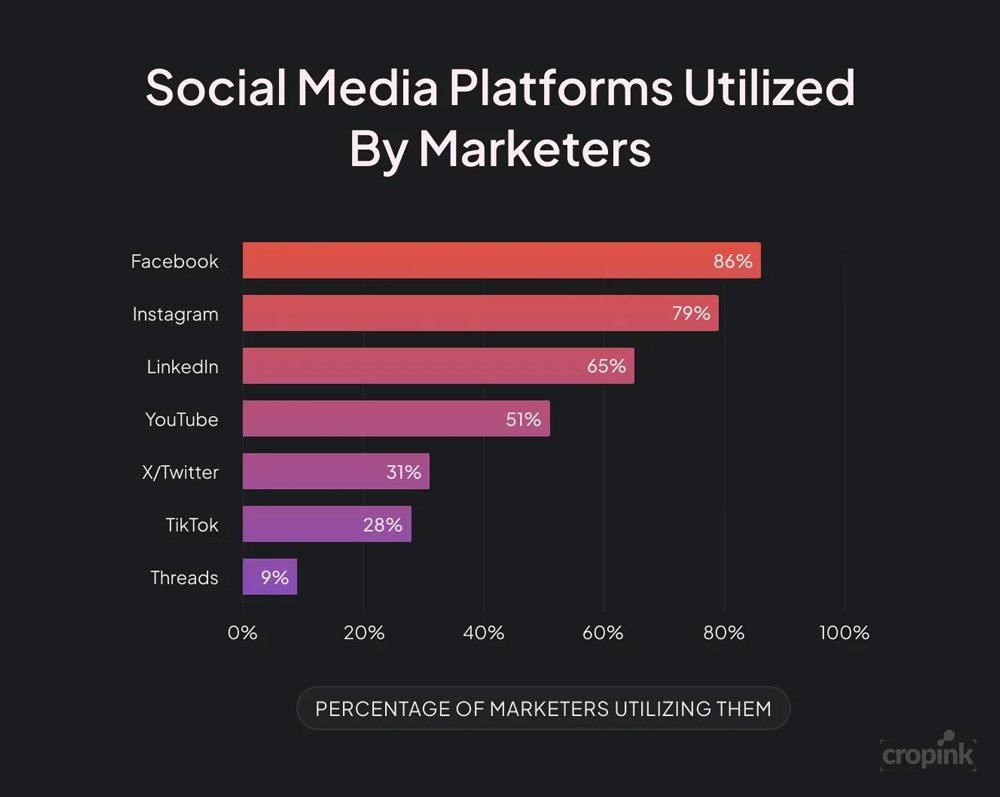
- Threads, Meta’s newer platform, is used by just 9%, indicating it is still gaining traction among marketers.
- Facebook remains the top choice for marketers, with 86% actively using it for campaigns and brand engagement.
- Instagram follows closely, utilized by 79% of marketers to leverage visual content and influencer reach.
- LinkedIn is used by 65% of marketers, especially for B2B targeting and professional audience building.
- YouTube is employed by 51%, tapping into long-form and short-form video content for brand storytelling.
- X/Twitter is used by 31% of marketers, serving as a platform for real-time updates and customer service.
- TikTok, despite its fast growth, is used by only 28% of marketers, showing room for future adoption.
User Behavior Changes Driven by Social Media Algorithms
- 68% of users report seeing more content outside their immediate network due to algorithm-driven feed personalization.
- Platforms now prioritize content based on predicted user interest, increasing passive consumption by 35%.
- Algorithms favor short-form video, leading to a 60% increase in daily video content consumption over static posts.
- Around 95% of social media access is via mobile, with average daily use limited to about 2h 20m.
- Users see 40% less content from personal friends and more generalized or popular posts in their feeds.
- About 70% of users perceive social media more as curated media channels than personal networks.
- Bite-sized content formats like stories and reels generate up to 7.5% engagement rates, compared to longer posts.
- Loyalty to a single platform has dropped, with the average user engaging with 6.83 social networks monthly.
- Mobile-first content formats account for 80% of all video traffic on social media platforms.
- User time spent watching short-form video content averages 1 hour 16 minutes daily, reflecting changing consumption habits.
Personalization and Relevance in Social Media Feeds
- In 2025, social media algorithms use dozens to hundreds of signals like user behavior, device type, and browsing history for feed personalization.
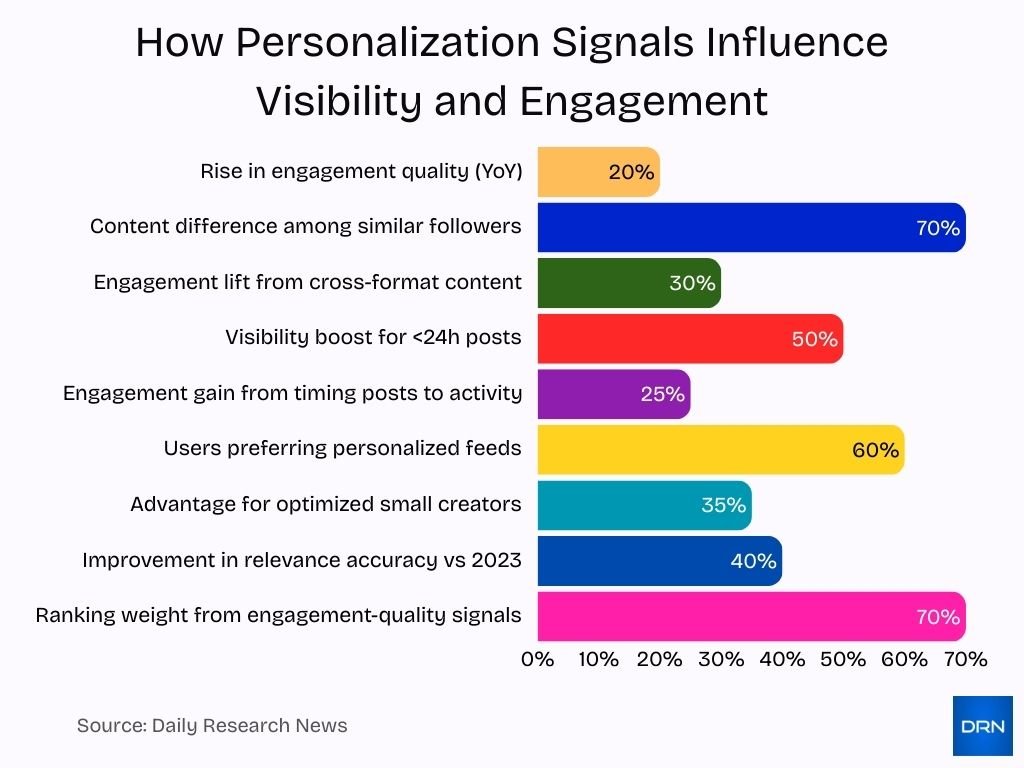
- Platforms prioritize posts with meaningful interactions, leading to a rise in engagement quality over sheer interaction quantity by over 20% year-over-year.
- Two users with similar followers see up to 70% different content based on personalized behavior patterns.
- Cross-format content (video, stories, posts) improves user engagement by 30–40% through combined content journeys.
- Freshness is critical; content posted within the last 24 hours receives 50% more visibility than older posts.
- Timing impacts visibility significantly, with posts timed to audience activity windows seeing up to 25% higher engagement.
- Personalized feeds act like streaming services, delivering content tailored to interests, with 60% of users stating they prefer personalized feeds over chronological ones.
- Small creators optimizing for relevance outperform larger accounts lacking personalization by up to 35% in reach and engagement.
- AI-driven ranking models have boosted content relevance accuracy by 40% compared to 2023 methods.
- Engagement quality indicators such as comments and shares now account for over 70% of content ranking weight, shifting focus away from likes alone.
Engagement Metrics Prioritized by Algorithms (Likes, Shares, Comments)
- Algorithms give 3x more reach to posts with meaningful comments and shares than those with only likes.
- Posts with just 5 shares generate more reach than posts with hundreds of likes.
- Engagement from outside followers can increase reach by up to 40% through discovery mechanisms.
- User-generated content boosts engagement by approximately 20% over standard brand content.
- Videos with high watch-time increase ranking by over 60% compared to static posts.
- Cross-format posts (mix of video, images, text) see engagement rates rise by around 25%.
- Comments increase post exposure by up to 2x more than likes on platforms like Facebook.
- User comments contribute a 15-20% higher boost in content visibility compared to likes alone.
- Frequent posting without quality engagement reduces visibility by nearly 30% due to algorithm penalties.
- Engagement metrics (comments, shares, watch-time) are replacing follower counts as primary KPIs on social platforms.
Social Media Algorithms That Marketers Find Most Challenging
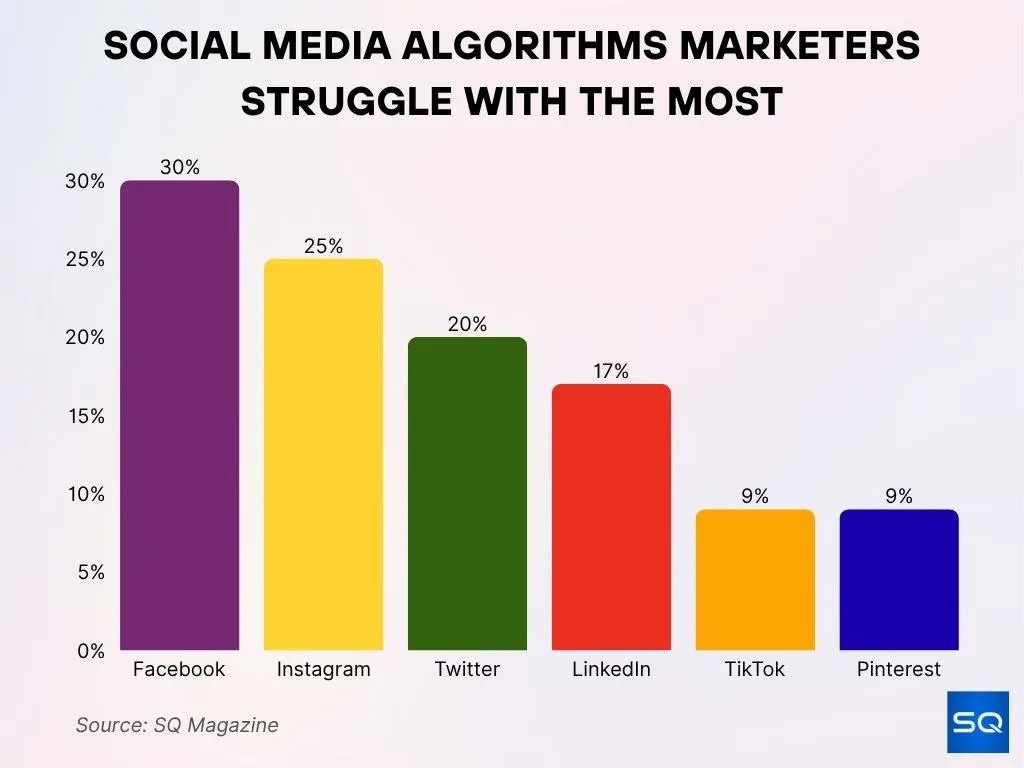
- 30% of marketers state that the Facebook algorithm is the hardest to manage, highlighting ongoing concerns with visibility and engagement performance.
- 25% say the Instagram algorithm is difficult to handle, largely because of its frequent shifts and restricted organic reach.
- 20% struggle most with the Twitter (X) algorithm, especially due to how content is prioritized and its steadily dropping impressions.
- 17% report that the LinkedIn algorithm poses challenges, pointing to uneven reach patterns and an overall short content shelf life.
- Both TikTok and Pinterest are mentioned by 9% of marketers, showing they create comparatively less friction than other major platforms.
Amplification of Misinformation and Divisive Content
- Engagement-based algorithms amplify divisive content by increasing exposure to toxic posts by 27%.
- Users prone to harmful content showed increased engagement when exposed to such posts.
- Personalized algorithmic feeds limit exposure to diverse views, reinforcing confirmation bias by up to 35%.
- Sensational posts outperform balanced content with 40% higher engagement rates.
- Low-credibility content spreads 50% faster than fact-checked corrections.
- Creators chasing engagement face a 20% rise in reputational risk over content quality pressures.
- Algorithms focusing on engagement amplify divisive narratives by a factor of 2 to 3 times compared to preference-based ranking.
- Exposure to engagement metrics increases user vulnerability to misinformation by 30%.
- Removing engagement-based ranking reduces partisan, angry content by 25%.
- Echo chambers in personalized feeds increase ideological homogeneity by 40% among users.
Challenges With Low-Credibility Content and Algorithmic Favoritism
- A 2025 systematic review found that 6.3% to 15.7% of mental health-related videos contained misinformation or disinformation intent.
- Social bots increase misinformation spread by operating in coordinated networks, amplifying false content through tagging and replies.
- Individuals with higher digital literacy show significantly better ability to distinguish true from false information, reducing susceptibility to fake news.
- Algorithms often promote emotionally charged or sensational content, resulting in 5 times more engagement than neutral posts.
- Public health misinformation surged during crises, with algorithms amplifying fringe narratives, contributing to a 6 times faster spread of false news compared to truth.
- Trust in institutions and journalism has eroded, with 70% of respondents believing journalists deliberately mislead the public.
- Viral false content can spread rapidly due to inconsistent platform moderation, with false news reaching audiences 6 times faster than factual news.
- Echo chambers are intensified by algorithms prioritizing engagement, leading to reinforced, polarized views and reduced content diversity.
- AI-generated deepfake videos increased by 550% globally from 2019 to 2023, fueling misinformation and fraud cases.
- More than 5.4 billion people interact daily with personalized social media feeds that use algorithms affecting content visibility and engagement.
Algorithm Impact on Community Interaction and Fact-Checking
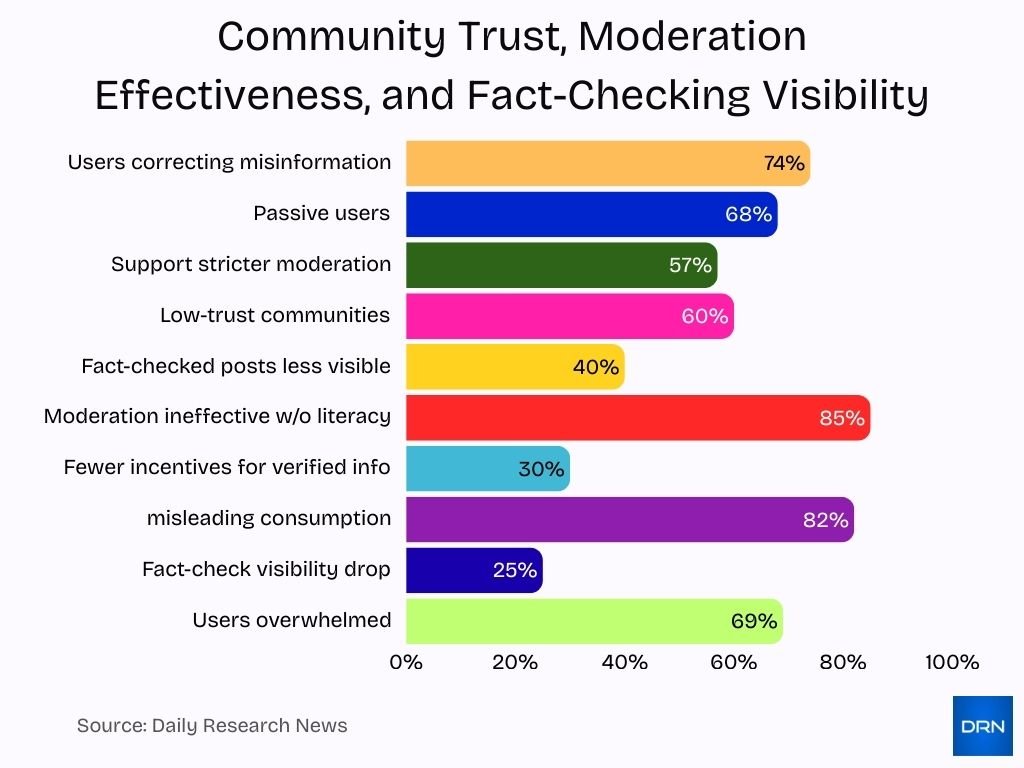
- 74% of users with high eHealth literacy actively correct misinformation, yet 68% of users remain passive observers.
- 57% of users who perceive misinformation as a personal threat support stricter moderation policies.
- Over 60% of social media communities report low trust, leading to failure in countering misinformation.
- Engagement-driven algorithms reduce visibility of fact-checked posts by up to 40% compared to viral misinformation.
- 85% of moderation efforts are ineffective without concurrent improvements in digital literacy and user behavior.
- Algorithms focused on engagement decrease creator incentives for verified information by roughly 30%.
- Niche or extreme communities grow at rates up to 3 times faster under engagement-prioritizing algorithms.
- 82% of users consume a blend of credible and misleading content routinely without clear indicators.
- Fact-checking visibility drops by 25% when engagement metrics dictate content feed prioritization.
- 69% of users feel overwhelmed by mixed content, diminishing trust in online community interactions.
Impact on Mental Health, Well-being & Social Perception
- A 2025 study found that adolescents whose social media use increased from 7 minutes/day to 73 minutes/day saw symptoms of depression rise by 35%.
- Government advisories warn that excessive social media use correlates with higher risks of anxiety, depression, and suicidal behavior among youth.
- Among Gen Z youth, 56% report spending four or more hours a day on social media.
- Many young users rely on social media as a top news source, around 63%.
- Posting publicly correlates with a higher risk of poor sleep, anxiety, and depression in children and teens.
- Algorithm-driven exposure to harmful content worsens body image dissatisfaction among vulnerable adolescents.
- Widespread mental health misinformation misleads users into harmful self-diagnosis tendencies.
- Algorithms rarely prioritize well-being content, instead rewarding posts that drive emotional engagement.
Role of Artificial Intelligence in Algorithm Adaptation
- The MindSET dataset comprises 13 million annotated posts across mental health conditions introduced in 2025.
- AI models trained on MindSET achieved up to an 18-point F1 score gain for detecting certain mental health conditions.
- The RoBERTa-LSTM hybrid classifier reached a misinformation detection accuracy of approximately 98.4%.
- AI-driven content moderation systems can filter harmful content on a large scale efficiently.
- Experts emphasize that 100% human oversight is still necessary to avoid AI bias and misclassification.
- Algorithms adapt continuously by analyzing dynamic user behavior and engagement patterns in real time.
- Increased algorithm complexity has reduced transparency by over 40%, complicating accountability.
- Ethical concerns from expanding AI moderation include privacy, fairness, and freedom of expression issues.
- AI advancements have enabled a 280-fold reduction in inference costs for large models since 2022.
- Nearly 90% of significant AI models developed by the industry will contribute to adaptive algorithm innovations in 2025.
Impact on Political Messaging and Viral Trends
- 68% of political misinformation on social media in 2025 was spread faster than moderation could intervene.
- Automated bots accounted for 25% of Twitter’s political content amplification in 2025.
- Fringe political viewpoints gained up to 3 times more visibility due to engagement-based algorithm boosts.
- Emotionally political posts received 97% higher chances to go viral on social media platforms.
- Over 60% of users relied primarily on social media for political information in 2025.
- Misinformation spreads 70% faster than corrections, drastically reducing fact-checking effectiveness.
- 95% of harmful viral political trends persisted longer due to algorithmic amplification.
- Political groups using targeted algorithm exploitation increased content reach by over 50%.
- 83% of social media users in 2025 support more transparency and regulation of political content algorithms.
- AI-driven microtargeted political ads reached about 34% of social media users, enhancing message impact significantly.
Frequently Asked Questions (FAQs)
About 5.66 billion people worldwide are active social media users as of October 2025.
A typical user now visits an average of 6.84 different social platforms per month in 2025.
Organic reach on Facebook averages around 1.65%, while on Instagram it is about 3.50%.
Engagement rates dropped roughly 36% on Facebook, 16% on Instagram, and 34% on TikTok.
Conclusion
The rapid evolution of social-media algorithms, bolstered by advanced AI, has intensified challenges around misinformation, mental health, and public discourse. While algorithmic adaptation enables powerful content personalization and scalable moderation, it also magnifies low-credibility content, amplifies divisive narratives, and complicates community-level fact-checking. The mental health implications for young users and vulnerable groups continue to draw concern, as do risks to civic trust and information accuracy.
As we move forward, balancing engagement-driven growth with ethical content practices and transparency will prove critical. Only then can social media fulfill its potential as a platform for connection, without undermining truth or well-being.