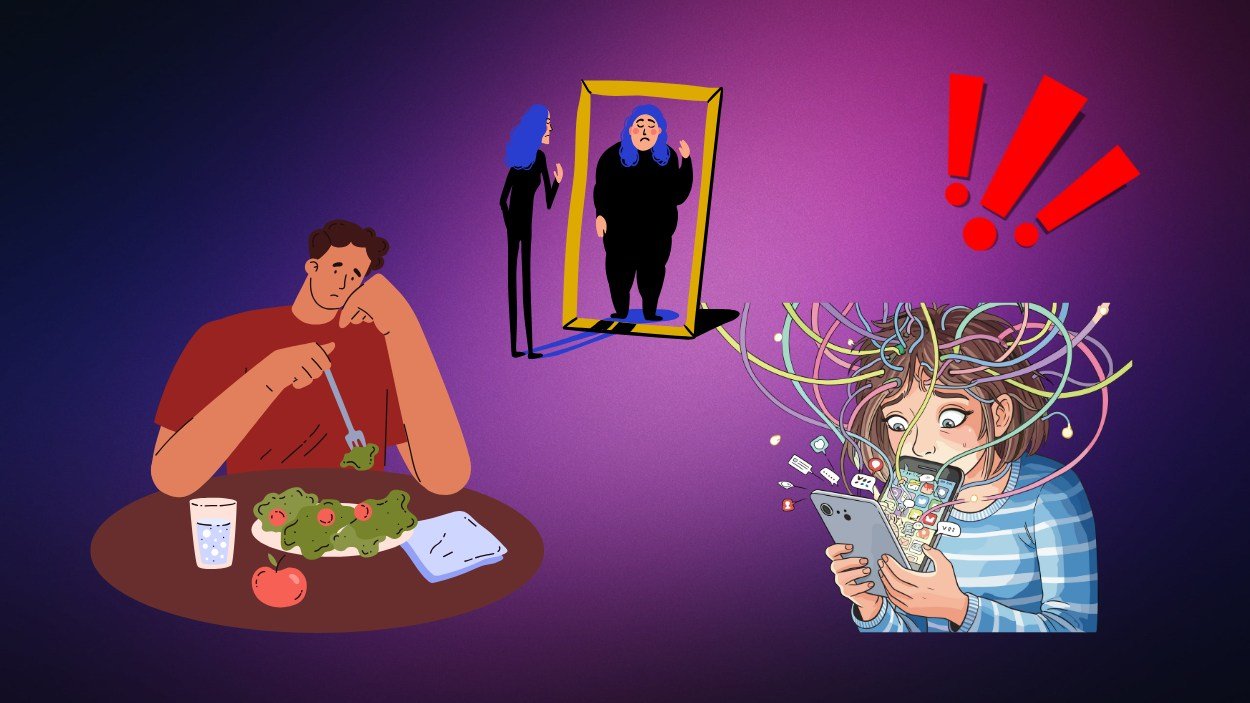


Social media is woven into the daily lives of billions, shaping how we communicate and perceive ourselves. Its influence goes beyond likes and shares; platforms like Instagram, TikTok, and Snapchat now play a measurable role in how people view their bodies, especially among teens and young adults. Researchers and clinicians are increasingly linking social media exposure to body dissatisfaction and risk of eating disorders, showing real-world consequences in mental health clinics and college counseling centers.
From clinical settings treating disordered eating to schools implementing digital wellness programs, its impacts extend into both healthcare and education. This article breaks down the latest statistics to help readers understand the scale and subtleties of this issue, and dives in to explore the data.
Editor’s Choice
- 65% of teens who use social media daily report negative feelings about their body image.
- Nearly half (46%) of U.S. teens aged 13–17 say social media makes their body image worse.
- People spending over 3 hours daily on social media are twice as likely to develop eating disorders as those with less use.
- In 2025, about 24% of high schoolers who use social media daily show symptoms linked to eating disorders.
- 71% of female users (ages 14–24) follow fitness or diet influencers with unrealistic body standards.
- A WHO report shows 11% of adolescents exhibit problematic social media behavior globally.
- Internal research from Instagram shows “eating disorder adjacent content” appears ~3× more often to teens already dissatisfied with their bodies.
Recent Developments
- In 2025, Meta acknowledged that teens who already feel bad about their bodies see eating disorder‑related content three times more often than their peers.
- TikTok banned the hashtag #SkinnyTok in mid‑2025 amid rising concerns that it promoted extreme thin ideals and disordered eating.
- Researchers are using large TikTok datasets, over 43,000 videos linked to eating disorder themes, to study patterns of harmful content.
- Global reviews emphasize how visual social media intensifies exposure to edited images, feeding body dissatisfaction and comparison pressures.
- WHO and other health bodies are now tracking problematic social media behavior as part of adolescent mental health surveillance.
- New psychosocial studies focus on self‑esteem and eating disorder risk tied to social media activity in ages 16–25.
- Cross‑cultural analyses are rising, examining platform characteristics on adolescent body image (e.g., comparing TikTok vs WeChat influences).
Global Prevalence of Eating Disorders
- An estimated 9% of the U.S. population, or about 28.8 million Americans, will have an eating disorder in their lifetime.
- Eating disorders contribute to roughly 10,200 deaths annually in the U.S., equating to one death every 52 minutes.
- Worldwide, eating disorders affect millions, disproportionately impacting teens and young adults (particularly women), according to mental health epidemiology.
- The global increase in social media users, around 4.9 billion people in 2023, raises exposure risks to eating disorder triggers.
- WHO data suggest problematic social media use (an addiction‑like pattern) now affects ~11% of adolescents worldwide.
- Systematic reviews confirm consistent associations between social media use and body image issues and disordered eating across diverse countries.
- Even outside the U.S., research links platform engagement with body dissatisfaction and harmful eating behaviors among youth.
- Cross‑sectional studies show that content type, not just time spent, plays a critical role in eating disorder risk globally.
Most Common Symptoms Reported by People with Eating Disorders
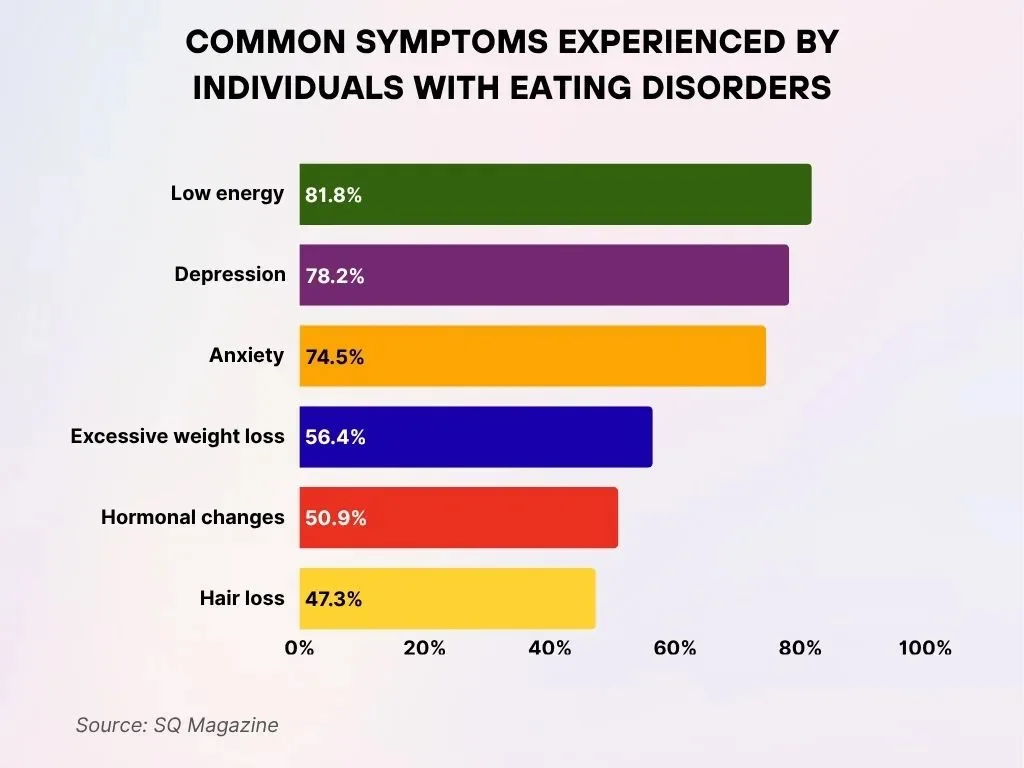
- Approximately 81.8% of respondents reported persistent low energy, identifying it as the most frequently experienced symptom.
- Around 78.2% mentioned depression as a major psychological consequence associated with their eating disorder.
- Nearly 74.5% struggled with anxiety, underscoring the strong link between eating disorders and mental health issues.
- About 56.4% experienced excessive weight loss, recognized as a key clinical indicator of eating disorders.
- Roughly 50.9% faced hormonal changes, pointing to significant internal physiological disruptions.
- Close to 47.3% reported hair loss, demonstrating the visible physical effects of nutritional deficiencies.

Key Types of Eating Disorders
- Anorexia nervosa lifetime prevalence reaches up to 4% in females and 0.3% in males.
- Bulimia nervosa shows a lifetime prevalence averaging 1.0% globally.
- Binge-eating disorder lifetime prevalence averages 1.9% worldwide.
- OSFED one-year prevalence stands at 1.18% in females and 0.27% in males.
- ARFID affects 0.3%–15.5% of the general population.
- 95% of first-time eating disorder cases occur by age 25.
- 52% of teen girls and 45% of teen boys skip meals after social media exposure.
- 40% of young girls feel insecure about Instagram or Facebook content.
- 30% of eating disorder treatment seekers have OSFED.
- Disordered eating tendencies affect 42% of youth with social media addiction.
Social Media Usage Statistics Worldwide
- About 4.9 billion people worldwide used social media in 2023, averaging 145 minutes per day.
- 72% of U.S. adults report using at least one social networking site, up sharply from 5% in 2005.
- WHO reports show ~11% of adolescents globally display problematic addiction‑like social media behavior.
- Platform popularity varies, with YouTube, TikTok, Instagram, and Snapchat among the most widely used globally.
- A review of 32 countries finds social media addiction rates range from 5% to 31% on average.
- Teens often engage with social apps for multiple hours daily, correlating with increased mental health risks.
- Visual platforms (Instagram, TikTok) are especially influential on body image perceptions and comparisons.
- Growth trends predict that social media users could reach 5.8 billion by 2027, expanding potential exposure.
Time Spent on Social Media by Age Group
- U.S. teens average 4.8 hours daily on social media.
- 13-year-olds spend 4.1 hours per day on social media.
- 17-year-olds average 5.8 hours daily on social media platforms.
- Teen girls use social media 5.3 hours per day versus 4.4 hours for boys.
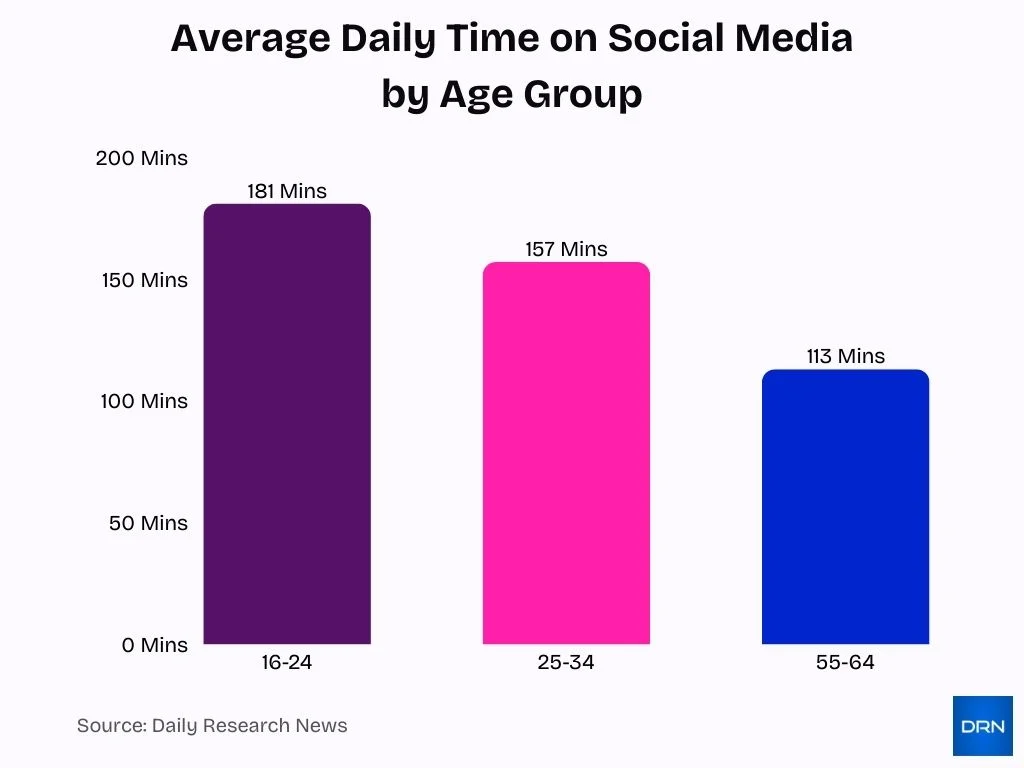
- 16-24-year-olds average 3 hours 1 minute daily on social media worldwide.
- 25-34-year-olds spend 2 hours 37 minutes per day on social networks.
- 55-64-year-olds average 1 hour 53 minutes daily on social media.
- Gen Z females (16-24) lead at 2 hours 59 minutes daily on social media.
- 18-24-year-olds in the U.S. spend 186 minutes daily on social platforms.
Teen and Young Adult Social Media Use
- 46% of adolescents (13–17) say social media makes their body image worse.
- U.S. teens increasingly cite social media as a top negative influence on mental health, up from 32% in 2022 to 48% in 2024.
- Parents are even more likely to view social media as harmful, with 55% extremely concerned about its effects on teen wellbeing.
- Around one‑third of teen girls felt worse about their bodies due to Instagram use, compared to around 14% of boys.
- Early use of social platforms around the ages of 12–13 correlates with the onset of body image and self‑esteem issues.
- Teens often rate social media as more stressful than beneficial for self‑image perceptions.
- Older adolescents (18–24) report social comparison and influencer content as contributors to poor self-image perceptions.
- Heavy use among college students often correlates with increased anxiety and shame about appearance.
Social Media Addiction and Disordered Eating
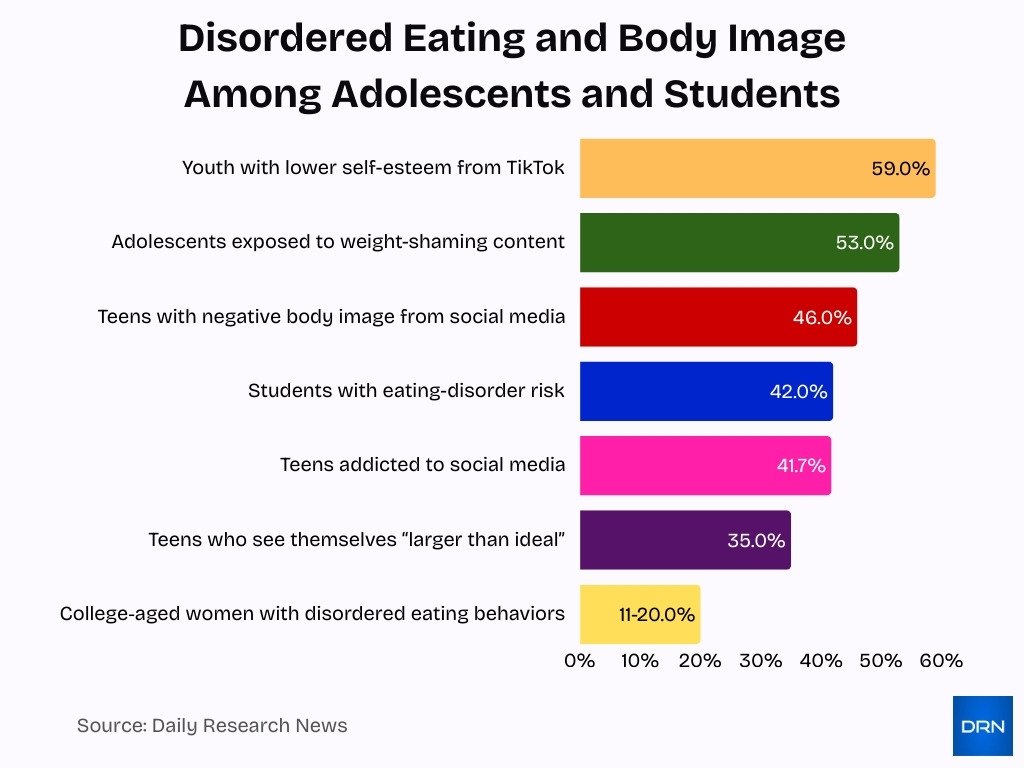
- 42% of youth students exhibit probable eating disorders, with 41.7% showing social media addiction.
- Facebook addiction raises the risk by OR 1.784 among young adults.
- 38% of young adults display Facebook addiction, while 23.6% risk eating disorders.
- 17.7% of Instagram fitspiration followers risk developing an eating disorder.
- 40% of teens worry about their image due to social media content.
- Social media overusers are 2.2 times more likely to engage in emotional overeating.
- Constant social media use is linked to 25% higher risk of elevated eating disorder symptoms.
- 71% report higher body dissatisfaction after viewing ideal model images on social media.
- Social media addiction correlates weakly positively (r=0.133) with eating disorders.
Social Media and Body Image Dissatisfaction
- Nearly 40% of teens reported that social media images caused them to worry about their body image.
- 40% of British teens aged 13-19 said social media content made them anxious about their appearance.
- A study found 46.1% prevalence of body dissatisfaction among late adolescents using social media.
- 90% of teenagers reported some level of body image concern, with 38% very concerned.
- Instagram and Snapchat show stronger associations with negative body image than text-based platforms.
- Daily social media users among teenage girls experience significantly more body dissatisfaction.
- Passive scrolling on social media links to elevated anxiety, depression, and body dissatisfaction.
- 74% of adolescent girls and 50% of boys want to change something about their body shape.
Most Prevalent Types of Mental Health Disorders Worldwide
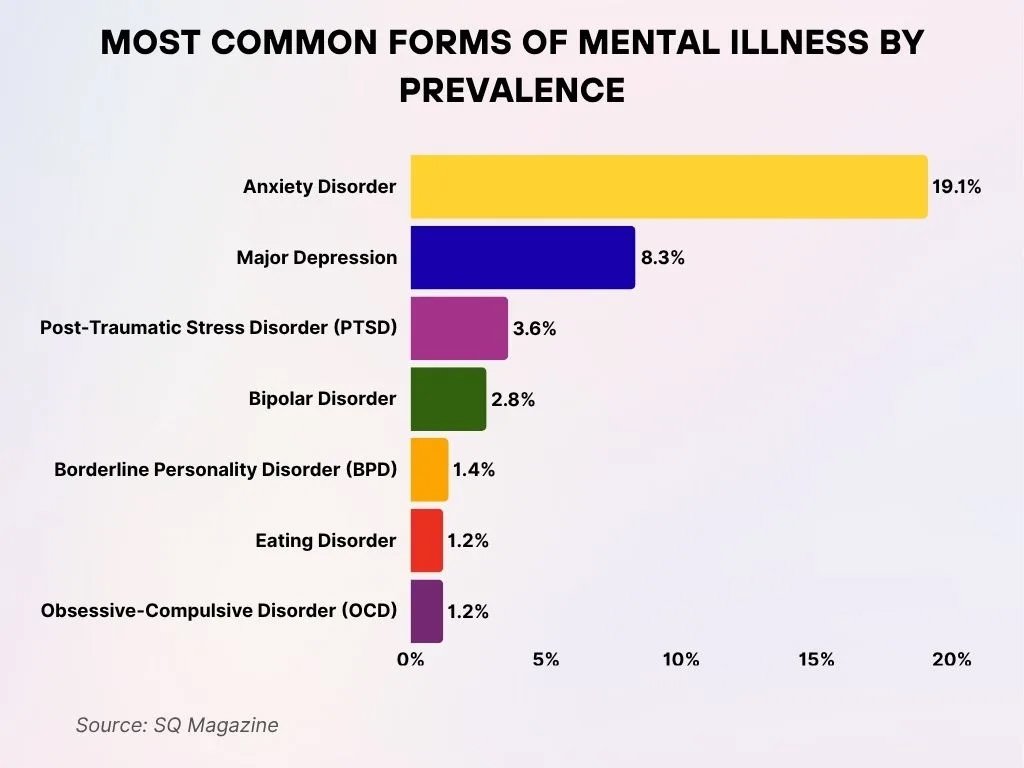
- Anxiety Disorder is the most common mental illness, affecting 19.1% of individuals across the population.
- Major Depression ranks as the second most prevalent condition, with a reported prevalence rate of 8.3%.
- Post-Traumatic Stress Disorder (PTSD) impacts 3.6% of the population, reflecting significant exposure to trauma-related mental health challenges.
- Bipolar Disorder is reported by 2.8% of individuals, indicating notable prevalence among mood disorders.
- Borderline Personality Disorder (BPD) affects 1.4% of people, highlighting its presence among personality-related conditions.
- Eating Disorders and Obsessive-Compulsive Disorder (OCD) each impact 1.2% of the population, showing equal prevalence among these conditions.
Appearance-Based Social Comparison on Social Media
- One in two girls reports that idealized beauty content on social media causes low self-esteem.
- Upward social comparisons on social media show a small negative effect on self-evaluations and emotions in a meta-analysis of 118 effect sizes.
- Browsing Instagram links to lower body appreciation, fully mediated by upward comparisons to influencers.
- 74% of adolescent girls and 50% of boys want to change something about their bodies, tied to social media use.
- 19% of early adolescents feel down about their body image after viewing social media content.
- The highest social media users have 2.18–2.55 times greater odds of having eating concerns.
- Overweight/obese users show significantly higher frequency of image comparisons on social media.
- Girls report higher social media use and body dissatisfaction than boys, who focus on muscularity.
- More than 20% of social media users face body image issues, doubling to over 40% in teenagers.
- Anorexia nervosa adolescents display a higher drive for thinness linked to online comparisons.
Influencers, Celebrities, and Appearance Ideals
- Instagram influencers like Khaby command over 162 million followers on TikTok, amplifying beauty ideals to massive audiences.
- 49% of Instagram users following health-food accounts exhibit symptoms of orthorexia nervosa.
- 90% of young women edit or filter photos before posting on social media due to appearance anxiety.
- Browsing Instagram influencers correlates with lower body appreciation via upward social comparisons in young females.
- 17.7% of fitspiration Instagram followers are at high risk for developing an eating disorder.
- 67.7% of young women agree that influencers significantly affect their body image perceptions.
- TikTok thin-ideal content heightens upward appearance comparisons and reduces body satisfaction in Gen Z users.
- 51% of men use photo editors to remove facial blemishes, matching widespread image editing habits.
- Exposure to celebrity images is linked to increased body dissatisfaction and disordered eating across 36 studies.
U.S. Adults With Eating Disorders by Ethnicity
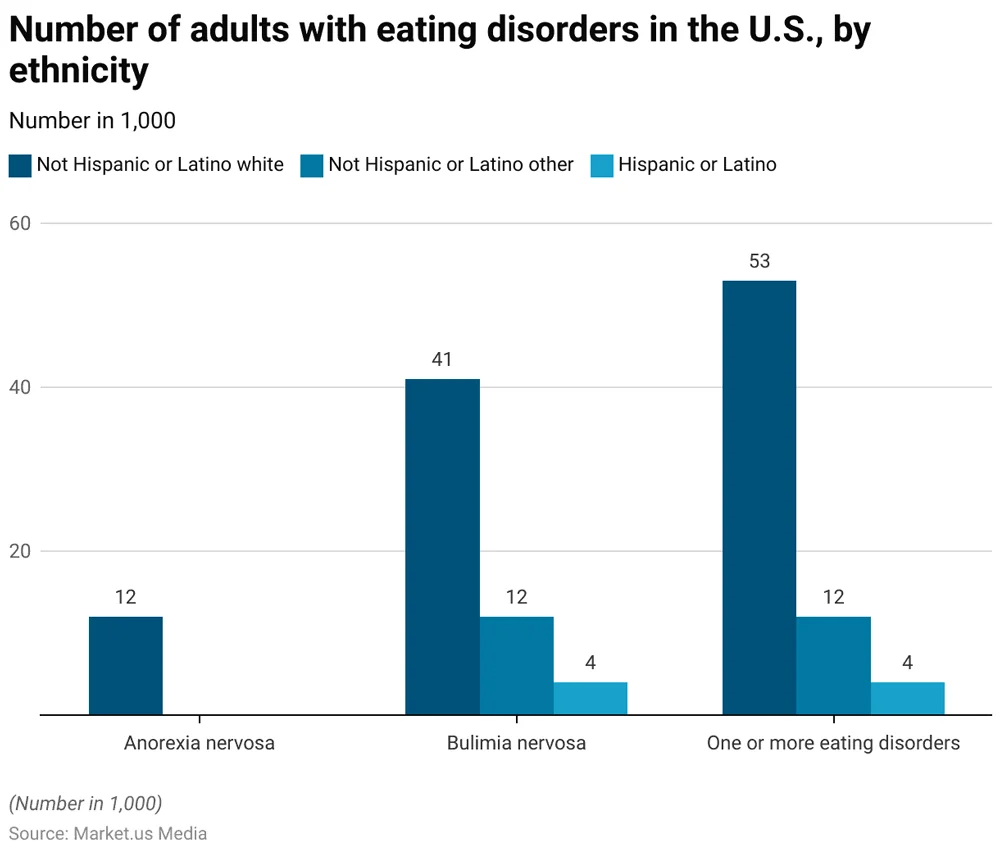
- Anorexia nervosa affects approximately 12,000 Non-Hispanic or Latino White adults, with no reported figures available for other ethnic groups in this dataset.
- Bulimia nervosa impacts about 41,000 Non-Hispanic or Latino White adults, making it the most affected ethnic group for this disorder.
- Roughly 12,000 Non-Hispanic or Latino adults from other ethnic backgrounds are reported to have bulimia nervosa.
- Around 4,000 Hispanic or Latino adults in the U.S. are affected by bulimia nervosa.
- An estimated 53,000 Non-Hispanic or Latino White adults live with one or more eating disorders, representing the largest share overall.
- About 12,000 Non-Hispanic or Latino adults from other ethnic groups report having one or more eating disorders.
- Approximately 4,000 Hispanic or Latino adults are affected by one or more eating disorders, according to the available data.
Platform-Specific Impact: Instagram
- Internal research reveals teens who feel worse about their bodies see roughly 3× more eating‑disorder‑adjacent content on Instagram than their peers.
- Content involving disordered eating themes made up ~10.5% of feeds for vulnerable teens, compared with ~3.3% for others.
- Instagram’s recommendation system may inadvertently amplify posts that emphasize body judgments and comparisons.
- Visual photo posts on Instagram are strongly linked to upward social comparison and worsened self‑image.
- Frequent Instagram use predicts higher internalization of cultural body ideals, increasing ED symptom risk.
- Teens using Instagram daily report greater pressure to match peer aesthetics than those using text‑based platforms.
- Instagram has rolled out messaging prompts and resource links to combat harmful content exposure.
- Despite moderation efforts, algorithmic visibility of body‑focused content remains a concern for researchers and clinicians.
Platform-Specific Impact: TikTok
- TikTok banned the hashtag #SkinnyTok after concerns it promoted unhealthy body ideals and disordered eating content.
- #SkinnyTok had amassed hundreds of thousands of posts, many with restrictive diet messages linked to anxiety about body shape and weight.
- Trends like the “Sunglasses Challenge” reward users for showing a “small waist,” contributing to body checking behaviors.
- TikTok’s algorithm can personalize content toward dieting and weight loss themes, increasing exposure to at‑risk users.
- Large datasets of TikTok eating‑disorder‑related videos (e.g., over 43,000 videos) help researchers track harmful trends and moderation gaps.
- Video‑based platforms intensify upward comparison, particularly among Gen Z users seeking approval through body image.
- Even with moderation, harmful trends resurface under alternate tags or creative captions, challenging enforcement.
- Critics note that merely banning hashtags may not curb underlying algorithmic biases toward sensational content.
Impact on Adolescents and College Students
- Adolescents with high social media use report 74% greater body dissatisfaction among girls.
- Young adults in the highest social media use quartile face 2.18–2.55 times higher odds of eating concerns.
- 53% of adolescents saw increased weight-stigmatizing content like memes and jokes on social media.
- 59% of children and adolescents experience decreased self-esteem from TikTok use.
- 46% of teens aged 13–17 feel worse about their body image due to social media.
- 40% of teens report social media content causes worry about image.
- 42% of students show probable eating disorders, with 41.7% addicted to social media.
- 11–20% of college-aged women exhibit disordered eating behaviors linked to platforms like Facebook.
- 35% of teens perceive themselves as “larger than ideal” from social media exposure.
- Excessive screen time during the pandemic led to 188% rise in youth eating disorder admissions aged 10–21.
Gender Differences in Social Media–Related Eating Disorders
- Girls aged 13–14 with social media accounts report disordered eating at 51.7%, higher than 45% in boys.
- Girls show significantly higher body dissatisfaction from social media than boys, with a gender gap of 0.33 standard deviations.
- Adolescent girls experience stronger negative body image effects from social media due to greater investment in appearance content.
- 55.6% of dieting adolescents initiate disordered restrictive eating, linked to social media exposure in females.
- Daily social media use correlates positively with body dissatisfaction in teenage girls across countries.
- Prolonged Internet use over 4 hours daily harms body esteem more in girls than in boys.
- Social media boosts muscle dysmorphia risk in boys via muscularity content viewing.
- 60-70% of girls attempt weight loss by age 14, driven by social media beauty ideals.
- Girls report higher thin-ideal internalization and body dissatisfaction from visual platforms than boys.
- Over 20% of social media-using teens face body image issues, doubling the adult rate.
Mental Health and Social Media Exposure Trends Among U.S. Girls
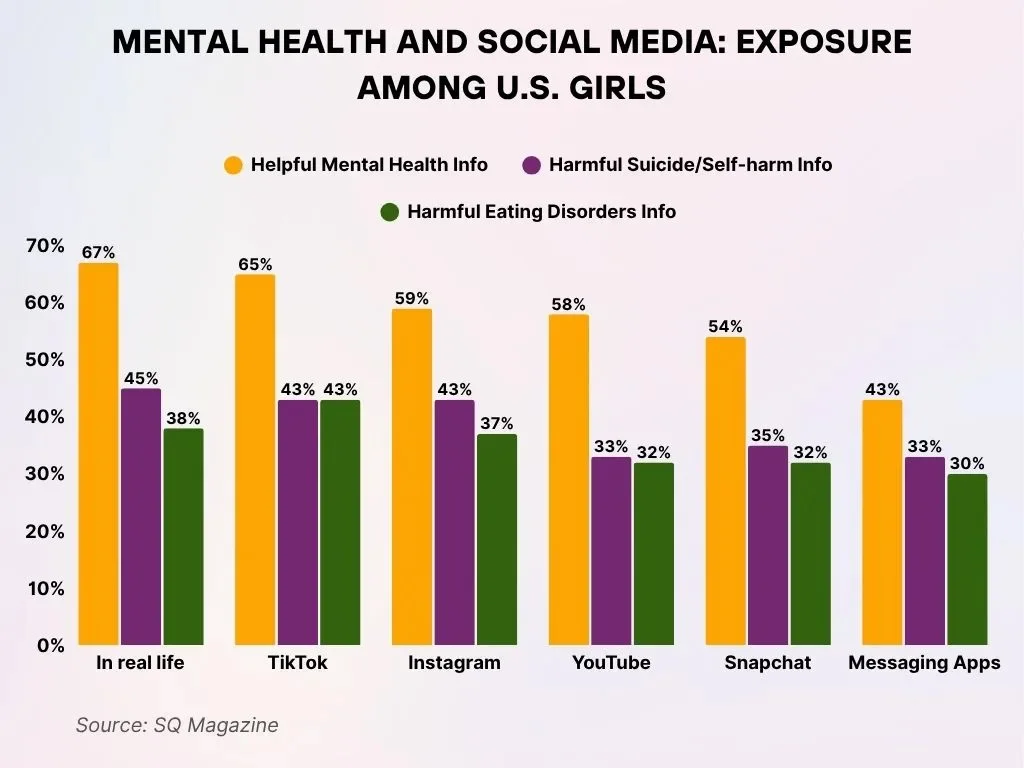
- About 67% of girls said they received helpful mental health information in real life, yet 45% also reported encountering harmful suicide or self-harm content, while 38% were exposed to eating disorder–related content.
- TikTok demonstrated a mixed influence, with 65% of girls finding helpful mental health content, but 43% being exposed to suicide or self-harm material, and another 43% encountering eating disorder content.
- On Instagram, 59% of girls accessed positive mental health resources, however 43% still encountered suicide or self-harm messages, and 37% came across eating disorder–related content.
- YouTube delivered helpful mental health content to 58% of girls, but 33% reported seeing suicide or self-harm material, and 32% encountered eating disorder content at least monthly.
- On Snapchat, 54% of girls reported helpful mental health exposure, while 35% experienced suicidal or self-harm messaging, and 32% were exposed to eating disorder–related material.
- Messaging apps showed the lowest level of helpful exposure at 43%, alongside 33% of girls reporting self-harm content exposure and 30% encountering eating disorder–related messaging.
Disordered Eating Behaviors Linked to Social Media
- Among adolescents who use social media, around 12–40% show signs of disordered eating or full eating disorders, depending on population and measures used.
- In one large survey, 52% of girls and 45% of boys reported skipping meals and similar behaviors linked to eating disorders alongside social media use.
- An Australian study found disordered eating behaviors in 51.7% of girls and 45% of boys, with 75% of girls and 70% of boys owning at least one social media account.
- A youth sample showed 42% had probable eating disorders, while 41.7% met criteria for social media addiction, indicating strong co‑occurrence.
- Over 90% of adolescents have at least one social media account, and 81% use social media daily, increasing routine exposure to dieting and body‑focused content.
- Increased Instagram and Snapchat use was significantly associated with higher global EDE‑Q scores, indicating more severe disordered eating symptoms among adolescent girls.
- Excessive social media use in a 41‑country study of 222,865 adolescents was linked to unhealthy dietary habits such as skipping breakfast and higher sugary drink intake.
- One study reported that social media–related body dissatisfaction in early adolescents significantly predicted later restrictive eating and dieting behaviors.
- Adolescents with pre‑existing body image concerns who followed appearance‑focused influencers showed a significantly higher odds ratio of developing eating disorders.
Depression, Anxiety, and Co‑Occurring Mental Health Issues
- Negative body image linked to social media use correlates with higher levels of anxiety and depression.
- Adolescents reporting distress over appearance online show elevated psychological distress symptoms.
- Constant comparison and feedback cycles disrupt self‑esteem and foster internalized criticism.
- Body dissatisfaction can predict depressive symptoms, especially in teen girls.
- Social media addiction tendencies compound anxiety, leading to chronic worry and mood symptoms.
- Self‑reported stress related to perceived body image often co‑exists with disordered eating.
- Exposure to harmful content intensifies emotional distress among vulnerable users.
- Mental health professionals often observe social media‑linked anxiety and depression alongside eating disorders.
Frequently Asked Questions (FAQs)
Nearly 46% of teens ages 13–17 report that social media makes their body image worse.
About 81% of teens use social media regularly, with 70% using it more than once a day and 40% multiple times per hour.
Instagram research found 10.5% of the feed seen by teens with body dissatisfaction was “eating disorder adjacent” content, compared to 3.3% for other teens.
Epidemiological studies report that disordered eating behavior in adolescents ranges roughly between 14% and 22%.
Conclusion
Social media’s role in shaping body image and eating disorder risk is no longer theoretical; multiple studies confirm that appearance‑focused content, algorithmic exposure, and social comparison behaviors are consistently linked to negative self‑perception, disordered eating behaviors, anxiety, and depression across age groups. The influence is especially pronounced among adolescents and young adults, with gender‑specific patterns that reflect broader cultural ideals.
While platforms have begun implementing content moderation measures, harmful trends still permeate feeds and engagement metrics, highlighting the need for education, media literacy, and supportive environments.
As we continue to navigate a digital world where screens mediate self‑worth, understanding these statistics is crucial for families, educators, clinicians, and policymakers aiming to protect mental health and promote healthier online experiences.