

Technology access has reshaped daily life, but it has also paved the way for growing technology addiction, a pattern of digital dependence that affects behaviour, well‑being, and social interaction. Recent reports show a rising global burden: millions worldwide experience compulsive tech use that interferes with work, learning, and mental health. This isn’t just a youth problem; adults across the U.S. report tech dependence affecting sleep, productivity, and emotional regulation.
From school classrooms to corporate environments, understanding current trends matters now more than ever. Explore detailed statistics below to see how widespread and impactful technology addiction has become.
Editor’s Choice
- Globally, an estimated 36.7% of people experienced some level of internet addiction in 2025.
- Around 57% of U.S. adults report smartphone addiction behaviors.
- 76% of parents express concern over children’s excessive device usage.
- Teen internet addiction risk hits up to 73% in some age groups.
- About 44% of American adults feel anxious without their phones.
- Nearly half of teens lose sleep due to phone or internet use.
- 10% of Americans may qualify as social media addicts.
Recent Developments
- In 2025 studies, anxiety and addiction patterns linked to social media and gaming intensify concern.
- Parental concern about screen time rose to 76% worldwide.
- Research highlights the role of compulsive use patterns, not just screen time, in harmful outcomes.
- New digital well‑being clinics are opening globally to treat tech and gaming addictions.
- Mental health experts debate whether generative AI use may contribute to psychological dependencies.
- Teen internet addiction risk reached 73% among ages 13‑17 in recent research.
- Countries like South Korea are implementing digital detox programs for youth.
- Diagnostic standards for tech addiction are evolving, reflecting broader recognition.
Global Prevalence of Technology Addiction
- 36.7% of the global population exhibits internet addiction signs in recent data.
- Internet addiction diagnostic criteria (ICD‑11) show 18% worldwide meet addiction thresholds.
- Prevalence estimates for smartphone addiction globally are around 26.99%.
- Social media addiction estimates globally sit near 17.42%.
- Internet addiction rates vary widely by region, from 3.7% to 26.8% in some studies.
- Internet addiction peaks as high as 47.4% in parts of Asia.
- Global smartphone dependency affects roughly 48% of users.
- Compulsive checking behavior (e.g., checking within the first 10 minutes of waking) is nearly 89% worldwide.
Technology Addiction by Age Group
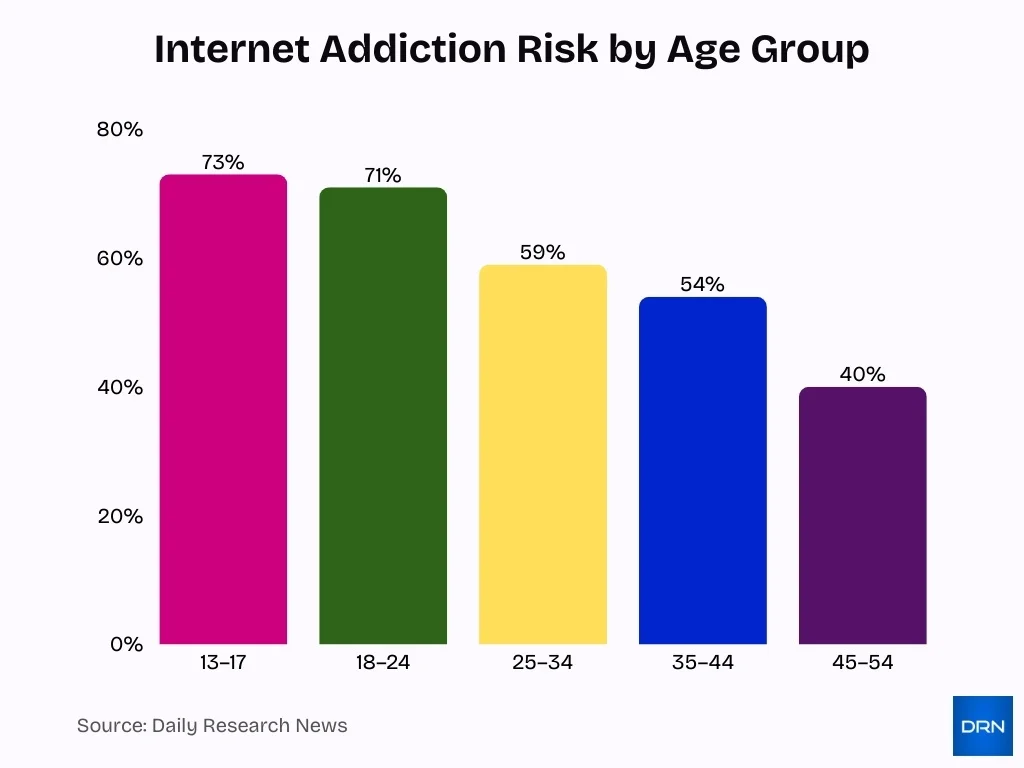
- 73% of teens (13–17) show internet addiction risk.
- Ages 18–24 have a 71% internet addiction risk.
- Young adults 25–34 face a 59% risk.
- Ages 35–44 see a 54% risk.
- Ages 45–54 demonstrate a 40% risk.
- Social media dependence is highest among Gen Z users.
- Teens show higher sleep disruption from screens than older groups.
- Young adults aged 18‑29 show significant smartphone dependency.

Smartphone Addiction Statistics
- 57% of Americans self‑report smartphone addiction.
- 88.6% check their phones within 10 minutes of waking up.
- Americans check their phones an average of 144+ times per day.
- 44% of U.S. adults can’t go 24 hours without their phone.
- 67% of teens lose sleep due to phone use.
- Global phone addiction affects about 48% of users.
- Frequent phone checking without notifications is reported by ~67% of users.
- Nomophobia affects about 66% globally (fear of being without a phone).
Technology Addiction in the USA
- ~57% of Americans say they are addicted to their phones.
- 48% of U.S. internet users feel addicted to digital devices.
- 44% of adults get anxious without their phones.
- Nearly half of American teenagers report poor sleep due to device use.
- Around 10% of Americans qualify as social media addicts.
- U.S. adult screen dependency has increased year over year.
- Digital distractions affect 52% of U.S. employees’ productivity.
- American teens average over 7 hours of daily screen time.
Most Popular Social Media Platforms Among U.S. Users
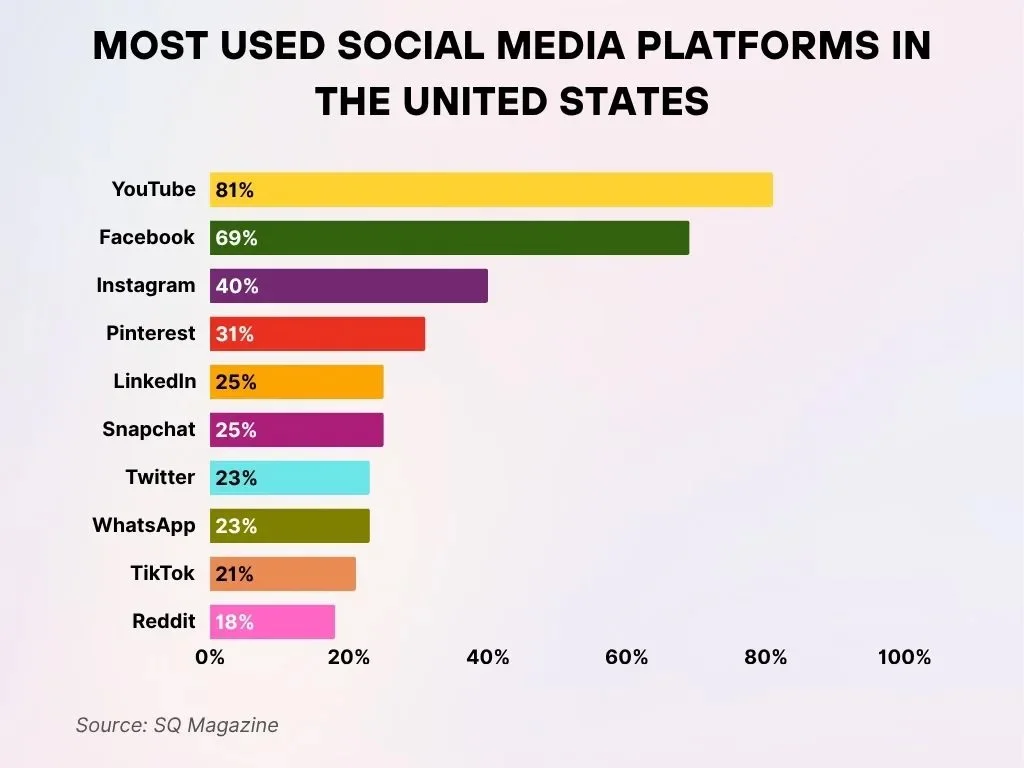
- YouTube stands as the most widely used social platform, with 81% of Americans actively engaging on it.
- Facebook secures the second position, being used by 69% of the U.S. population.
- Instagram attracts 40% of users, highlighting its strong appeal and sustained popularity.
- Pinterest is used by 31%, particularly favored for visual inspiration and shopping-related content.
- LinkedIn and Snapchat share an identical user base, with 25% of Americans using each platform.
- Twitter and WhatsApp also report equal adoption levels, each reaching 23% usage among U.S. users.
- TikTok, despite its rapid expansion, is currently used by 21% of Americans.
- Reddit completes the ranking, with 18% of the U.S. population actively using the platform.
Internet Addiction Rates
- Global internet addiction prevalence stands at 36–38% in 2025, up from roughly 33% in 2024, showing steady year‑over‑year growth.
- In the U.S., about 48% of adults say they feel addicted to the internet or online services.
- Clinical studies estimate 7–10% of U.S. users meet criteria for problematic internet use, a narrower but more severe category.
- College‑age adults show higher vulnerability, with over 60% reporting loss of control over online time.
- Average daily internet use worldwide reached 6 hours and 40 minutes in 2025, up nearly 10 minutes from 2024.
- Internet addiction rates are consistently higher in urban areas than rural ones, driven by broadband access.
- Streaming and short‑form video platforms now account for more than 35% of total internet time globally.
- Late‑night internet use correlates strongly with addiction symptoms, especially among users under 30.
Social Media Addiction Data
- Roughly 210 million people worldwide are estimated to struggle with social media addiction in 2025.
- In the U.S., 10–12% of users qualify as social media addicted, based on behavioral assessments.
- Gen Z users spend an average of 4.5 hours per day on social platforms, the highest of any age group.
- About 41% of U.S. adults feel uneasy or anxious when unable to check social media.
- TikTok and Instagram drive the highest engagement‑to‑addiction ratios among major platforms.
- Daily social media use increased by 7% globally from 2024 to 2025.
- Over 50% of teens say they try to cut back on social media but fail, a key addiction indicator.
- Heavy social media users report higher rates of sleep disruption and attention issues.
General Technology Addiction Usage
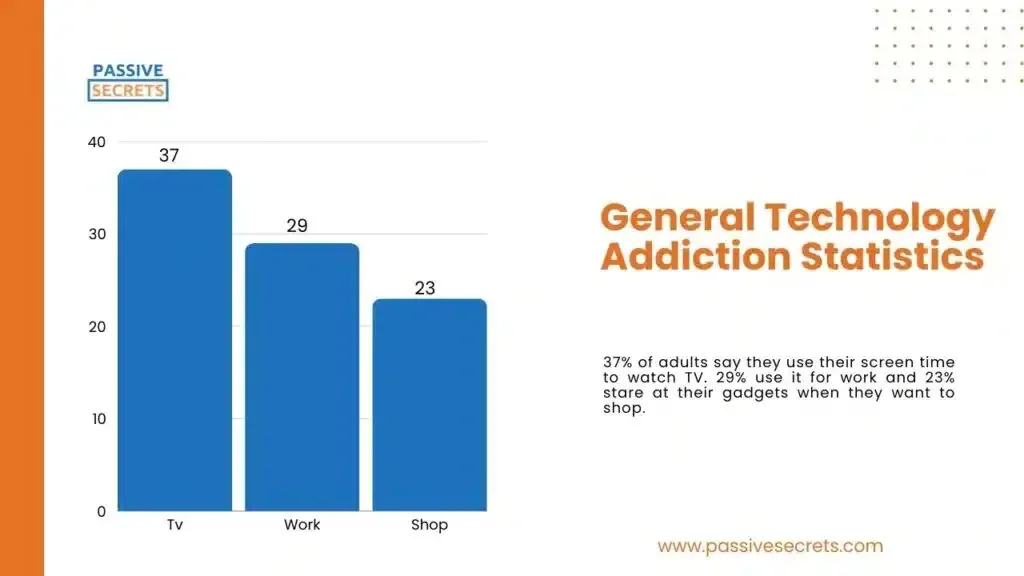
- 37% of adults report that the majority of their screen time is spent watching TV, making it the most common primary activity.
- 29% of adults state that they mainly use their devices for work-related tasks, highlighting productivity-driven usage.
- 23% of users admit they spend time staring at their gadgets, specifically when they intend to shop online.
Video Game Addiction Facts
- The World Health Organization recognizes gaming disorder, affecting an estimated 3–4% of gamers worldwide.
- In the U.S., about 8.5% of gamers show signs of gaming addiction, with higher rates among males under 25.
- Global gaming time rose again in 2025, averaging 8.5 hours per week per user.
- Online multiplayer games show stronger addiction links than single‑player formats.
- Nearly 70% of gamers with addiction symptoms also report sleep problems.
- Mobile gaming addiction is growing faster than console or PC addiction.
- Adolescents who game daily are twice as likely to report academic difficulties.
- Loot boxes and reward mechanics increase compulsive gaming behaviors.
Causes of Technology Addiction
- Digital interactions trigger dopamine release, with 70% of addicts showing elevated reward pathway activity.
- FOMO drives smartphone addiction in 58% of young adults, increasing checking frequency.
- High impulsivity individuals face a 3.2x higher risk of tech addiction.
- Peer pressure boosts social media addiction rates by 25% among teens.
- Anxiety sufferers have 14x odds of internet addiction.
- Infinite scroll extends daily engagement by 47% on average.
- Children starting smartphones at age 10 show 2.5x long-term addiction risk.
- Constant connectivity correlates with 27% global smartphone addiction prevalence.
- Depression patients exhibit 40% higher digital dependency rates.
Technology Addiction in Teens
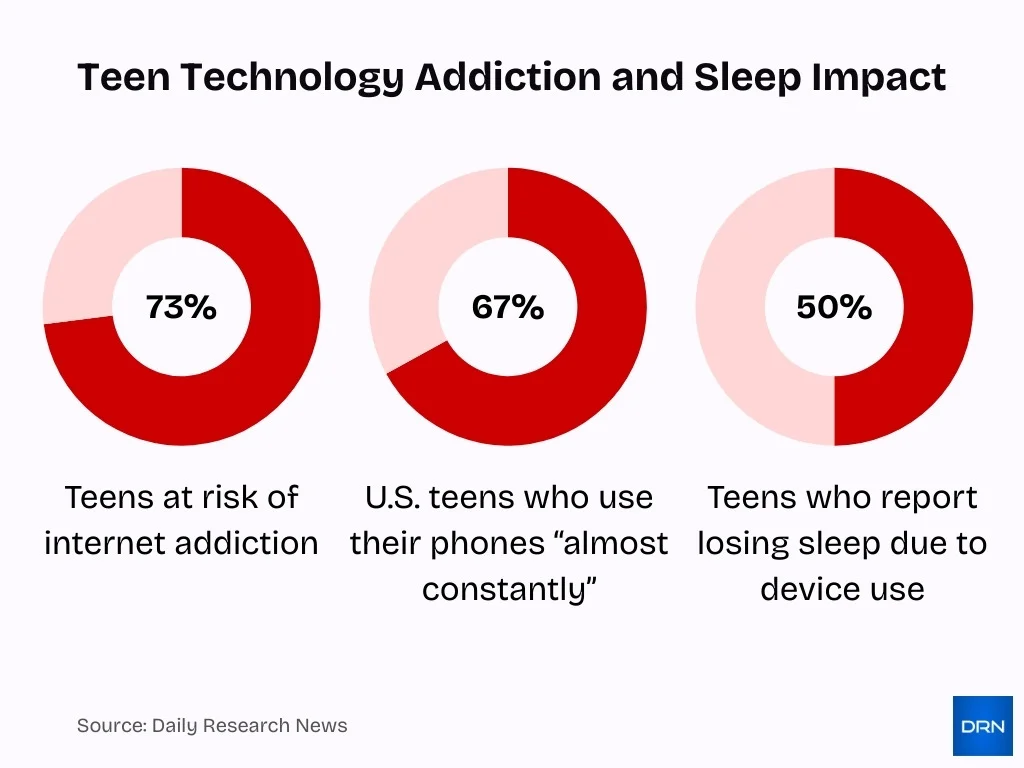
- 73% of teens are at risk of internet addiction, based on behavioral screening tools.
- Nearly 67% of U.S. teens say they use their phones “almost constantly”.
- About 50% of teens report losing sleep due to device use.
- Social media is the primary driver of tech addiction among adolescents.
- Teens with higher screen time show increased rates of anxiety and mood disorders.
- Parental concern over teen tech addiction reached 76% in 2025.
- School performance issues are more common among teens with heavy device use.
- Early smartphone ownership correlates with higher addiction risk later in adolescence.
Effects on Mental Health
- High technology use is linked to increased anxiety and depression symptoms, especially in younger users.
- Social media addiction correlates with lower self‑esteem and higher loneliness scores.
- Heavy screen users report higher stress levels than moderate users.
- Internet addiction is associated with impaired attention and memory function.
- Teens with tech addiction symptoms face higher risks of emotional dysregulation.
- Sleep disruption from late‑night device use worsens mental health outcomes.
- Digital overload contributes to burnout among working adults.
- Reducing screen time shows measurable improvements in mood within weeks.
Effects on Physical Health
- Excessive screen time can contribute to eye strain, dryness, and blurred vision, known as computer vision syndrome.
- Sedentary behaviors tied to technology addiction increase the risk of weight gain and obesity.
- Poor posture during long device use may lead to chronic neck and back pain and musculoskeletal issues.
- Smartphone overuse exposes users to blue light, which suppresses melatonin and disrupts sleep cycles.
- Adults with diagnosed smartphone dependence show lower gray matter volume and thinner cerebral cortex, affecting memory and decision‑making.
- High device usage time late at night is linked to sleep deprivation and daytime fatigue across age groups.
- Repetitive hand and wrist motions from frequent smartphone taps may contribute to tendinitis or repetitive strain injuries.
- Excessive technology use has been associated with headaches and tension due to prolonged focus and screen exposure.
Daily Screen Time Among Americans
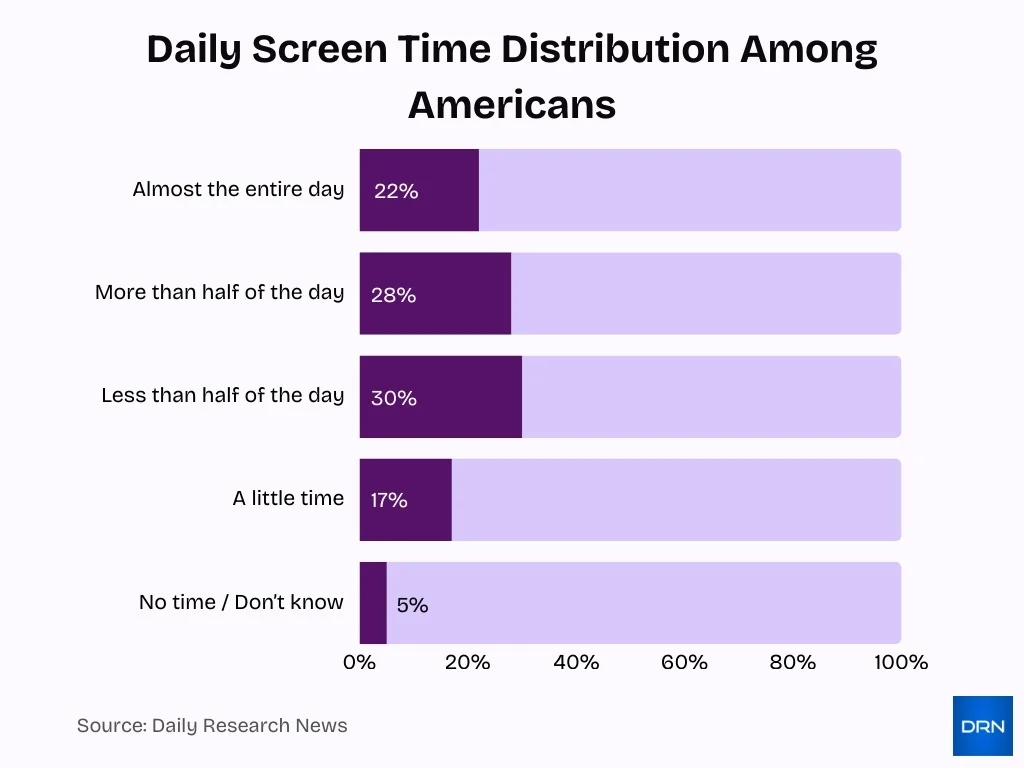
- 22% of Americans spend almost the entire day in front of a screen, highlighting a significant share of the population with very high daily screen exposure.
- 28% of Americans report spending more than half of the day using screens, reflecting extended digital engagement across work and personal activities.
- 30% of Americans, the largest group, say they spend less than half of the day in front of screens, indicating moderate screen usage.
- 17% of Americans spend only a little time on screens each day, suggesting limited reliance on digital devices.
- Just 5% of Americans report no screen time or are unsure, showing that nearly all Americans interact with screens daily.
Symptoms and Signs
- Approximately 67% of smartphone owners check their devices even without notifications, indicating compulsive behavior.
- Americans check their phones an average of 144 times daily, often driven by persistent urges.
- 58% of phone users attempt to limit screen time but face difficulty despite negative life impacts.
- 95.5% of internet addiction patients report withdrawal symptoms like irritability and anxiety.
- One hour of post-bedtime screen use raises insomnia risk by 59% among students.
- 61.7% of young adults with high smartphone addiction experience poor sleep quality.
- 73% of teens aged 13-17 are at risk of internet addiction, leading to social isolation.
- Excessive screen time correlates with lower academic performance and job distractions in students.
Prevention Strategies
- Digital wellbeing tools cut screen time by up to 30% daily.
- Tech-free bedtime routines boost sleep quality by 25%.
- Physical activity reduces sedentary tech use by 40% in teens.
- Real-world socializing balances digital habits for 65% of young adults.
- Parental guidance lowers children’s addiction risk by 50%.
- Digital literacy education empowers 70% to make healthier choices.
- Digital detox challenges reset habits in 80% of participants.
- CBT therapies achieve 78% success in severe tech addiction cases.
Emotional Effects of Social Media on People Aged 18–24
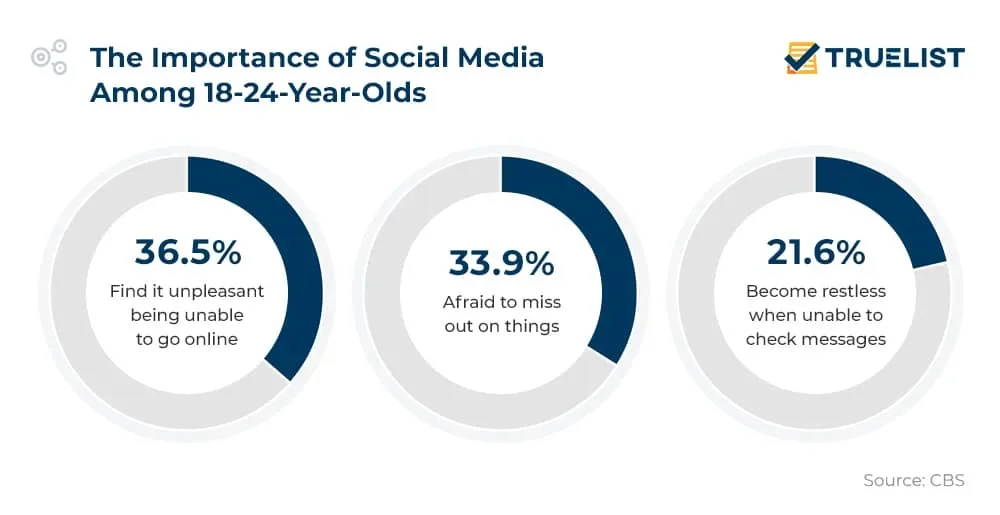
- 36.5% of young adults report that they find it unpleasant when they are unable to go online, highlighting emotional discomfort linked to digital disconnection.
- 33.9% experience fear of missing out (FOMO) when they are not connected to social media, indicating anxiety driven by online absence.
- 21.6% become restless when they cannot check their messages, reflecting dependency on constant digital communication.
Workplace and Productivity Impact
- Nearly half of employees face digital distractions every 30 minutes, causing over 160 weekly interruptions.
- 60% of workers can’t focus for 30 minutes without digital interruptions, slashing productivity.
- Digital tools cause 40% productivity drop from personal devices and unrelated checks.
- Technostress explains 22% of emotional exhaustion, heightening burnout risk.
- Burnout fully mediates technostress effects on depressive mood in remote workers.
- Frequent phone checks are linked to task delays, automatically raising delays by 0.092 units.
- 86% deem smartphone use inappropriate in meetings, harming communication.
- Digital wellness policies cut burnout by 22% and anxiety by 34%.
- Multitasking due to distractions reduces productivity by 40% and doubles errors.
- Employees lose up to 720 work hours yearly to distractions, equating to three weeks.
Regional Differences in Technology Addiction
- South Africa leads with residents averaging 9.5 hours daily online, the highest internet addiction globally.
- Indonesia averages 6.03 hours of mobile internet daily, second highest worldwide.
- Philippines users spend 5.54 hours daily on mobile internet, fueling high addiction rates.
- East Asia shows 12% pooled gaming disorder prevalence among youth.
- East Asian males face 16% gaming addiction rate vs. 8% for females.
- India reports 39.9% smartphone addiction among college students in Kerala.
- US adults average 4.19 hours daily mobile internet, with 47% reporting phone addiction.
- Asia exhibits 5.08% gaming addiction vs. 2.72% in Europe.
- 73% of 13-17-year-olds worldwide are at risk of internet addiction.
Frequently Asked Questions (FAQs)
Approximately 36.7% of the global population experienced internet addiction or problematic tech use in 2025.
About 57% of Americans say they are addicted to their phones.
An estimated 210 million individuals globally suffer from social media addiction, roughly representing 4–5% of total users.
Internet addiction prevalence is 33.7% in South Korea versus 18.5% in the United States.
Conclusion
Technology addiction continues to rise as devices and platforms become deeply integrated into daily life. Across age groups and regions, excessive use correlates with physical ailments, mental health challenges, and workplace inefficiency. Children and teens are at particular risk, with early exposure often leading to longer‑term habitual use. Prevention remains essential, from setting healthy boundaries and encouraging offline activities to education and professional intervention.
As policymakers, educators, employers, and families confront this modern dependency, understanding the latest data can guide more balanced and sustainable technology use and beyond.