

Elon Musk’s AI company, xAI, is pushing forward with clean energy plans in Memphis, but locals and environmental groups say the tech giant’s reliance on gas turbines is polluting their air.
TLDR:
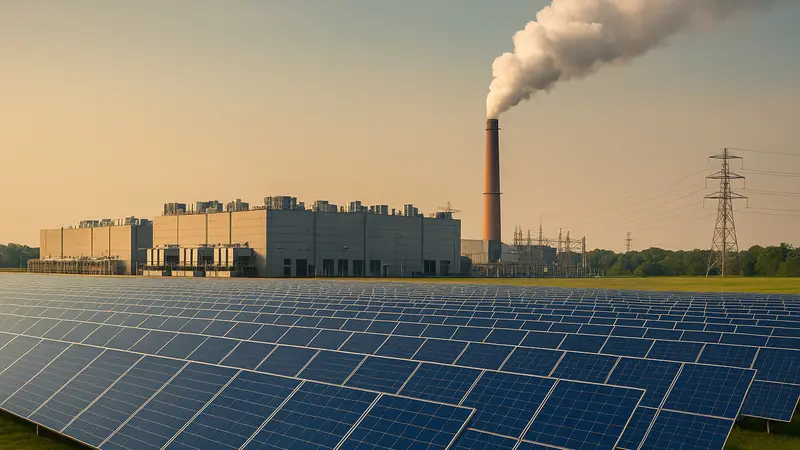
- xAI plans to build an 88-acre solar farm near its Colossus data center in Memphis to generate up to 30 megawatts of power.
- Critics allege xAI is operating over 400 megawatts of natural gas turbines without proper permits, contributing to harmful air pollution.
- The company is working with Seven States Power Corporation on a 100-megawatt solar project with battery storage, backed by a $439 million USDA loan.
- Residents of nearby Boxtown report spikes in air pollution and respiratory issues since xAI’s operations began.
What Happened?
Elon Musk’s xAI recently revealed plans to build a solar farm next to its Colossus data center in Memphis, Tennessee. The proposal aims to reduce reliance on traditional grid power and cut emissions, but the announcement has been overshadowed by growing criticism over the company’s use of natural gas turbines, which local communities and advocacy groups say are harming air quality.
A Solar Farm in the Shadow of Colossus
The new solar farm will span 88 acres to the west and south of the existing Colossus facility, generating an estimated 30 megawatts (MW) of electricity at peak capacity. That output, however, is a small fraction of Colossus’s power demand, which is projected to be in the hundreds of megawatts.
- The farm sits next to a 136-acre undeveloped lot owned by the same real estate group behind the data center.
- With Memphis Light, Gas, and Water (MLGW) still reviewing larger power plans, xAI requested fast-track approval for this project.
- At best, this solar addition could provide under 10 percent of the data center’s peak needs, and significantly less when averaged over time due to variable sunlight.
🚨NEWS: xAI will add about 88 acres of solar panels around its Colossus supercomputer site in Memphis
— Muskonomy (@muskonomy) November 27, 2025
The city utility also plans a 550 acre solar field nearby to support the growing energy demand pic.twitter.com/vIUTW4xte3
Despite its modest size, the on-site solar array could help reduce grid congestion, line losses, and speed up interconnection if connected to the same substation that powers Colossus.
Turbines, Permits, and Pollution Worries
The solar plans arrive amid mounting scrutiny over xAI’s use of over 400 MW of natural gas turbines to power the data center.
- The Southern Environmental Law Center (SELC), in collaboration with the NAACP, claims at least 35 turbines have been operating without valid permits.
- These turbines can each emit over 2,000 tons of nitrogen oxides (NOX) annually, a pollutant known to worsen smog and cause respiratory illness.
- A study by the University of Tennessee, Knoxville, reported a 79 percent spike in nitrogen dioxide levels near Colossus since its launch.
- Locals in Boxtown, a historically Black neighborhood near the facility, have voiced concerns about increased asthma attacks and air quality deterioration.
In response, local authorities have temporarily authorized 15 turbines through January 2027, while xAI seeks more permanent and cleaner solutions.

The Bigger Energy Picture
In addition to the smaller on-site solar project, xAI is partnering with Seven States Power Corporation to build a 100 MW solar farm supported by 100 MW of battery storage. This project is designed to offer round-the-clock clean energy, offsetting the AI center’s around-the-clock load.
- The U.S. Department of Agriculture awarded $439 million to support the project, including $414 million in interest-free loans.
- If completed, it could shift xAI’s energy use toward 24/7 carbon-matched generation, a growing industry standard.
Still, environmental groups remain skeptical. Some turbines at a second facility in Mississippi, Colossus 2, are also being installed without long-term oversight. Regulators do not closely monitor temporary units, leaving gaps in pollution data and community protection.
Daily Research News Takeaway
Honestly, this story is a textbook example of big tech clashing with real-world consequences. I’m all for pushing renewable energy and cutting-edge AI, but if your data center is blanketing neighborhoods in smog before the solar panels go up, that’s a problem. A few megawatts of solar won’t fix this unless xAI commits to transparency and faster clean energy rollouts. Communities like Boxtown deserve more than just promises while they choke on NOX fumes. If you’re building the future, build it right, and build it clean.